Futures Rise As SpaceX Blowout Revives AI Trade; Brent Back Above $110
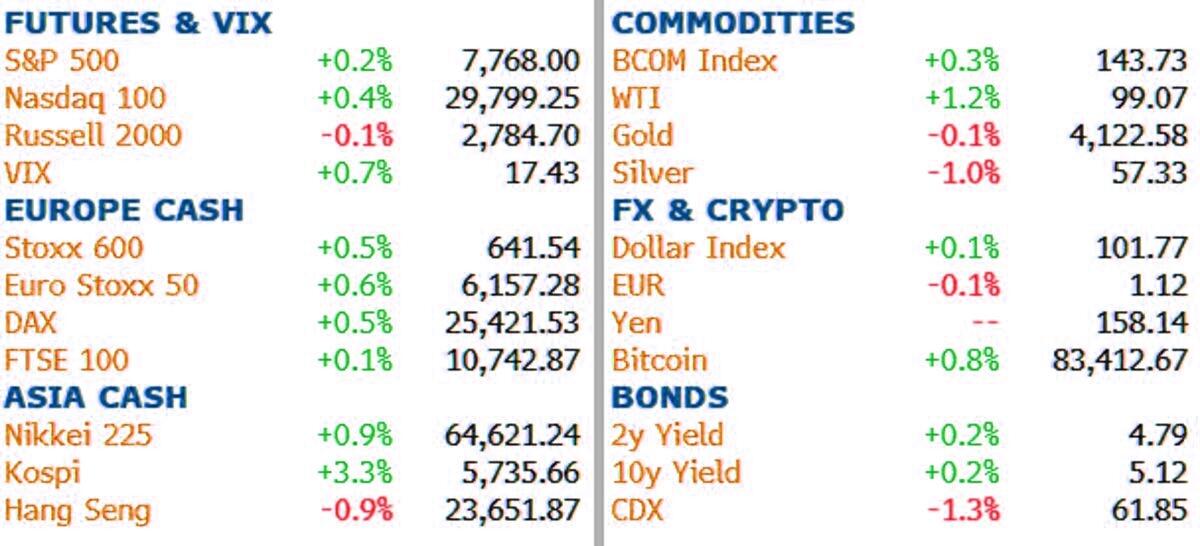
US futures are higher as blowout results from SpaceX and a monster preannouncement from Super Micro gave the battered AI trade a reason to bounce, while Elon Musk's open endorsement of a SpaceX-Tesla merger added to the buzz; but with more attacks on shipping around the Strait of Hormuz, oil is back on the rise and as a result Brent is again above $110 while French 10Y yields hit 5% for the first time since 2002. As of 8:00am ET, S&P futures are 0.3% higher while Nasdaq futures are up 0.6% and Dow futures are up 0.1%. That follows a session in which the S&P rose 0.3% to 7,712 with 403 advancers, the most since April, as the equal-weight index jumped 1.15% while the Nasdaq slipped 0.02% in yet another rotation day out of AI. In premarket trading, the AI complex is back in demand with SpaceX up 9.1% and Super Micro up 12.4%, confirming our post from last night, and Nvidia leads the Mag 7 with a 1.3% gain, while Netflix tumbles 6.2% on a soft Q4 guide and Intuitive Surgical slides 7.8%. The day's driver is AI (again), and this time it's the bulls' turn: SpaceX revenue of $14.6 billion crushed the $12.8 billion consensus and Super Micro guided fiscal Q1 sales to $18.5-19.5 billion vs its own prior $14.5-15.5 billion guide, reviving the AI trade one day after Korea's Elice IPO faceplant and Ken Griffin's warning that investors are "almost certainly" in an AI bubble. Treasuries are slightly cheaper across the curve, led by the front-end and belly, with the 10Y around 5.12% as stocks climb on better AI sentiment and a leg higher in oil adds to the upside pressure on yields ahead of today's $13 billion 20-year reopening; French bonds are the weak link in Europe, with the OAT-Bund spread widening to 158bps on fiscal worries and $110 crude, while gilts outperform even after UK CPI rose to an 11-month high of 3.5%, cementing a November BOE hike. The Bloomberg dollar index is little changed while the Aussie is the best G10 performer, rising 0.5% to 0.7036, the highest since Sept. 28, after hawkish RBA comments. In commodities, WTI rises 1.4% to about $99 and Brent 1.2% to $110, Dutch TTF gas jumps 4%, gold is flat near $4,120 and silver drops 1%. Bitcoin rises 0.8% to about $83,400. US economic data slate is empty after MBA mortgage applications fell 5.3% last week (7am); the Fed is in its external communications blackout ahead of next week's meeting. The Treasury will sell $75 billion of 17-week bills (11:30am) and $13 billion of 20-year bonds (1pm). Earnings from Meta, Tesla, IBM, Texas Instruments and Lam Research come after the close.
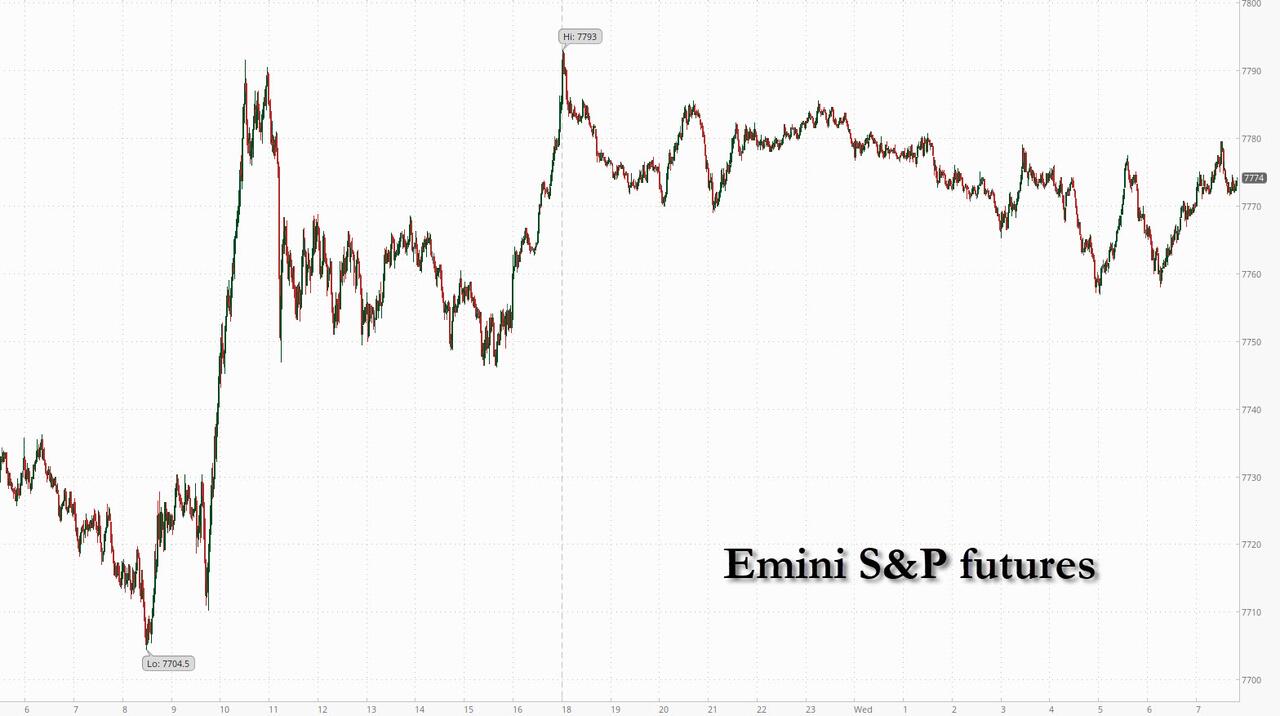
In premarket trading, Mag 7 stocks are mixed: Tesla (TSLA) climbs 1.3% after Elon Musk openly endorsed the prospect of combining SpaceX with the electric-car maker. Nvidia is also gaining amid a broad AI rally (Nvidia (NVDA) +2%, Amazon (AMZN) +0.2%, Alphabet (GOOGL) -1%, Meta Platforms (META) -0.5%, Apple (AAPL) -0.4%, Microsoft (MSFT) -0.5%).
- AT&T (T) falls 3% after the wireless carrier reported third-quarter wireless postpaid phone net additions that missed the average analyst estimate.
- Capital One (COF) rises 2% after reporting third-quarter earnings that beat estimates as the largest US credit-card lender benefited from revenue climbing and kept its expenses in check.
- DigitalOcean (DOCN) climbs 4% after Piper Sandler upgraded the software company to overweight from neutral, writing that it is seeing an acceleration in growth due to AI.
- Fortinet (FTNT) slips 3% after Arete downgraded the security software company by two notches, to sell from buy, citing concerns about its growth and valuation.
- Intuitive Surgical (ISRG) falls 5% after the robotic-surgery company reported US growth for its da Vinci surgical robots in the third quarter that fell short of investor expectations.
- Netflix (NFLX) is down 6% after the streaming-video company gave a revenue forecast that was weaker than expected, compounding concerns about its growth.
- Philip Morris International (PM) slips 2% after the tobacco maker cut its profit forecast for this fiscal year as rising energy costs stemming from conflict in the Middle East take a toll.
- SpaceX (SPCX) is up 6% after Elon Musk’s satellite, rocket and artificial intelligence conglomerate reported third-quarter revenue that was better than the average analyst estimate. The beat was driven by substantial growth in its artificial intelligence and satellite internet businesses.
- Super Micro Computer (SMCI) jumps 11% after the maker of servers reported preliminary first-quarter sales that were stronger than expected, citing AI-related demand.
- Zoom Communications (ZM) rises 4% after Oppenheimer upgraded the software company to outperform, writing that its AI platform was working better than expected.
In other corporate news, Elon Musk, never one to think small, said SpaceX and Tesla are studying a possible merger, saying the idea has "a lot of merit": the potential $3.5 trillion combination would be the biggest-ever corporate merger, and both companies have formed special committees to consider it. Musk also said ASML and other key providers of chipmaking machines have expedited supplies for his Terafab semiconductor project. Anthropic could spend $750 billion on additional computing power in the coming years, the WSJ reported citing a draft IPO prospectus, while Reuters reports OpenAI is racing to raise about $30 billion at a valuation above $1.4 trillion before Anthropic's IPO. Nvidia is in talks to invest hundreds of millions of dollars in Australian AI cloud provider Firmus, per The Information, after the company abandoned plans for an IPO. Abbott said it will separate its global nutrition business into a public company. United Airlines forecast earnings below estimates as soaring jet fuel prices eat into profits. AT&T reported 3Q wireless postpaid phone net adds of 379,000, short of the 387,410 estimate. Optimum Communications is closing in on a restructuring agreement that will hand control to its lenders, and Getty Images is starting a prepackaged bankruptcy. EQT is in advanced talks to buy Qiagen with a binding offer above $50 a share, with KKR also bidding. Salesforce agreed to buy Braze at a 58% premium, prompting a dozen downgrades of Braze to neutral/hold. DayOne Data Centers is weighing a delay or size cut to its US IPO as data center volatility rises, Disc Medicine priced a 6 million share offering at $75, Sachem Head is planning a more active role at Ionic Digital and Ananym Capital has taken a position in CTS Eventim.
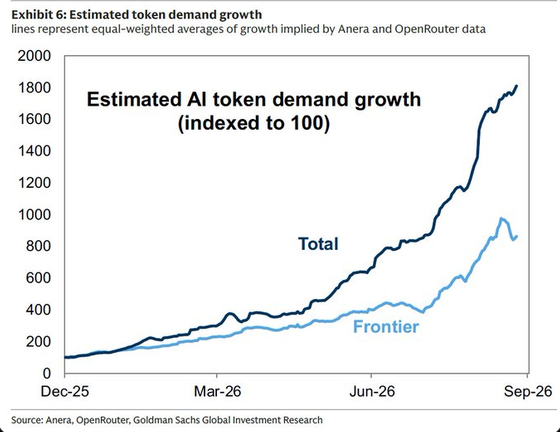
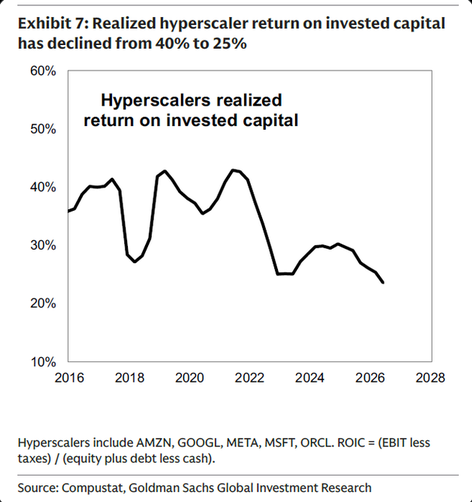
The AI trade is getting a reprieve this morning: Nasdaq futures are higher after solid earnings from SpaceX and Super Micro soothed nerves around the AI trade, but as Bloomberg's Neil Campling notes, lots of questions remain, not least over how companies will pay for their lofty AI ambitions.
“SpaceX appears to have provided exactly what the market was looking for: evidence that AI-related demand remains very real,” said Simon Wiersma, chief investment strategist at ING. “That has improved sentiment not only toward SpaceX itself, but toward the broader AI ecosystem.”
Speaking in Berlin, Nvidia's Jensen Huang said a 1 gigawatt data center now costs about $50 billion (or roughly the same it has been for the past two years before Vera Rubin pushes itg to $100 billion/GW); Anthropic could spend $750 billion on compute; and Musk's ambition to bring 10GW of compute online by the end of 2027 will cost around $500 billion, according to JonesTrading's Mike O'Rourke. SpaceX has $100 billion in cash to start the buildout, but O'Rourke can envision Nvidia offering "some version of Buy Now, Pay Later (BNPL) financing for SpaceX's GPU purchase." Meanwhile, markets keep doing what they're not supposed to: just one day after the biggest Korean IPO of the year cratered 32% on its debut, Elice is up 30%, and the AI CDS frenzy has done little to stop the Kospi from triggering a sidecar on the way up.
“This sounds ludicrous, but ludicrous is what happens in a bubble,” says Jonestrading’s Mike O’Rourke.
“More importantly, we see the latest AI jitters as a bump, not a break, in the AI investment cycle,” writes Sim Moh Siong, FX strategist at Oversea-Chinese Banking Corp. “Taiwan’s strong external fundamentals remain supportive, although active central bank management should keep appreciation prospect gradual.”
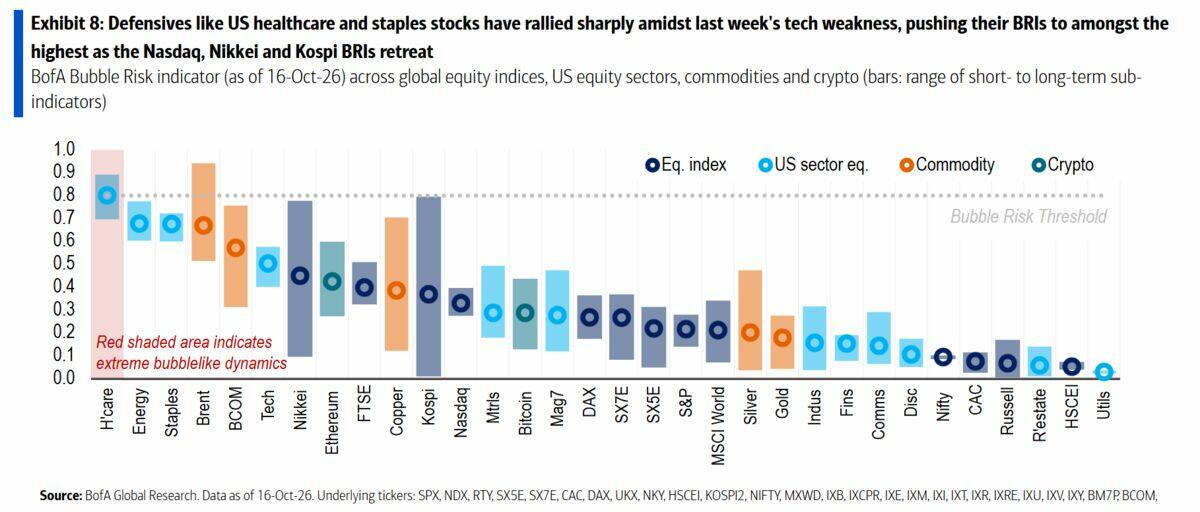
Top finance executives are divided over whether a bubble is forming: Ken Griffin said investors are "almost certainly" in the midst of an AI bubble, while BlackRock's Larry Fink warned last week that delays in building data centers could raise computing costs and threaten economic growth. Mounting worries about AI are showing up in a rotation into value and defensives, with the Dow Jones outperforming the Nasdaq 100 by more than 6% so far this month, while option investors are increasingly generating flows that run counter to moves in the S&P 500, with this long-gamma flow from counter-trend trading now larger than traditional dealer gamma, which may explain record low levels of correlation.
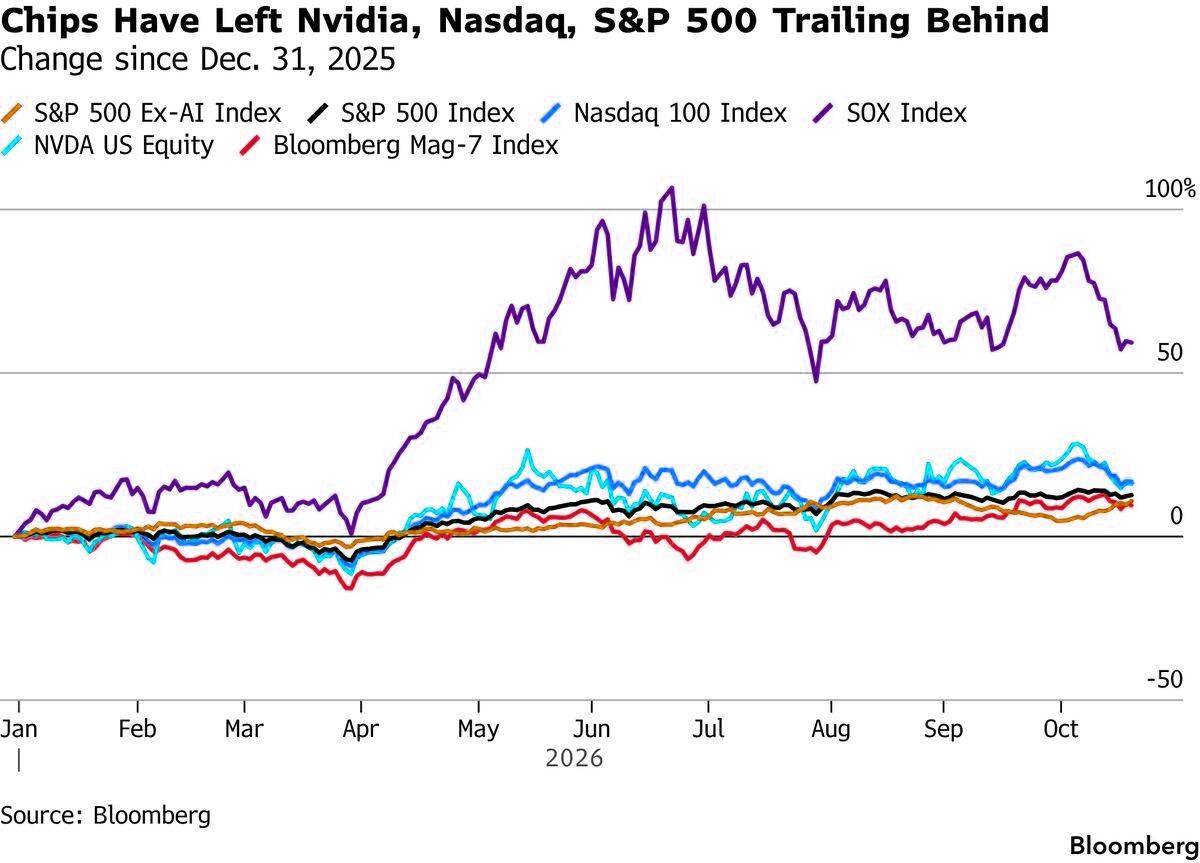
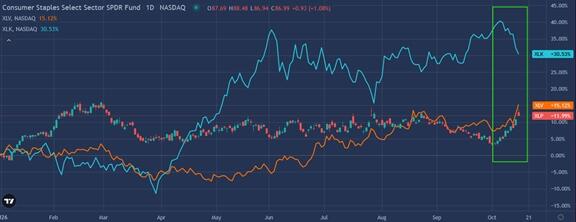
That rotation has gone so far that, according to Bank of America strategists, AI jitters are sending defensive sectors like healthcare and consumer staples nearer to "bubble" conditions, as investors shifting out of AI-linked stocks into safer havens push those valuations to more extreme levels (more in "From AI To KO: BofA Says The Flight-To-Safety Has Become A Bubble Of Its Own").
JPM's Market Intel desk under Andrew Tyler says SpaceX's beat and Super Micro's upside preannouncement were both supportive for AI sentiment, but warns that "these two catalysts alone would not resolve investors' concerns about financing risk and the scale of AI capex." The team doesn't think much has changed beneath the headline noise: Tuesday's sharp squeeze in the Russell "looks more like short covering than growing confidence," with high-touch volumes down 32% and, per trader Matt Reiner, "mass hesitation to step in and re-gross." The desk remains Tactically Bullish, favoring cyclicals outside tech while selectively buying tech weakness. All eyes now turn to Meta tonight: JPM's Mark Schilsky puts the revenue bogey at about $64 billion and says buyside consensus for 2027 opex plus capex is $435-475 billion, adding that a majority of investors still believe an equity raise is likely post-Q3. Separately, JPM's Stuart Humphrey called SpaceX "a very strong print, particularly SI," but reminds that 1.3 billion shares become eligible for sale off lockup on Thursday.
Goldman's desks are similarly skeptical of the bounce. GS Prime's Vincent Lin writes that "October has tested the AI trade": hedge funds just posted the largest two-week net selling of global Info Tech on record (-3.3 SDs), short sales outpaced long buys roughly 5 to 1 this month, and short leverage is in the 99th percentile, approaching 5-year highs ("short squeeze risk alert?"). TMT specialist Sean Johnstone says SpaceX "printed the cleanest AI-segment ramp yet," guiding Q1 2027 revenue to $33-37 billion vs a Street at about $22 billion, but the US desk was "still a net seller of Semis/AI into this bounce" and Tuesday's move higher "felt squeezy with short pockets at the top of the leader board." And for those keeping score on risk appetite, Goldman's cross-asset Risk Appetite Indicator has declined sharply over the past 3 weeks and turned negative for the first time since March, while Johannes Duttenhoefer flags that margin debt rose $26.2 billion in September, the second-highest month-end reading on record.
In geopolitics, the Iran standoff shows no sign of resolution: Iranian Foreign Minister Araghchi wrote in an FT op-ed that "there is little reason to expect progress now" given the White House's threats, Pakistan's army chief Munir reportedly delivered a US "final warning" to Tehran, and the FT reports Netanyahu is pushing to resume large-scale strikes on Iran. UKMTO received a late report of a tanker struck by an unknown projectile 30nm southeast of Al Faw, Iraq, though Gulf oil exports have surpassed prewar levels per the WSJ. On Ukraine, US envoy Steve Witkoff takes the security-guarantee proposals discussed in Oslo to St. Petersburg today, while the WSJ reported that Musk ordered a slowdown of Ukraine's Starlink service (prompting Marco Rubio to say Ukraine "would not exist" without US backing). In politics, National Democrats sued Trump and the DOJ over what they call a coordinated effort to erode confidence in the midterms.
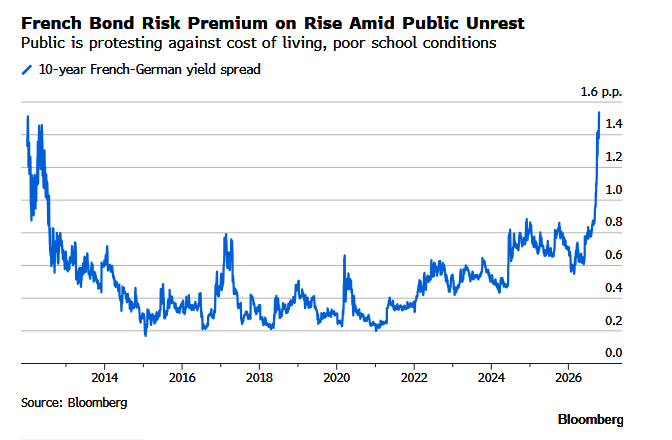
In Europe, the French bond rout continues: the 10Y OAT yield rose 7bps to 5%, the highest since July 2002, with the OAT-Bund spread widening to 158bps as higher energy prices hit bonds across the eurozone on top of persistent fiscal concerns. One trader bought 5,000 OAT March put spreads targeting the 10Y yield climbing to 5.60% by mid-February, a level last seen in 2000. The domestic unrest is now hitting earnings: Carrefour cut its 2026 targets citing riots, looting and curfews across France, and Goldman's FX desk expects Moody's to downgrade France to A1 on Friday.
In Europe, the Stoxx 600 is up 0.5%, extending an early gain as investors assess a flurry of corporate results, with real estate, energy and tech leading while autos, personal care and retail lag; the CAC 40 rises 0.4% as EssilorLuxottica's 14% jump outweighs Carrefour's 14% plunge. JPM notes Luxury, Semis, AI Disruptions and Cyclicals are among the top performing baskets; the Euro Stoxx 50 is up 0.6%, the DAX 0.5% and the FTSE 100 0.1%. Here are the biggest European movers:
- Randstad shares rally as much as 19% after the recruitment firm reported 3Q organic growth that beat consensus expectations.
- Adidas shares rise as much as 2.4% after the German sportswear maker reported preliminary third-quarter operating profit that beat estimates and raised its full-year profit outlook.
- Pepco surges as much as 8.4% after the retailer’s main shareholder, Ibex, sold a 5.5% stake through accelerated book-building.
- Iberdrola shares rise slightly after the Spanish power company raised its profit forecast. Analysts at Morgan Stanley say the increase is largely priced in.
- Carrefour shares drop as much as 15% after the French supermarket operator slashed its full-year financial goals, citing the “worsening social and security situation” following violent protests and looting across the country that damaged its stores.
- Michelin shares fall as much as 6.4% after Citi said third quarter revenue missed expectations due to weaker volumes.
- Elisa shares drop as much as 6.3% after the Finnish telecom carrier reported declining telecom service revenues and 3Q Ebitda that missed consensus expectations.
- Akzo Nobel shares fall as much as 1.8% after the paints and coatings manufacturer posted results analysts described as mixed, with weaker volumes somewhat offset by margin resilience.
Asian stocks rose, bouncing back from Tuesday's rout as blockbuster results from US tech revived the AI trade, with the MSCI Asia Pacific Index gaining as much as 1.6% and Samsung, SK Hynix and TSMC among the biggest drivers. South Korea's Kospi jumped 3.3% to 5,735.66, triggering a sidecar as Kospi 200 futures surged 5%, with foreigners snapping an 18-day net-selling streak in SK Hynix per Goldman, while Elice rebounded 30% after its 32% debut slump. Taiwan's Taiex rose 1.3%, its best day since Oct. 5, and the Nikkei added 0.9% to 64,621 despite softer-than-expected exports. China was the exception: the Hang Seng fell 0.9% to 23,651.87, its lowest close since July 7, as CATL tumbled 11.4% after its Q3 miss and Tencent slid 4%, and the CSI 300 dropped 1.0%; the ASX 200 was little changed and Bank Indonesia held rates at 5.75%. Goldman's Rachel Hu notes that "the de-rating of AI and crowded growth trades continued to dominate regional price action."
In FX, the Bloomberg Dollar Spot Index is little changed and the DXY trades in a tight 101.73-101.83 range. The Aussie is the best G10 performer, up 0.5% to 0.7036, the highest since Sept. 28, after RBA Deputy Governor Andrew Hauser said the inflation outlook is "materially worse" than forecast; Goldman now expects a 25bp RBA hike in November and markets price about a 50% chance. The euro slips 0.1% to 1.1226 as French spreads widen, while the pound is a touch firmer after UK CPI topped estimates, with EUR/GBP down 0.1% to 0.8389 even as the cost of hedging the pound against the euro hit a five-month high ahead of next week's UK budget. USD/JPY is little changed at 158.1, and the Taiwan dollar snapped a four-day drop.
In rates, Treasuries are slightly cheaper across the curve, led by the front-end and belly as stocks climb on better AI sentiment, while a leg higher in oil adds to the upside pressure on yields after continued attacks in the Strait of Hormuz. Yields are cheaper by up to 1.5bp across the front-end, marginally flattening 2s5s and 2s10s, with the 10Y trading around 5.12%; bunds lag by 1bp while gilts outperform by 1bp, with UK 2-year yields as much as 3bps lower at 4.93% as traders fully price a November BOE hike after CPI. Today's duration event is the $13 billion 20-year reopening at 1pm: the WI is trading around 5.485%, about 6.5bp cheaper than September's stop-out, which tailed by 2bp (in other words, not exactly a vote of confidence). Traders keep piling into bearish bets: 12,000 TY Wk5 104.0 puts were bought, taking the total above 100,000 contracts since the start of the week, a position which targets 10Y yields at least 20bps higher by month-end. Swaps price about a 20% chance of a Fed hike next week. The IG dollar issuance slate includes a handful of names after two issuers priced a combined $3.5 billion on Tuesday, taking the week to just over halfway to dealers' $25 billion forecast.
Former New York Fed President Bill Dudley argues in a Bloomberg Opinion column that the AI investment boom is currently pushing US interest rates up before its eventual unwind slows the economy and prompts the Fed to cut sharply.
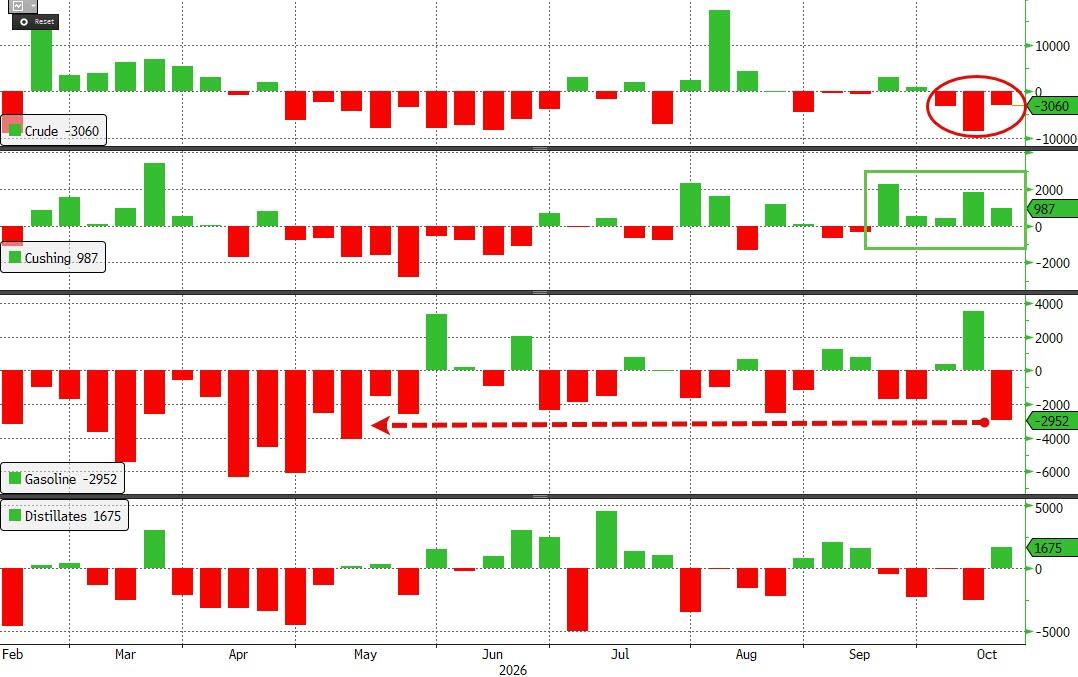
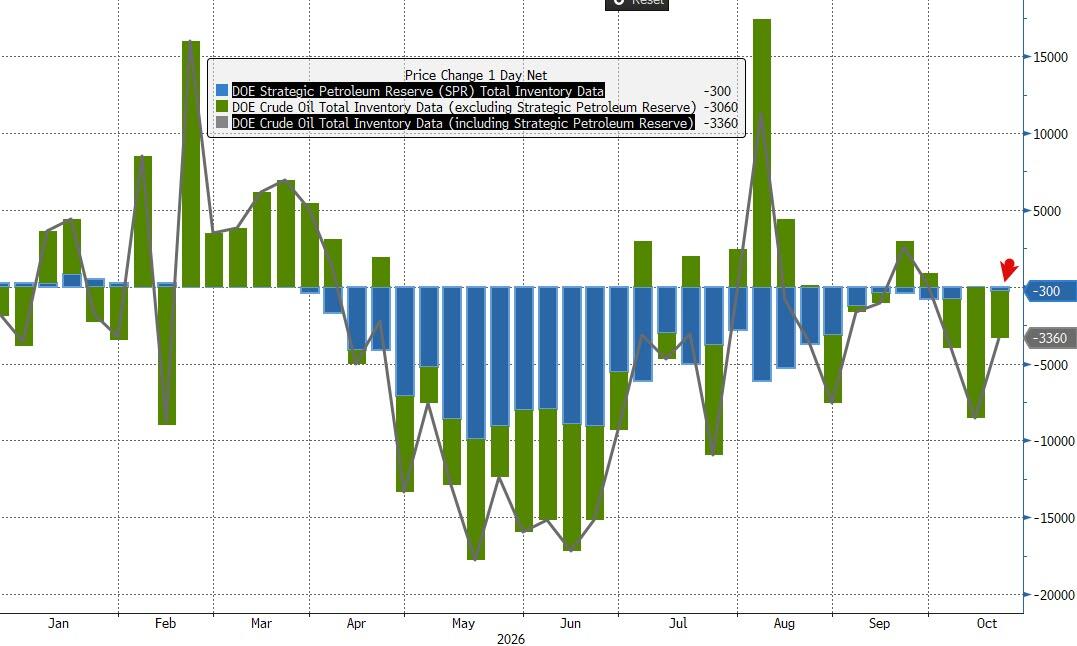
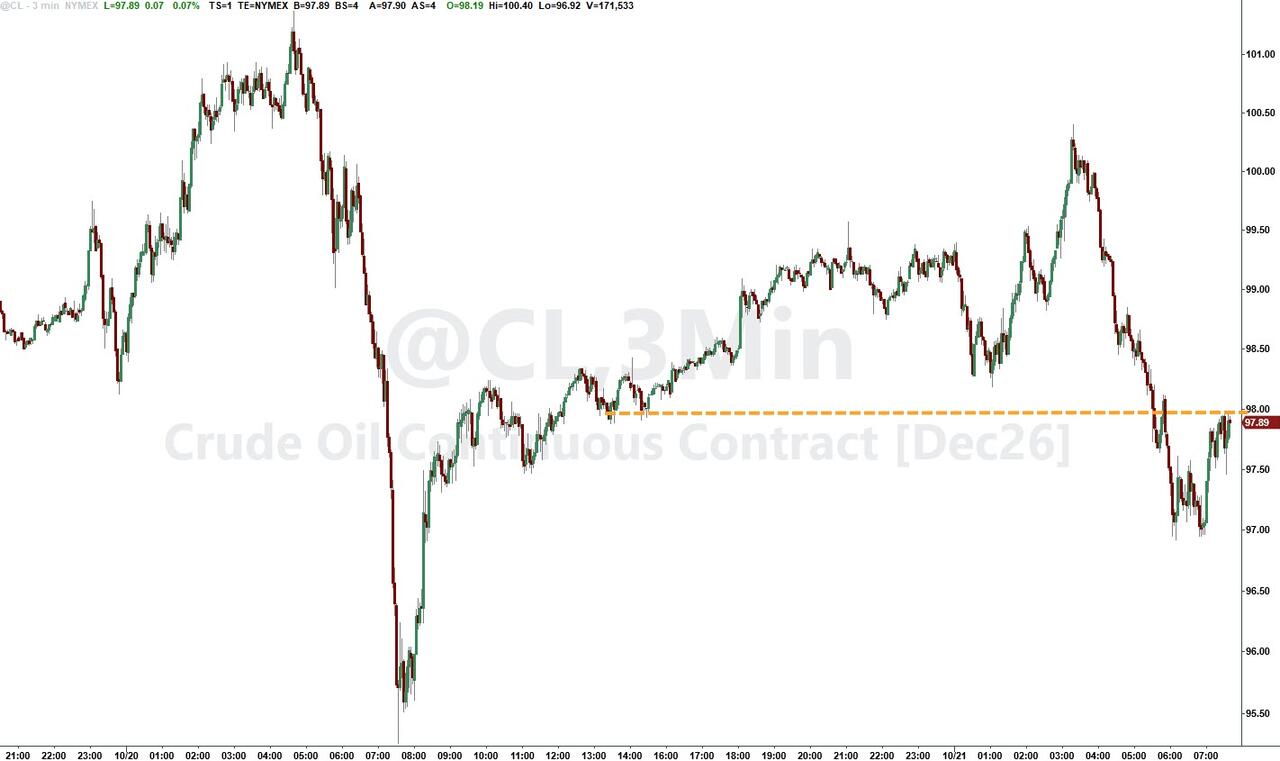
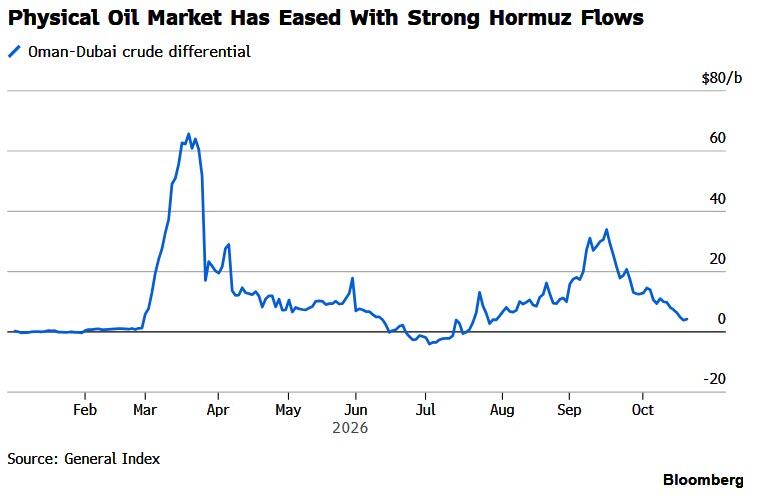
In commodities, WTI is up 1.4% at $99.20 and Brent rose 1.2% to $110.13 (holding within a $109.27-110.75 range), rebounding from Tuesday's losses as attacks on ships around the Strait of Hormuz threatened shipments and industry data showed US crude stockpiles fell 4.9 million barrels, far more than the 1.1 million expected. Goldman estimates global crude freight costs have surged about sevenfold over the past year to above $20/bbl, while the premium of Oman crude over Dubai fell to near $4, the lowest since late July, a sign of resilient Gulf exports. Morgan Stanley raised its 2027 Brent forecasts and says product markets will stay tight through mid-2027. Dutch TTF gas rose 4% toward €90/MWh on LNG disruptions; Macron said France secured 2 terawatt-hours a month of Qatari gas over the winter, and the UK approved the Jackdaw North Sea gas field. Spot gold is flat in a $4,106-4,131 range, silver is down 1% and LME copper is lower.
US economic data slate is empty after MBA mortgage applications fell 5.3% (7am), with the EIA weekly crude inventory report at 10:30am; the Fed is in blackout ahead of next week's decision. The Treasury sells $75 billion of 17-week bills (11:30am) and $13 billion of 20-year bonds (1pm). Abbott, AT&T, Philip Morris, Thermo Fisher, NextEra, CME and Moody's report before the open, with Meta, Tesla, IBM, Texas Instruments, Lam Research and SAP after the close; Nvidia's GTC Berlin continues.
Market Snapshot
Top Overnight News
- Anthropic could spend $750 billion on additional computing power in the coming years, the WSJ reported, citing a draft IPO prospectus, while billionaire Ken Griffin said investors are "almost certainly" in the midst of an AI bubble. BBG
- Nvidia is in talks to invest hundreds of millions of dollars in Australian AI cloud provider Firmus. The Information
- Nasdaq futures rose after SpaceX and Super Micro topped forecasts, reigniting the AI trade. Adding to the buzz, Elon Musk said SpaceX and Tesla are studying a potential merger that would be the biggest ever. BBG
- Over the past two weeks, HFs aggressively net sold global Info Tech stocks at the fastest pace in the past decade (-3.3 SDs), driven by long-and-short sales. Net allocation to Global AI stocks now sits in the 38th percentile while aggregate long/short ratio is in the 6th percentile vs. the past year. GSPB
- Persian Gulf oil exports have surpassed prewar levels, as an improvised shipping system under U.S. protection is helping tankers move oil through one of Iran’s fiercest waves of attacks in the Strait of Hormuz. WSJ
- Benjamin Netanyahu is pushing to resume large-scale strikes against Iran and had instructed his military to plan for a major new offensive earlier this month, moves that risk plunging the region back into full-scale war. FT
- More Oil Is Now Coming Out of the Persian Gulf Than Before the Iran War: WSJ
- "Given that the White House has shown no willingness to reach an understanding on the way forward, while also threatening more violence, there is little reason to expect progress now," Iranian FM Araghchi said in an FT op-ed. BBG
- UKMTO received a late report of a tanker struck by an unknown projectile 30 nautical miles southeast of Al Faw, Iraq, on Tuesday; crew reported safe. BBG
- French yields rose above 5% for the first time since 2002 as persistent fiscal concerns continued to weigh on bonds BBG
- U.K. inflation rose further above the Bank of England’s target in September as policymakers prepare for a meeting that investors expect will yield a first rate increase since the start of the war between the U.S. and Iran. WSJ
- Britain’s national debt topped £3 trillion for the first time as the government borrowed more than forecast in the first half of the fiscal year. BBG
- Australia’s inflation outlook looks “materially worse” than previously expected, RBA Deputy Governor Andrew Hauser said, bolstering expectations for a fifth hike this year in November. BBG
- Japan’s exports rose 16.7% in September, missing forecasts despite an increase in chip shipments. South Korea’s exports jumped 65.9% in early October, powered by a more than 220% semiconductor surge. BBG
- Leaders of Ukraine, Finland and Norway hailed progress in talks in Oslo on Tuesday about how to end Russia’s war in Ukraine, but they did not announce any breakthroughs. “I think we made genuine progress today,” said Finnish President Alexander Stubb, who co-hosted the talks with Norwegian Prime Minister Jonas Gahr Støre at the request of Ukraine. FT
- Elon Musk ordered a slowdown of Ukraine's military-grade Starlink service, and Musk and Trump discussed the decision in a subsequent call. WSJ
- The US is increasingly reliant on price-sensitive private investors to fund its debt as traditional buyers retreat. Hedge funds and other private investors now own about 70% of Treasuries, helping drive yields higher. BBG
- US President Trump posted that he is watching data centres closely: Newsquawk
- US and Mexican negotiators hit an impasse over tariffs on steel and aluminum, dashing earlier optimism. BBG
- National Democrats sued Trump and the US Justice Department over what they say is a coordinated effort to erode confidence in the midterms. BBG
- JPM's Mark Schilsky puts buyside consensus for Meta's 2027 opex plus capex at $435-475 billion, and says a majority of investors still expect an equity raise post-Q3. JPM
- Goldman estimates global crude freight rates are above $20/bbl, about 7x a year ago, with the Hormuz war-risk premium alone accounting for about $7/bbl. GIR
A more detailed look at global markets courtesy of Newsquawk
APAC stocks were mostly firmer as after-hours strength in AI names, following Super Micro Computer's upbeat guidance and SpaceX's earnings call, offset the mixed lead from Wall Street, where the Nasdaq 100 lagged on AI-debt concerns. ASX 200 was little changed amid a busy morning of company updates, including NEXTDC's FY27 guidance cut, while Goldman Sachs shifted to expecting a 25bps RBA hike in November after hawkish remarks from RBA's Hauser. Nikkei 225 gained on the AI-led strength in US after-hours trade, shrugging off softer-than-expected exports and a wider-than-expected trade deficit. KOSPI outperformed and triggered a sidecar as KOSPI 200 futures jumped 5%, rebounding after Tuesday's sharp slide. Hang Seng and Shanghai Comp were lower with the latter reversing earlier opening gains, while CAICT data showed a 22.9% Y/Y drop in China's September smartphone shipments and CATL was in focus after its Q3 miss.
Top Asian News
- Japanese Finance Minister Katayama said the government is coordinating closely with the BoJ, with no major divergence on the inflation outlook or monetary policy. Noted that tax cuts boost demand and push up prices. Government will ensure proactive and responsible fiscal policy strengthens Japan's supply capacity without accelerating inflation.
- Japan and India to hold 2+2 meeting in mid-November, Kyodo reported citing officials, with the aim to strengthen cooperation in maritime security and economic subjects.
- China's September smartphone shipments fell 22.9% Y/Y, according to CAICT.
European bourses (STOXX 600 +0.5%) have a slight positive tilt to start Wednesday’s session, with upside seen in France’s CAC 40 (+0.4%), as EssilorLuxottica (+14.2%) upside outweighs the downside in Carrefour (-14%). Outside of a busy earnings docket, which is set to be even busier tomorrow, there has been little in terms of a broader driver. Sectors are mixed. Real Estate tops the sector pile, with Energy and Tech rounding out the sector gainers. At the bottom sits Autos, as Optimised Personal Care and Retail follow. Other key updates include: Adidas +1.6%, Q3 metrics beat and lifts its FY26 operating profit guidance; Iberdrola +0.6%, raises its FY26 adj. net growth profit guidance to “at least” 10%; Qiagen +1.4%, as EQT reportedly offers USD 50/shr to acquire the company. US equity futures are mixed, with outperformance in the NQ following upbeat after-hour earnings from SpaceX and Super Micro. The former reported a sharp increase in AI revenue, which drove a swing to profit, while the latter raised its Q1 outlook on stronger AI platform demand. Focus now turns to Meta and Tesla earnings tonight.
Top European News
- The UK government has approved the Jackdaw North Sea gas field, with the Energy Minister saying the project will start to supply gas to British homes and businesses from as early as the end of this month. In later comments, the UK Energy Secretary said that the government will decide shortly on the Rosebank oilfield project.
- Germany's Federal Finance Agency Director said that unconditional European support measures to calm sovereign bond markets could trigger a more serious debt crisis later, Econostream reported.
- French Finance Minister said France have the instruments to pass a budget.
FX
- G10s are mixed against the USD. The Antipodeans gain, with mild outperformance in the Aussie after hawkish commentary from RBA’s Hauser. The EUR holds towards the foot of the pile.
- DXY is essentially flat and trades within a 101.73-101.83 range, holding towards the lower end of the prior day’s range. The data docket has been light this week, and will remain so; therefore, the USD may need surprises in tech-earnings/geopolitics to make a move in either direction. On that note, the USD came under mild pressure on Tuesday following reports that the Iranians were presented a “compromise proposal”; newsflow since then has been lacking, but the Iranian FM suggested that indirect negotiations were ongoing. Nonetheless, the situation remains tense with reports suggesting that tankers are still under fire.
- AUD is the best performer this morning, following hawkish commentary from RBA’s Hauser. He mentioned that the inflation outlook is “materially worse”, blaming AI spending and rising energy costs. Hauser added that Q3 CPI will show inflation accelerating. Money markets have upped their bets of a hike at the November meeting, and now assign a c. 50% chance of such a move. Further adding to the hawkish tone was Goldman Sachs now expecting a 25bps rate hike in November, vs its previous call of no move. AUD/USD topped the 0.70 mark, to trade back towards levels not seen since late-September.
- EUR is the slight underperformer this morning, with sentiment around Europe remaining downbeat. The OAT-Bund spread remains exceptionally wide at c. 156bps, and building on recent advances. Of course, the civil unrest in France and the ongoing French fiscal situation remain front of mind.
- Across the channel, the GBP is a touch firmer this morning. Some mild strength was seen following the region’s inflation report, which saw the headline rise a touch more than expected, whilst Core M/M fell from the prior. Overall, a slightly firmer-than-expected inflation report, which plays in favour of those pushing for a hike at the BoE's November confab. Today's report, alongside the recent solid jobs report, will provide MPC members with enough evidence to suggest that the UK economy is holding up fairly well to deliver a hike in November. For reference, Danske, MUFG and Pantheon all expect a hike next month, and Pantheon sees another in February.
Central Banks
- RBA's Hauser said monetary policy is working, but the inflation outlook has deteriorated and appears worse than forecast. Inflation has remained elevated for an extended period, while inflation expectations must remain anchored to the target. Companies continue to cite cost pressures as their primary concern. There has been some slowing in labour market and housing data. RBA is still finalising its forecasts, and it remains uncertain what decision the Board will make. Looks like quarterly trimmed mean will be higher than expected.
- BoJ is expected to assess whether underlying inflation has reached its 2% target at its October 29th-30th policy meeting, while keeping interest rates unchanged at around 1.25%, Kyodo reported.
- BoJ's Himino said upside inflation risks remain high, warning that delays in adjusting monetary policy could allow inflation risks to materialise and harm the economy. Financial conditions remain accommodative, with real interest rates low and bank lending expanding rapidly. Medium- and long-term inflation expectations continue to rise. Underlying inflation is nearing the BoJ's 2% target and is expected to converge towards levels consistent with the target. Strong AI demand is boosting domestic capex and exports.
- ECB's Kazaks said that some more policy tightening might be necessary if inflation continues to reside above target and that the recent rise in yields has already tightened financing conditions, Econostream reported.
- ECB's Lane said greater global euro use may help the ECB control prices.
- Indonesian Central Bank left the BI rate unchanged at 5.75%, raised the Deposit Facility rate to 5.00% (prev. 4.75%).
- Goldman Sachs now expects the RBA to hike rates by 25bps to 4.85% in November, having previously expected rates to remain unchanged.
Fixed Income
- A relatively contained morning for fixed income. USTs in a narrow sub-10 tick range, awaiting geopolitical updates with the docket otherwise fairly light and headlined by equity newsflow.
- Bunds also contained, in a narrow 121.43-74 band; however, this currently comes with pressure of around 20 ticks, weighed by a gradual move higher in energy overnight and one that has continued marginally this morning for WTI and Brent. Particularly though, marked upside in TTF is doing the heavy lifting.
- Gilts digested the morning’s inflation data as the hawkish driver it is, opening lower by just under 30 ticks and then slipping further to a 83.91 low, but still above 83.85 and 83.79 from Tuesday and Monday respectively. In brief, the series shows continued price pressures, with the headline well above the BoE’s forecast. However, and pertinently, the series still does not indicate overt or significant second round effects.
- Overall, it keeps the BoE on track for a hike in 2026 and makes the November meeting ever more likely, barring a significant shock between now and then. But, the hike is likely to be a risk-management/prudence move, rather than a function of policymakers being concerned that second round effects are getting out of hand. A point that means calls for just one hike early in 2027, and then an extended hold before easing returns to the conversation, are likely fair at this stage.
- Australia sold AUD 1.0bln of 4.25% October 2036 bonds; b/c 3.63x (prev. 4.51x), average yield of 5.2545% (prev. 5.3802%).
Commodities
- WTI and Brent are trading with gains of 1.7% and 1.4%, respectively. Strength which appears to be a bit of a bounce back following the hefty losses seen in the prior session. WTI currently holds towards the upper end of a USD 97.91-99.57/bbl range, whilst Brent holds within a USD 109.27-110.75/bbl band.
- The current geopolitical environment contains a number of key focus points. Starting with US-Iran, the Pakistani Army Chief met with Iranian officials in Tehran. Reports suggested that he provided a Qatar/Pakistan led “compromise proposal”, but this has yet to be confirmed. Instead, N12 reported that Army Chief Munir brought the US’ “final warning” to Iran, and if that does not bring peace, then the report suggests that the US could target Iranian nuclear facilities. The overarching theme is that the diplomatic path appears to be in effect, as confirmed by the Iranian Foreign Minister, but risks of escalation remain.
- The other main points of interest are: 1) potential Russia-Ukraine peace; US Envoy Witkoff has met with Russian President Putin today, where he is expected to present a peace plan later; so far, Putin and Witkoff have struck a conciliatory tone. 2) Ongoing strikes between Saudi Arabia and the Houthis.
- Dutch TTF (+4%) is stronger this morning, but holds a little shy of the EUR 90/MWh mark, remaining within a EUR 86.02-88.97/MWh range. Strength facilitated by ongoing LNG disruptions and as we enter the winter period, amidst low EU storage inventories. On the gas subject, the UK government has approved the Jackdaw gas field, and will begin production this month. The effect of this decision will likely be negligible on global markets, given it is expected to supply only around 6% of the UK’s domestic gas output.
- Spot gold is essentially flat and trades towards the bottom end of a USD 4,106-4,131/oz range. Action today appears to be following the lacklustre action seen in the Dollar, and will ultimately take cues from any geopolitical updates. Elsewhere, base metals are broadly lower this morning. 3M LME Copper trades within a USD 14,284.63-14,463.63/t range.
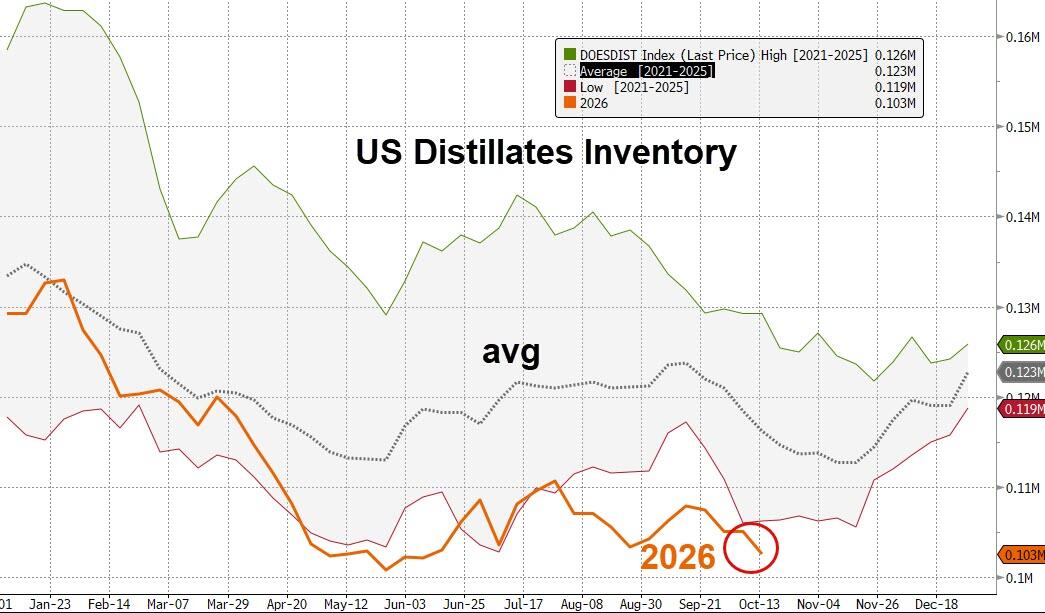
- US Weekly Private Inventory Data (bbls): Crude -4.9mln (exp. -1.1mln), Gasoline -2.0mln (exp. -0.7mln), Distillate -2.6mln (exp. -1.6mln), Cushing +0.9mln.
- Russian Deputy PM Novak said they could see a full restoration of diesel volumes by end-2026 and they could have a commercial deal with China regarding Power of Baikal by end-2026, IFX reported.
- South Korea's President Lee said the government is preparing to reduce mandatory domestic fuel supply obligations and allow refiners to increase exports.
- Russian President Putin said that they could supply fertilisers in large quantities to the US market, TASS reported.
- Iranian FM Araghchi said Tehran has opened dedicated routes for ships carrying Iraqi oil to pass through the Strait of Hormuz in order to reduce Iraq’s losses.
- French President Macron said they secured 2 terawatt-hours per month of gas from Qatar during the winter period.
Geopolitics: Middle East
- Pakistan Army Chief Munir, in his meeting with Iranian officials, brought with him the "final warning" from the United States, which called on Iran to submit to the American demand for concessions on the nuclear issue before taking any other steps.
- Iranian Foreign Minister Araghchi said indirect US talks continue via Pakistan and Qatar despite Washington's public opposition. Araghchi added that the US accepted Iran's seven-day proposal to reopen the Strait of Hormuz but added conditions. Iran insisted Washington first honour commitments under the Islamabad MoU before further negotiations, stressing that diplomacy remains possible if the US fulfils its obligations.
- Iranian Foreign Minister Araghchi said Tehran has yet to receive a response from Saudi Arabia or Yemen's Houthis regarding its mediation initiative, while warning against trusting the US in negotiations. All possibilities are on the table, including a new war launched by the United States and Israel against Iran. Sanctions and the blockade have imposed major burdens on Iran. Reopening the Strait of Hormuz depends on reaching an understanding with the US.
- Iran's IRGC Political Deputy said Iran will target internet cables in the Strait of Hormuz if its infrastructure is attacked, Mehr reported.
- Iran has reportedly prepared for an all-out, multi-layered and comprehensive war against its adversaries, Press TV reported, citing a source.
- Israeli PM Netanyahu is pushing to resume major strikes on Iran, but a planned October 10th offensive was halted amid Trump's opposition ahead of the US midterms, FT reported.
- UKMTO received report of an incident 11NM west of Bukha, Oman.
- Houthi military spokesperson said they did not launch any drones toward Medina, Saudi Arabia, on Wednesday.
- Saudi-led coalition said it intercepted and destroyed four drones launched towards Saudi Arabia, according to a coalition spokesperson.
Geopolitics: Ukraine
- US Special Envoy Witkoff said talks in Oslo were productive and that there is forward progress on the issue of Ukraine, IFX reported. Witkoff added that a basic foundation exists for a ceasefire in Ukraine and hopes that Russian President Putin will consider resuming US-Ukraine-Russia talks. Furthermore, he emphasised that Russia and the United States have prospects for developing economic relations after the end of the conflict in Ukraine.
- Russia's President Putin told US Special Envoy Witkoff that Russia is interested in restoring economic ties with the US, IFX reported.
- Russian President Putin invited US Envoy Witkoff for discussions on the prospect of a meeting between Putin and US President Trump in China, IFX reported.
- Elon Musk reportedly ordered a slowdown of Ukraine's military-grade Starlink service, while Musk and Trump discussed the decision in a subsequent call, WSJ reported.
- Russia’s Foreign Ministry said it views Japan’s supply of drones to Ukraine as a hostile act; Russia will respond.
Crypto
- Bitcoin fell to a low of USD 82.54k before gradually climbing to a peak of USD 83.6k throughout the European morning.
US Event Calendar
- 7:00am: Oct 16 MBA Mortgage Applications, actual -5.3%, prior -2.7%
- 10:30am: EIA weekly crude oil inventories
- 11:30am: U.S. To Sell USD75 Bln 17-Week Bills
- 1:00pm: U.S. To Sell USD13 Bln 20-Year Bond Reopening
Central Bank Speakers
- Fed in external communications blackout ahead of the Oct. 28 FOMC decision
- 9:00am: BOE’s Bailey Speaks in Fireside Chat
- 12:00pm: ECB’s Lagarde Speaks in Wiesbaden
DB's Jim Reid concludes the overnight wrap
It’s been another 24 hours of uncertainty and volatility, and that’s not me talking about our household during a wet half term. In markets, what started as a widespread morning sell-off dominated by AI concerns, higher oil prices and ongoing worries over French sovereign debt turned into a more positive session as the US came in, ultimately driving the S&P 500 to close +0.28% higher as the index saw the most daily advancers since April.
Today we see the first of the hyperscalers report, with Meta out after the bell. This comes as SpaceX shares surged by about +8% in after-hours trading yesterday (vs NASDAQ Futures -0.16%), as the company exceeded quarterly revenue and net income expectations amid stronger AI revenue growth. Elon Musk also disclosed that SpaceX and Tesla have formed committees to consider a potential merger. Those results have boosted the tech mood overnight, with Nasdaq futures up +0.75% overnight, with those on the S&P +0.30% higher.
Asian bourses are also reversing yesterday’s losses this morning, which were partly triggered by a sharp fall in Korean data centre company Elice Inc (-32%) after its trading debut on Monday morning. However, they are back up +29.9% this morning highlighting the large vol in tech at the moment. Staying in Korea, the big Asian heavyweights Samsung (+4.62%) and SK Hynix (+3.91%) are also recovering helping the KOSPI (+2.61%) rebound even if it's off the highs of around +4.75% earlier in the session. Elsewhere, the Nikkei (+0.77%) is also trading higher on the tech rebound. In contrast, Chinese equities remain under pressure, with the CSI 300 (-0.65%), Hang Seng (-0.35%), and Shanghai Composite (-0.31%) all trading lower. The S&P/ASX 200 is flat.
Delving more into yesterday’s main stories now. Brent dropped from around $112 to $106 in the early London afternoon after several unconfirmed reports indicated that Qatar and Pakistan had put forward a proposal that could potentially revive talks aimed at ending the conflict in the Middle East. That in turn sparked both an equity and bond rally, as investors looked past ongoing AI worries to focus on hopes for a resolution. Later, Brent crude started to climb again, as the story was discredited by a diplomat involved in negotiations. According to Bloomberg, the diplomat said that while talks to reach a deal are ongoing, reports that the negotiating sides were close to a solution were false. After the European close we then heard Tasnim report Iran's President Pezeshkian as saying that he believes “the US will attack again if we negotiate”. So this left Brent back at $108.79/bbl by the close, -0.68% on the day but well off the day’s lows. And Brent is trading back up +1.4% at around $110.36 this morning. European natural gas futures also round tripped yesterday but ultimately declined -3.38% to €85.06/MWh, after climbing to their highest levels since 2022 intraday.
The relief from energy that played out late in the European session meant equities rallied as investors overcame some of their earlier AI jitters. Tech-heavy indices such as the Philadelphia Semiconductor Index (-0.29%) and Nasdaq (-0.02%) still underperformed, but this was a big improvement after chip stocks had been nearly -2.5% down early on. Exemplifying that intra-day swing was CoreWeave, which closed +1.65% higher on the day after trading as much as -6.36% lower near the open. Outside tech, stocks performed much better, with 403 daily advancers in the S&P 500, the most since April, while the equal-weighted version of the index rose by +1.15%.
In Europe, although stocks recovered from their morning lows, they still finished down, with the Stoxx 600 (-0.14%), CAC 40 (-0.38%) and DAX (-0.06%) all lower, whilst the STOXX Banks Index (-0.35%) edged lower to a new 4-month low. However, the euro recovered to finish +0.21% against the dollar.
Turning to bond markets, the initial sell-off also reversed later in the day, so by the close we saw yield declines led by 10yr bunds (-5.4bps), with BTPs (-4.8bps), gilts (-2.2bps) and OATs (-0.8bps) also lower. In addition to the pullback in energy late in the European session, this rally came as Germany’s ZEW investor expectations survey saw a larger-than-expected decline in October (28.1 vs 30.0 exp., 34.7 prev.). However, French bonds continued to underperform on a relative basis, with the 10yr OAT-Bund spread reaching 153bps, its widest level since 2011. So the French concerns are still there, even if the domestic unrest seems to have calmed for now.
In the US, 10yr Treasury yields also declined by -3.0bps to 5.11%, though 2yr yields (+0.4bps) ended the day little changed as oil prices reversed their decline. Earlier in the session, a decline in yields had also been supported by soft housing data for September. This included a decline in housing starts (-5.2% vs +1.9% exp.) and a sharp slowing in pending home sales, with their annual growth falling to its lowest since 2023 at -12.6% yoy. So signs of the recent rise in yields weighing on the US housing market.
In yesterday’s other data, in the UK the unemployment rate for June-Aug registered a big drop (4.7% vs. 4.9% est). So despite the number of job vacancies also falling, it was an overall hawkish batch of data, with payrolls also up by +13k. The UK inflation print is out just after this hits your inbox, but the labour market data will lean hawkish for many on the MPC and left 2yr gilts (+3.3bps) as a major exception from yesterday’s global bond rally. Staying in the UK, our economists are conducting a survey of expectations ahead of next week’s budget from the new Burnham Government. If you have a couple minutes to spare, they would appreciate your responses here.
Early morning data showed that Japan's exports increased by +16.7% in September compared to the same month last year, driven by robust demand for semiconductors and AI-related products that continued to support growth. This marked the 13th consecutive month of gains following a 9.3% rise in August, although it was below expectation of a +21.3% increase. Meanwhile, imports rose by +18.9% y/y, falling short of the forecast of a +20.4% increase. A decrease in imports contributed to reducing Japan's trade deficit to -536.6 billion yen in September from -1.11 trillion yen in the previous month.
To the day ahead, there will be a lot of data from the UK this morning, including September CPI, RPI and public finances. Central bank speakers include the ECB’s Lagarde and Cipollene and the BoE’s Bailey. We’ll also get earnings from Meta, Tesla and Lam Research among the notable names. Finally, the US is set to hold a 20yr bond auction at $13bn.
Tyler Durden
Wed, 10/21/2026 - 08:18






Recent comments