Individual Economists

Supreme Court Sets November Arguments In Religious Liberty, Prison Medical Care, And Agency Power Cases

Zero Hedge -

Supreme Court Sets November Arguments In Religious Liberty, Prison Medical Care, And Agency Power Cases

Authored by Matthew Vadum via The Epoch Times,

The Supreme Court on Aug. 11 scheduled oral arguments for November in three high-stakes cases involving a religious liberty challenge to Colorado's preschool funding rules, a lawsuit over inadequate prison medical care, and a separation of powers dispute involving Labor Department penalties.

The Supreme Court in Washington on July 13, 2026. Madalina Kilroy/The Epoch Times

The court said in a new scheduling notice that on Nov. 3 it will hear St. Mary Catholic Parish v. Roy, which is about whether Colorado may decline to fund Catholic preschools.

The case could help to redefine how states reconcile anti-discrimination laws with religious freedom.

Colorado's universal preschool program pays for 15 hours of free preschool per week at public or private providers. To participate, preschools must offer "equal opportunity" to sign up regardless of religious affiliation, sexual orientation, gender identity, income level, or disability.

The state permits exemptions for other groups such as low-income or disabled children but has blocked Archdiocese of Denver preschools because they require families to support Catholic teachings on sex and gender.

The Supreme Court will look at the case in the light of two of its precedents, Employment Division v. Smith (1990), and Carson v. Makin (2022).

The petitioners had asked the Supreme Court to overrule Smith, but in agreeing to hear the case, it specifically declined to take up that question. Instead, the justices indicated that they will consider if the application of Smith should be narrowed.

Smith held that neutral, generally applicable laws do not violate the First Amendment's Free Exercise Clause even if they burden religious practice, and that religious objectors are not entitled to exemptions from such laws. Carson held that a state violates the Free Exercise Clause when it excludes religious schools from an otherwise generally available public benefit - such as tuition aid - solely because of their religious character. In that case, the Supreme Court struck down a Maine law that excluded families from a student aid program if they chose to send their children to religious schools.

In the case at hand, lower courts upheld the exclusion, citing Smith, holding that the rules were neutral and generally applicable. The justices limited review to two questions: how to apply Smith's general applicability test when secular exemptions exist, and whether Carson requires stricter scrutiny only for explicit religious exclusions.

The high court said that it will hear U.S. Department of Labor v. Sun Valley Orchards LLC on Nov. 10. The case concerns whether the federal agency has authority to conduct its own administrative hearings to collect money from employers accused of violating the terms of the seasonal farm worker visa program.

The justices agreed to review a U.S. Court of Appeals for the Third Circuit ruling that sided with a New Jersey produce farm. The farm was fined more than $500,000 by an in-house Labor Department tribunal for alleged violations of the rules for the H-2A visa program for temporary foreign farm labor. The appeals court held that the agency's process was unconstitutional, relying primarily on constitutional separation of powers principles that limit the ability of agencies to adjudicate private rights and impose monetary penalties without going to federal court.

In its ruling, the Third Circuit also cited Securities and Exchange Commission v. Jarkesy (2024), which held that the SEC's in-house enforcement of securities fraud laws infringed the defendants' Seventh Amendment right to a jury trial.

The case will give the Supreme Court another opportunity to address the reach of Jarkesy and decide how far federal agencies may go in handling enforcement cases that seek monetary penalties.

The justices indicated they will hear Nielsen v. Watanabe on Nov. 9, a case testing whether a federal inmate can sue prison staff for inadequate medical care under the Bivens doctrine.

The Supreme Court held in Bivens v. Six Unknown Federal Narcotics Agents (1971) that individuals may sue government officials for violations of their constitutional rights.

In Carlson v. Green (1980), the high court extended Bivens to an Eighth Amendment claim of deliberate indifference to medical needs where prison officials failed to deal with an inmate's acute asthma attack and exacerbated it, leading to his death on-site within hours. The Eighth Amendment bans cruel and unusual punishment.

Since the 1980 ruling, the court has said it is up to Congress, not the courts, to create damages remedies.

Kekai Watanabe was injured in a gang riot in 2021 at a federal detention center in Honolulu, Hawaii. He alleges a nurse declined to send him to a hospital and instead provided him only with over-the-counter medication. He later received a diagnosis of a fractured tailbone and bone chips.

Watanabe sued for $3 million under Bivens, alleging the prison authorities were deliberately indifferent to his serious medical needs and that this violated the Eighth Amendment.

A federal district court threw out the lawsuit, ruling it presented a "new context" different from Carlson. The court cited Watanabe's access to the Bureau of Prisons' administrative grievance process and the non-life-threatening nature of his injury. A divided U.S. Court of Appeals for the Ninth Circuit reversed, finding the claim closely tracked Carlson.

The Supreme Court is currently in recess for the summer. It will resume hearing oral arguments on the first Monday in October.

Reuters contributed to this report.

Tyler Durden Thu, 08/13/2026 - 13:20

Running The Hormuz Gauntlet: Recruitment Ad Offers Tanker Crews Double Pay To Brave Drone Strikes

Zero Hedge -

Running The Hormuz Gauntlet: Recruitment Ad Offers Tanker Crews Double Pay To Brave Drone Strikes

Flexport founder and CEO Ryan Petersen posted on X what appears to be a recruitment ad from Singapore-based maritime crewing agency Singhai Marine Services, offering a rare look at the pay and "transit" bonuses available to tanker crews transiting the highly contested Strait of Hormuz.

Singhai Marine is recruiting a full crew to operate a VLCC, or very large crude carrier, through the Strait of Hormuz on a Dubai-Oman route. The one-month contract offers salaries ranging from $1,600 for ordinary seamen to $16,000 for the captain.

The offer also includes:

  • A separate high-risk allowance
  • A "Hormuz transit bonus" equal to one additional month's full salary
  • Tanker experience preferred, with applicants required to accept high-risk deployment

If authentic, the recruitment ad suggests ship operators are having difficulty staffing tankers for Hormuz voyages amid the constant threat of Iranian drone and missile attacks, forcing them to offer substantial hazard bonus.

Tyler Durden Thu, 08/13/2026 - 13:00

Diesel Crack Spread Explodes To Record As Wall Street Warns Of Refined-Products "Perfect Storm"

Zero Hedge -

Diesel Crack Spread Explodes To Record As Wall Street Warns Of Refined-Products "Perfect Storm"

Wall Street Warns About "Perfect Storm" Diesel Crunch: 

  • Goldman's Daan Struyven Shows Global Diesel Exports Crashing
  • Citi's Anthony Yuen Warns: Global Diesel Inventories "Below 5YR Minimum"
  • BofA's Francisco Blanch Warns: "Diesel's Perfect Summer Storm" Unfolding 
  • Jefferies' Sam Burwell Warns: Hormuz Shock "Manifesting Itself In Cracks, Not Crude

Brent crude remains hostage to daily geopolitical developments in the Gulf region more than five months into the conflict, with muted traffic through the Strait of Hormuz (read the latest US-Iran wrap) constraining tanker flows and driving refined-product markets to new, dire extremes as they become the focal point of the energy crisis.

Brent briefly fell below $80 a barrel last week as prospects improved for an Iran-Oman deal to reopen the maritime chokepoint, before rebounding toward $90 as negotiations stalled this week.

Hormuz traffic has stabilized at about 10 crossings a day, down from 30 to 40 before the latest escalation. Liquids flows are averaging roughly 4 million barrels a day, well below public estimates of 9 million, according to HSBC analysts.

We earlier cited Jefferies analyst Sam Burwell, who warned clients:

"What this all shows is that global oil-market tightness is manifesting itself in cracks, not crude, at least for now. Wide cracks suggest refining runs should remain strong, however, which is positive for crude. 

By lunchtime Thursday, the front-month US diesel crack spread (HOCL1 on the Terminal) had exceeded the $97 level reached in mid-March, when the US-Iran conflict was just three weeks old, and was closing in on $100. That signals extreme tightness in diesel.

Francisco Blanch, head of commodities at Bank of America, warned clients in a note earlier titled "Diesel's Perfect Summer Storm" that the industrial fuel is "materially disrupted in 3 of 4 major regions" around the world.

As we recently warned (see report: The crude reality of oil markets), supply disruptions are amplifying the squeeze on petroleum markets.

Three of the world's four major refining hubs remain impaired for one reason or another.

First, the closure of the Strait of Hormuz and adjacent military activity has reduced Middle East fuel exports, with the recent Houthi strike on Saudi Arabia's Jazan refinery being the latest example.

Second, record Russian refining disruptions following Ukrainian strikes have removed significant volumes from the global diesel pool. 

Third, fearful of potential domestic shortages, China has yet to restart petroleum product exports to the Asia region. As such, Europe has increasingly relied on record US exports to fill the gap.

Yet those flows are drawing down already tight US inventories, the only major hub open for business, creating a global competition for fuel that is pushing diesel cracks back toward record seasonal highs.

Beyond Ukraine drone-striking Russian energy assets, Moscow has decided to ban diesel exports; yet again, more evidence of dwindling global supplies: 

Separately, Anthony Yuen, managing director and head of energy strategy at Citi Research, warned clients that global observed diesel inventories are "below the five-year minimum and not substantially lower than this," adding, "The last time inventories were at a similar level was in 2022, when gasoil cracks globally were about $20/bbl lower than currently observed, and they were meaningfully lower in 2018."

Goldman's commodities expert Daan Struyven told clients earlier today:

Since the Iran war began, we have viewed the Hormuz shock as more disruptive for refined products, especially diesel, than for crude.

Near-record prompt diesel margins have already triggered a strong supply response from refiners with spare capacity, including higher utilization and a shift in yields toward diesel. As a result, outright diesel shortages still look unlikely this year.

Struyven showed that global diesel exports are crashing.

Kpler data suggest that Persian Gulf flows are down 80% year over year for diesel, versus 48% for crude.

BofA's Blanch noted, "In short, absent a meaningful supply recovery, the diesel market appears poised to stay tight, volatile, and expensive well into next year."

The clearest signal of how far the energy crisis has spread, even as Brent and WTI remain relatively calm, is now visible in refined-product markets, particularly diesel, where the blowout in crack spreads signals a severe global supply squeeze.

Hormuz Shock "Manifesting Itself In Cracks, Not Crude," Jefferies Says

Brent crude futures held near recent highs of $90 a barrel before fading to around $87 early Thursday morning, as traders awaited progress toward reopening the Strait of Hormuz. Stalled US-Iran negotiations and tightening global fuel supplies continued to support prices and concern some top energy experts, who warn of a looming supply shock

US-Iran talks remain deadlocked to end the week as the Trump administration maintains its blockade of Iranian ports and Tehran demands compensation for war-related damage. Pakistan, which has served as a mediator, said the broader peace talks had stalled.

Late Wednesday, President Trump wrote in a Truth Social post that the USA has "total control" over the Strait of Hormuz and "I think we will keep it." It's also yet more confirmation that he's opting for economic siege warfare while the US military campaign is on hold. 

Polymarket odds for "US-Iran 60-day negotiation period extended?" currently stand at around 25%, down from 80% one week ago.

//--> //--> US-Iran 60 day negotiation period extended?
Yes 25% · No 76%
View full market & trade on Polymarket

So far, Brent crude is headed for a weekly advance of nearly 5% as a near-term resolution to the US-Iran conflict remains murky and Ukrainian and Russian attacks on energy infrastructure tighten oil and, more critically, diesel markets.

Last week, our note titled "Winter Is Coming" for Europe outlined how the energy-stricken continent faces a twin diesel and natural gas crunch.

Samantha Dart, co-head of global commodities research at Goldman Sachs, told Bloomberg TV early last week that the global diesel-supply crunch is "what keeps her up at night."

Saxo Markets strategist Charu Chanana said volatility will remain elevated until Hormuz reopens and the outlook for production becomes clearer.

Making matters worse, the International Energy Agency released a report on Wednesday that forecast a 1.8 million-barrel-a-day deficit this quarter, more than double its previous estimate. The agency also warned that elevated prices are beginning to crush demand and projected the widest annual supply shortfall in five years.

Offsetting higher prices was bearish US inventory data showing that crude stockpiles surged by 17.4 million barrels last week, the largest increase since January 2023, as exports weakened and imports from Saudi Arabia and Venezuela increased.

Jefferies analyst Sam Burwell, who specializes in oil, gas and energy infrastructure equities, wrote in a note Wednesday that showed oil-market extremes in three charts:

Three Pictures Worth 1,900 Characters - Oil Market Extremes

We return from an earnings hiatus (and step outside Canada) to show some current extremes in global oil markets. Chinese crude imports bounced a bit in July but remain far below the prior run rate. While crude is well off its highs and never made a historic spike, diesel cracks are far above prior all-time highs (gasoline is strong, too). China remains the wild card, but we think this setup is constructive for crude (and, by extension, the Canadian energy complex).

Chart #1 shows monthly Chinese crude imports. The massive ~5 mmbpd downshift in imports following the Hormuz closure demonstrated the extent of China's demand elasticity. July did see a ~1 mmbpd m/m increase from June's low. With somewhat higher crude prices and fewer vessels moving through Hormuz more recently, we'll see what August and beyond bring. However, we note that a return to the ~11 mmbpd five-year average would imply ~3 mmbpd of incremental demand.

Chart #3 shows that while diesel and gasoline prices are, of course, elevated, they are much closer to, or within, prior historical highs. Notably, clean-product prices in 2008 were similar to today's on a nominal basis (and therefore higher in real terms).

What this all shows is that global oil-market tightness is manifesting itself in cracks, not crude, at least for now. Wide cracks suggest refining runs should remain strong, however, which is positive for crude. While US refinery utilization dipped w/w, it remains near 20-year seasonal highs.

China is the crude-demand wild card, but with such wide cracks, one wonders how long it will be before the Chinese begin importing more crude to export more refined products (or simply replenish their own product/petchem stocks). Imports in the coming months will be telling as to how elastic China's buying remains.

In short, unless the Strait of Hormuz reopens soon and fuel supplies recover meaningfully, the focus will remain on refined-product markets, particularly diesel. The critical industrial fuel is being squeezed globally, and as Bank of America's commodities team warned, "the diesel market appears poised to stay tight, volatile, and expensive well into next year."

Professional subscribers can read a lot more energy content at our new Marketdesk.ai portal. 

Tyler Durden Thu, 08/13/2026 - 12:50

Treasury Department Ends Ownership Reporting For US Small Businesses

Zero Hedge -

Treasury Department Ends Ownership Reporting For US Small Businesses

Authored by Owen Evans via The Epoch Times,

The Treasury Department on Tuesday finalized a rule permanently exempting U.S. companies and individuals from reporting beneficial ownership information to authorities, rolling back Biden-era Corporate Transparency Act requirements.

Treasury Secretary Scott Bessent testifies before the Senate Committee on Appropriations in Washington on June 3, 2026. Madalina Kilroy /The Epoch Times

"Today's action is a victory for common sense and American small businesses," Treasury Secretary Scott Bessent said in a statement on Aug. 11.

"President [Donald] Trump promised to cut red tape, and this final rule delivers. Treasury is eliminating a burdensome reporting requirement for millions of law-abiding business owners without compromising our national security."

The original rules, implemented under the Biden administration, had applied to tens of millions of mostly small businesses.

The Corporate Transparency Act (CTA) is the 2021 law requiring shell companies to disclose owners, and the Treasury Department's Financial Crimes Enforcement Network (FinCEN) is the enforcer.

The new policy means that U.S. companies and U.S individuals no longer have to tell FinCEN who owns them.

However, foreign reporting companies will have to disclose beneficial ownership information for foreign individuals, the department said in a statement.

The Treasury Department said that FinCEN will also delete previously reported information by Americans from the government's beneficial ownership information database.

FinCEN had previously implemented rules requiring certain companies to report beneficial ownership data as part of anti-corruption and anti-money laundering efforts backed by lawmakers and the Treasury Department under former President Joe Biden.

The latest move adopts the exemptions set out in the interim final rule issued in March 2025, part of a broader push by the Trump administration. At the time, the Treasury announced that it would not enforce the CTA against "U.S. citizens, domestic reporting companies, or their beneficial owners."

Under the beneficial ownership information scheme, small businesses had to submit personal information about their beneficial owners, including name, address, birth date, and other information from a piece of identification such as a driver's license.

"Having a centralized database of beneficial ownership information will eliminate critical vulnerabilities in our financial system and allow us to tackle the scourge of illicit finance enabled by opaque corporate structures," then-Treasury Secretary Janet Yellen said in a statement about it in 2024.

Estimates suggested that the reporting requirement would have applied to approximately 32 million businesses, including corporations and limited liability companies.

Failure to comply would have come with sizable penalties.

Businesses and their owners faced civil penalties of up to $591 for each day they did not file. They could have also endured $10,000 in criminal fines and faced up to two years in prison if regulators found that businesses submitted false information or willfully did not file, correct, or update beneficial ownership information reports.

In May, the U.S. Government Accountability Office (GAO) released a report that recommended that the Treasury identify potential actions to address the risks posed by the domestic reporting company and U.S. person exemptions.

"Illicit actors frequently use corporate structures such as shell companies to launder criminal proceeds. These structures can be exploited because they allow the identities of people who benefit from or control them to be hidden from law enforcement," it said.

It also said that Congress and law enforcement should be provided with "highly useful information that addresses these risks."

Sen. Elizabeth Warren (D-Mass.), the top Democrat on the Senate Banking, Housing, and Urban Affairs Committee, said rolling back the reporting requirements increased the risk of organized criminal activity.

"This is a gift to cartels, criminals, and U.S. adversaries that exploit shell companies to move millions through our financial system," she said in an Aug. 11 post on X.

"Secretary Bessent should testify in front of Congress to explain his decision to put our national security at risk."

Andrew Moran and Reuters contributed to this report.

Tyler Durden Thu, 08/13/2026 - 12:40

Massive Blast Rocks Italian Munitions Plant At Heart Of Europe's Ammo Supply Chain

Zero Hedge -

Massive Blast Rocks Italian Munitions Plant At Heart Of Europe's Ammo Supply Chain

A massive explosion has been reported at a major Italian manufacturer of medium- and large-caliber ammunition, formerly known as Simmel Difesa. The plant operates in Colleferro and Anagni, near Rome.

Local Italian outlet Sky TG24 reports: 

Fire and explosion at Colleferro, in the facility of the former Simmel Difesa, currently owned by KNDS Ammo Italy. The company, located in the Quarto Chilometro area, along via Latina, between Colleferro and Artena, produces medium- and large-caliber ammunition for land and naval defense, as well as solid fuels for aerospace launch vehicles. 

The incident is said to have occurred in the powder pressing department. A loud boom was distinctly heard by residents in the area, triggering the alarm.

Separately, local media outlet Italia 24H Live posted footage on X that appears to capture the moment the explosion rocked KNDS Ammo Italy. 

For context, KNDS Ammo Italy produces: 

  • Complete ammunition ranging from 25mm to 155mm
  • Naval rounds, particularly 76mm and 127mm ammunition for Leonardo/Oto Melara guns
  • Medium-caliber ammunition for land, naval and air-defense applications
  • Artillery ammunition, including 155mm shells
  • Propellant powders and charges
  • Explosives and warheads
  • Proximity and programmable fuzes
  • Combustible cartridge cases and metal components
  • Missile components
  • Ammunition inspection, refurbishment and demilitarization services


Developments remain scant, and officials have yet to disclose the cause of the explosion, the extent of the damage or which production lines, if any, were affected. Against a backdrop of elevated concern over the Russia-Ukraine conflict's expanding geographic footprint, the explosion warrants scrutiny. Officials have yet to disclose whether the blast was linked to sabotage or hostile action. 

Ending the streak? 

KNDS Ammo Italy is also Italy's largest producer of medium- and large-caliber ammunition and a preferred supplier for Leonardo/Oto Melara naval guns.

Any supply disruption would have great exposure to

  • 76mm and 127mm naval ammunition, including programmable and proximity-fuzed rounds used for air and missile defense
  • Specialized anti-air and anti-drone ammunition
  • 155mm ammunition and modular propellant charges
  • Fuzes, explosives and missile components supplied to other weapons manufacturers

Let's get back to the US, where, in late 2025, Accurate Energetic Systems, a key defense contractor and manufacturer of high explosives for the military, suffered a massive explosion.  

Stockpiles and potentially other KNDS plants could cover any outage at KNDS Ammo Italy. A prolonged disruption affecting explosives, propellant or fuze production would be more serious because alternative ammunition must be qualified for specific guns and fire-control systems. That process can take many months. 

Tyler Durden Thu, 08/13/2026 - 11:00

All Of Iran's Weapons Today Are Domestic, Missile Production Exceeds Usage: IRGC Official

Zero Hedge -

All Of Iran's Weapons Today Are Domestic, Missile Production Exceeds Usage: IRGC Official

At a moment US officials as well as media headlines have been voicing alarm over depleted US missile stockpiles - something which President Trump sought to bat down as false - Iranian leaders have been busy boasting that their domestic defense production has not only kept pace but even expanded on the local production front.

Mohammad Reza Naqdi, Senior Advisor to the IRGC Commander-in-Chief, has been featured in state media as claiming that the production rate of ballistic missiles exceeds their operational launch rate, which comes on the heels of Tehran saying that it used the ceasefire with the US - which stretched from April into the summer months - to boost its weapons arsenal.

Naqdi asserted in a state television broadcast this week: "We are currently producing, and this process is unending." Naqdi warned further that "The enemy should not assume that Iran’s missile stockpiles will run out one day."

Iranian state media image

He also said: "There are many capabilities we have not deployed because we are managing the war with missile power."

Prior US (and Israeli) bombing campaigns since the start of Operation Epic Fury took direct aim at Iran's defense industrial sector. While it can be estimated that perhaps dozens or possibly even hundreds of missile sites as well as manufacturing locations were hit, damaged, and destroyed - Iranian officials say that hundreds more are still intact, scattered across the country.

Citing Naqdi's words further, Iran Wire writes:

He added that Iran does not rely solely on existing stockpiles, as defense equipment manufacturing remains continuous. Naqdi claimed that even if the war continues for years, ballistic missiles will still be manufactured in Iran and supplied to the armed forces on the final day of the conflict.

Highlighting the country’s industrial capacity, the senior advisor noted that, in addition to hundreds of industrial complexes, Iran houses approximately 950 industrial towns where defense equipment production is actively underway across various regions.

The same top IRGC official also this week was interviewed by PBS. In that interview he more broadly laid out that...

"We have to attain deterrence so that the enemy never dares to attack us, so we can live with security. One way is to prolong this war until we get to the next term of the presidency and cause attrition, so that if anyone else wants to attack Iran, they will know there is a cost."

Last week, a separate Iranian army official voiced something similar:

"We have made maximum use of the opportunity of the memorandum of understanding and every moment of the ceasefire," army spokesman Mohammad Akraminia told state television this week, referring to a now-suspended MoU signed with the US in June.

He said attempts were made to induct existing equipment into the armed forces and import new equipment, as well as repairing and recovering damaged systems or manufacturing new systems.

The brigadier general also said new-generation drones have been used in combat, and their specifications would be announced later.

Last month, Iran’s acting Defence Minister Majid Ebn-e Reza said that missile and drone production had "not stopped for a single day" and that drone production had reached three times its pre-war levels. But he did not provide any figures.

Meanwhile, the White House appears to have given up on finding a 'military solution' - and is settling in for a longer economic war, hoping the Islamic Republic will be weakened from within and ultimately collapse. But the Iranian military and government say the country is prepared to endure and outlast these external pressures while remaining ever-ready to resume retaliatory strikes if necessary.

Tyler Durden Thu, 08/13/2026 - 10:45

The Beautiful Great Game: Extra Time & Penalties

Zero Hedge -

The Beautiful Great Game: Extra Time & Penalties

By Michael Every of Rabobank

Yesterday’s in-line US CPI report was the non-event its relative insignificance vs tumultuous domestic and global backdrops suggested it should be. Meanwhile, in the ‘Beautiful Great Game’, it’s extra time and penalties, medals and champagne for some, and tears for others.

Iran remains defiant. Trump says he has “total control” of and “will keep” Hormuz. He’s hoping the UAE can shuttle vastly more refined product through Hormuz under the radar than it already is, as Axios flags, ‘Diesel desperation is mounting globally.’ Trump is also hoping Tehran will crumble in the face of 300% inflation, as the US blockade really is seeing import costs rise 4x in coming only by land. Over the longer term, a popular revolt can’t be ruled out – but until then that threat looms in many places.

In the US, despite a narrow defeat in the Wisconsin gubernatorial primary, the Democratic Socialist Alliance is rising to threaten to do to the Democratic Part what MAGA has done to the Republicans. Even the Wall Street Journal has noticed the rise of the pro-communist Hasan Piker.

The UK today sees a by-election where Reform UK leader Farage likely trounces Count Binface, a comedian wearing a trash can/rubbish bin on his head. While many in London and Manchester may think this mocks a right-wing populist feuding with much further-right figures, in a manner also seen in the US, The Times’ take is that Farage will return to Parliament in a Trumpian style that will further shake established British political norms.

A poll for the German state election in Saxony-Anhalt in four weeks shows the far-right AfD at 43%, Chancellor Merz's CDU 23%, the Left party 13%, the SPD 7%, the Greens 5%, the minimum to enter the parliament, and the far-left BSW and pro-business FDP 4% and 2%, respectively. In short, the ‘sensible centre’ of CDU, SPD, FPD, and Greens cannot govern in any possible combination, and perhaps nobody can.

The looming 2027 French presidential election holds the threat of far-right Le Pen meeting far-left Melenchon in the final round, where the former perhaps offers markets the relatively smaller shock given the latter has recently talked about outright cancelling French government debt.

Helpfully(?), the FT today asks, ‘Why must a socialist also be woke?’ arguing, “If the left could separate economics from culture, capitalism would have more to fear.” Yet elsewhere it notes the Boston Fed’s Collins saying poorer Americans are struggling to make ends meet while backing a rate hike if inflation remains hot that will hurt them too. ‘Why must capitalism not wake up?’ is a key question we ignore in assuming how we’ve played the game until now will still work ahead.  

Don’t think this is just a Western issue. India has been plagued with angry youth protests called ‘The Cockroach Party’; South Korea’s governing DPK is struggling with young voters furious about unaffordable housing and the need to gamble in the volatile stock market to make ends meet.

Unfortunately, it isn’t only Hormuz to resolve. The Wall Street Journal underlines that ‘War Is Squeezing Another Global Chokepoint: The Black Sea’, where Russia is ramping up attacks on grain shipments while Ukraine has been striking oil tankers. That war and the one in the Middle East are also conflating in the Caspian Sea, where Ukraine has struck Russian Iran-bound cargoes, which saw Iran contemplate an attack on Ukraine in response.

Moreover, Putin is reportedly now considering retaliatory seizures of European ships world-wide after his shadow fleet has been interdicted by them. That could require a firm, expensive, and risky response.

Eurovision banning countries in an “armed conflict” or a “sensitive geopolitical situation” from hosting its song contest will not suffice: Russia is already banned, so this is likely aimed at Israel, but also covers Ukraine – and could the recent border Spain-Morocco border issue count too?

Indeed, much more is needed in extra time. A belated Establishment recognition that free trade is not appropriate policy in a zero-sum, geopolitical, neo-mercantilist world disorder requires countries to ask, “What is GDP *for*?” That then creates a cascading stack of follow-on questions, including “*Who* is GDP for?

Even if we drop free trade, nobody is going to buy into a neo-mercantilism that makes people feel even worse off. Countries will therefore have to find ways to protect themselves and make people feel better off.

Yes, there is the ‘inflationary impact of tariffs.’ However, that kneejerk retort overlooks that neo-mercantilism can generate a supply-side response that lowers prices; and it sees the relative GDP share of consumption decline vs. that of investment and exports while consumer spending can still grow significantly in real terms – it did in China for many years, for example.

The Beautiful Great Game will therefore require new strategies and tactics. Old ones will need to be substituted – and some will be sent off. Space precludes a more detailed breakdown of what this is likely to entail ahead, but as underlined years ago, it involves structural changes to how the government, central banks, businesses, markets, and even society operate.

As the latest examples, the US is burning regulations like the Biden-era reporting requirement for US businesses; the US Army has just opened its testing ranges to private industry for the first time; and UK PM Burnham is talking about shaking up what the current vape-shops-and-Turkish-barbers high streets look like with differential local tax rates for various kinds of businesses. Moreover, the US Treasury has bailed out Argentina and intervened to help Japan – the latter to limited impact until the BOJ wakes up, which could trigger a tsunami for Japanese insurers and the Yen carry trade, requiring even greater US involvement; and, of course, the Fed is being restructured under Warsh and will almost inevitably work more closely with the Treasury.

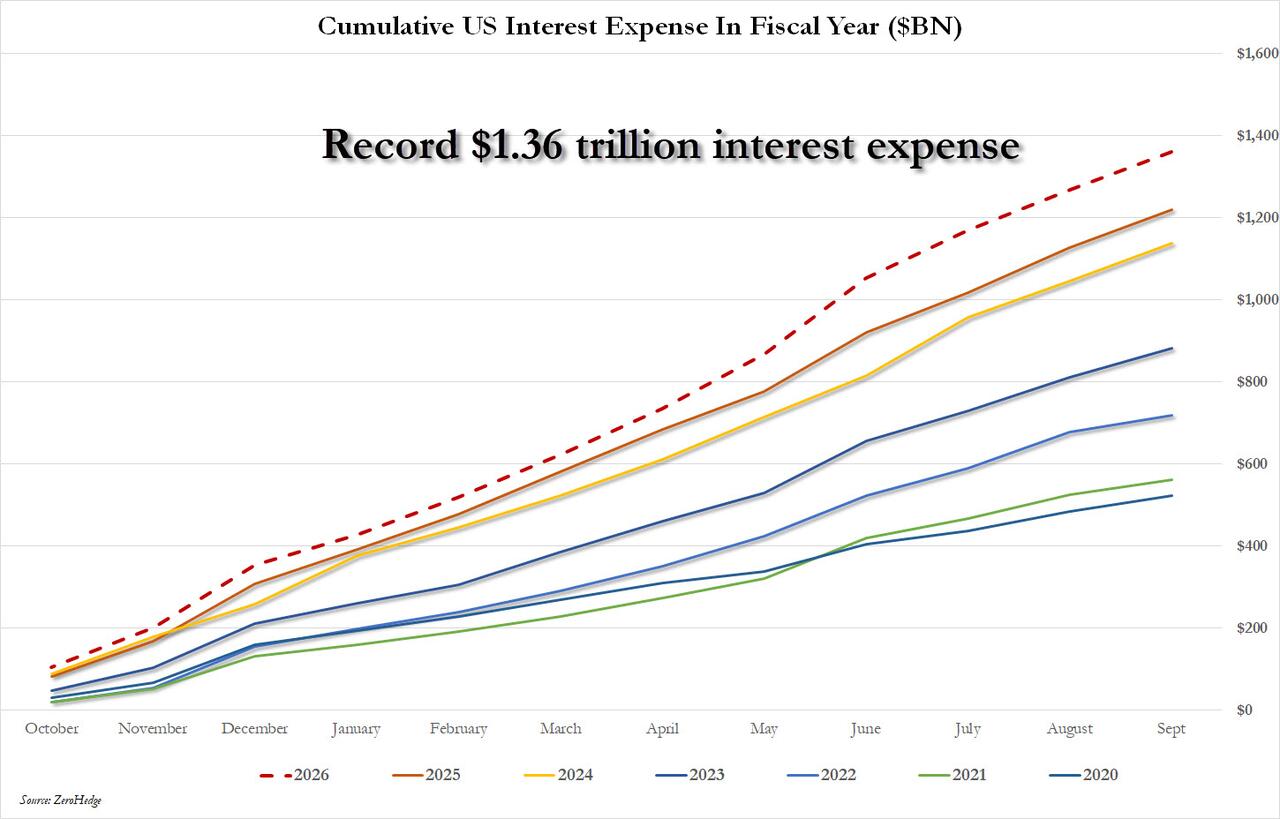
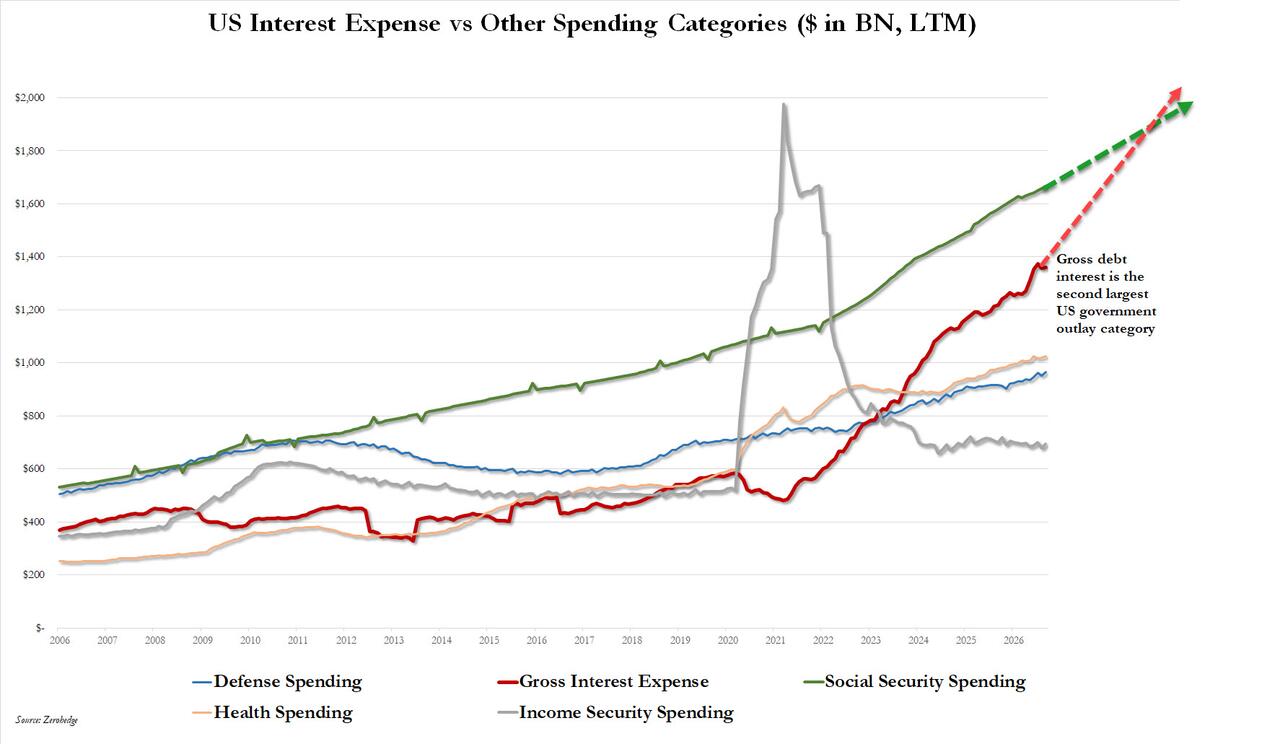
There will be penalties: the US just sold 10-year debt at 4.68%, the highest such yield since the GFC. If that is a problem for the US, imagine what it means for a global system built on its back.

There will be winners’ medals and champagne: the FT today notes, ‘Wall Street giants bet Nvidia’s AI chips will defy the laws of finance’, where “Private capital firms are wagering that the crucial hardware will hold its value for years to come.”

There will also be tears. AI volatility and recent ‘permanent underclass’ fears aside, AI is such a national-security issue that it’s convenient that the private-sector is prepared to fund so many schemes exceeding the cost of the Manhattan Project, saving the state the expense, in the aim of… massive profits(?); but it’s the government --and military-- that will likely want the fruits at the end, and cheaply.

That realpolitik power dynamic is a key neo-mercantilism rule you wouldn’t want to get offside of.

Tyler Durden Thu, 08/13/2026 - 10:25

Palantir, Flock, & Data Centers: The Battle Dividing The Right

Zero Hedge -

Palantir, Flock, & Data Centers: The Battle Dividing The Right

The political right spent much of the last decade united against Big Tech, government surveillance, and the unprecedented expansion of state power during COVID. But the rise of artificial intelligence has brought with it an urgent need for data centers, and firms like Palantir and Flock are providing government with increasingly sophisticated tools for mass-surveillance… severing the coalition that once simultaneously maintained the slogans “back the blue” and “don’t tread on me”.

7pm ET on the ZH home/X feed.

Tonight, ZeroHedge Debates takes on the emerging fault line: Is America's technological revolution essential to national renewal, or are conservatives embracing the very surveillance infrastructure they once feared?

Joining us are InfoWars host Harrison Smith and Jordan Schachtel, writer at dossier.today, two figures who once found themselves firmly aligned against the COVID-era regime.

At the center of the dispute are three issues: Palantir, data centers, and Flock surveillance cameras.

Schachtel calls Palantir “an exceptional American company” and argues that Flock is simply another tool for police to catch criminals… so if you opposed “defund the police”, then you ought to support Flock. 

Smith on the other hand… thinks they’re just gonna f***ing kill us:

“Us” being people deemed a threat to the State, which could extend to all gun owners if the Dems take power

President Trump recently made remarks inline with Schachtel that data centers have the potential to be a huge economic boon for the United States economy. Smith, however, does not see the tangible benefits:

Regardless of which camp you’re in, tune in this evening on the ZeroHedge homepage and X feed at 7pm ET tonight for the showdown.

Tyler Durden Thu, 08/13/2026 - 10:10

Dowd: US Disabilities Hit An All-Time High Of 37 Million In July: UP 23% Since Feb 2021

Zero Hedge -

Dowd: US Disabilities Hit An All-Time High Of 37 Million In July: UP 23% Since Feb 2021

Authored by Ed Dowd via Beyond The Narrative,

The latest Bureau of Labor Statistics data is out, and the number of Americans ages 16 and over reporting a disability has hit a new all-time high of roughly 37 million. As of July 2026, the Current Population Survey series sits at 37,029,000. That's not a rounding error or a seasonal blip. It's the continuation of a trend that broke higher more than five years ago and has refused to mean-revert.

I've been tracking this series since early in the COVID era. The charts have been public for years on the Phinance Technologies site and in repeated threads on X. Month after month the total population with a disability grinds higher. From the pre-2020 plateau into early 2021 the numbers were relatively stable. Then something changed.

February 2021 marks the clear inflection. The rate of increase shifted to a new, steeper trajectory, a 3-to-4 sigma departure from the prior trend. In the years since, the survey has added seven million people. Growth of that magnitude in a mature population is not normal aging, not "long COVID" in isolation, and not some gradual sociological shift. It was sudden. It has persisted. And it continues to be treated as background noise by the same public health authorities who spent years obsessed with every other metric.

Let me address the predictable objections, because they surface every time these numbers are posted. First: "It's just fraud. People are gaming disability benefits." That claim collapses under basic scrutiny of the data source. This is not Social Security Disability Insurance claims. It is not SSDI awards, which lag, require medical determinations, and are subject to administrative backlogs and incentive effects. This is the Current Population Survey, the same monthly household survey that produces the unemployment rate and labor-force participation numbers. Roughly 60,000 households are contacted each month. Six simple questions are asked about serious difficulty hearing, seeing, concentrating/remembering/making decisions, walking or climbing stairs, dressing or bathing, and doing errands alone. Any "yes" classifies the person as having a disability for statistical purposes.

I laid this out in detail years ago in threads that are still easy to find. The series is real-time, not claims-driven, and has nothing to do with benefit eligibility. The questions have been consistent since 2008. Response patterns do not suddenly invent millions of new disabled respondents because the political winds shifted. When the same survey that markets, banks, and the Federal Reserve rely upon for labor-market signals produces a multi-year, multi-sigma break in disability prevalence, the responsible reaction is investigation, not dismissal.

Second: "It's illegal aliens flooding the numbers." This one is equally weak. Undocumented immigrants have long been known to under-respond or avoid government surveys altogether out of fear of detection, deportation risk, or general distrust of authorities. They are not lining up to answer detailed questions about household members' health limitations over the phone or in person. If anything, the survey systematically undercounts this population relative to reality. The sharp, sustained rise in reported disability began in February 2021, well before the largest recent surges in border encounters, and has continued in a manner inconsistent with simple demographic inflows. The data do not support the claim that the disability spike is an artifact of illegal immigration.

Public health agencies and the media have largely ignored the signal. There has been no serious, transparent inquiry into why the disability rate changed slope so sharply in early 2021 and has remained elevated. Temporary explanations such as COVID itself, lockdowns, mental-health effects of isolation all fail the timing and magnitude tests. The virus was already circulating in 2020 without producing this sustained break. The sharpest acceleration aligned with the mass rollout and subsequent workplace mandates. Correlation is not causation; we are constantly reminded. Fair enough, but when a novel medical intervention is administered to hundreds of millions of working-age adults on an accelerated timeline, and the independent, high-frequency survey of population health then records a multi-sigma regime change precisely then, the burden of proof shifts. Authorities who spent years demanding every other correlation be investigated suddenly lose interest.

The economic implications are not abstract. More than 37 million people reporting disability means a permanently larger share of the population facing barriers to full participation. Labor-force participation among the disabled remains far lower than among those without disability. Employers face higher absence rates and higher costs. Insurance pools absorb elevated claims. The fiscal pressure on entitlement programs grows even if this particular survey is not the claims pipeline. All of it is occurring against a backdrop of demographic aging that was already expected to raise disability prevalence gradually but not at the abrupt rate observed since early 2021.

I have posted the charts for years: total population 16+, the civilian labor force subset, men, women, employed versus not. The pattern is consistent. Rate-of-change moderation appears occasionally, then another leg higher. The February 2021 inflection remains the defining feature. A 3-to-4 sigma shift in trend is not something serious analysts discard. It is the kind of signal that, in any other domain...markets, epidemiology, engineering...would trigger immediate forensic review.

Health authorities have chosen another path. The data continues to accumulate. The total population survey keeps printing higher numbers. The questions asked of households have not changed. The methodology is the same one used for the official employment statistics that move markets every month. Yet the disability series is treated as an inconvenience rather than a red flag.

The conclusion from the data is straightforward. The timing, the magnitude, the concentration among the previously healthy working age population, and the failure of alternative explanations all point to the COVID vaccine campaign as one of the primary driver of the excess disability. That is the assessment I have maintained as the numbers have updated. Ignoring a sustained, multi-sigma break in a core government survey does not make the break disappear. It only guarantees that the consequences continue to compound while institutions look the other way.

The July 2026 print at 37 million is simply the latest confirmation. The trend that began in February 2021 has not been explained by health authorities, has not been investigated with appropriate rigor, and has not been reversed. Until that changes, the data will keep speaking whether anyone in authority cares to listen or not.

"Hear this, you foolish and senseless people, who have eyes but do not see, who have ears but do not hear." Jeremiah 5:21

Tyler Durden Thu, 08/13/2026 - 09:50

StubHub Shares Plunge As Weak Outlook Fuels Fears World Cup Pulled Spending Forward

Zero Hedge -

StubHub Shares Plunge As Weak Outlook Fuels Fears World Cup Pulled Spending Forward

StubHub shares plunged 20% in premarket trading as uncertainty surrounding its second-half outlook fueled concerns that World Cup demand temporarily pulled forward discretionary spending on entertainment and events.

..back near four month lows...

StubHub's second-quarter results were mixed. Revenue climbed 33% to $573.1 million, beating the $513.3 million Bloomberg consensus estimate, while adjusted EBITDA of $105.7 million also topped expectations. Earnings per share were flat, missing the 9-cent consensus estimate.

2Q26 Earnings Snapshot:

  • Adjusted EBITDA: $105.7 million; estimate: $101.7 million
  • EPS: $0; estimate: $0.09
  • Revenue: $573.1 million; estimate: $513.3 million

The key takeaway from BMO Capital Markets analyst Brian Pitz was that StubHub delivered a "strong" second quarter:

STUB reported strong 2Q26 results, with GMS, revenue, and adjusted EBITDA all coming in ahead of consensus by 24%, 12%, and 10%, respectively. Year-over-year GMS grew 34% to a record $3.1B, revenue grew 33% to $573.1M, and adjusted EBITDA grew 94% to $105.7M. Management raised FY26 guidance for GMS to $10.1-10.3B, 2% above consensus at the midpoint, and reiterated adjusted EBITDA guidance of $400-420M, 2% below consensus at the midpoint. Maintain Outperform rating and $15 target price.

Continued Strong Marketplace Momentum: STUB delivered another quarter of strong growth, supported by robust global demand for live events, continued leadership in the secondary ticketing market, and elevated World Cup-related activity. GMS increased 34% YoY to $3.1B, while revenue grew 33% to $573M. Profitability expanded meaningfully, with the adjusted EBITDA margin improving 580 bps YoY to 18.4%.

Improving the Balance Sheet to Support Growth Investments: Strong earnings growth and cash generation continue to strengthen the balance sheet while preserving capacity for future growth investments. The company reduced debt by an additional $200M YTD, including $100M repayments in both May and July. Over the past 12 months, total debt has been reduced by $1.1B. As a result, net leverage declined to 3.0x trailing 12-month adjusted EBITDA as of June 2026, compared with 4.5x at year-end 2025, generating approximately $73M in annualized interest expense savings.

International Business Remains Robust: International sales growth exceeded North American growth during the quarter, albeit from a smaller base, underscoring the company's expanding global footprint and sustained demand for live events outside the U.S. During the World Cup, fans from more than 150 countries purchased tickets through STUB, and roughly one in seven tickets was purchased by buyers outside the U.S. and Canada.

Updated 2026E Outlook: Reflecting stronger-than-expected 2Q performance, STUB increased its full-year 2026E GMS outlook to $10.1-10.3B, 2% above consensus at the midpoint. STUB reiterated adjusted EBITDA guidance of $400-420M, demonstrating confidence in its profitability outlook while continuing to invest in growth initiatives.

BMO Model Updates: We are fine-tuning our 2026E and 2027E estimates, with GMS rising slightly to $10.3B and $11.3B from $10.0B and $11.1B, respectively, and revenue declining to $2.04B and $2.27B from $2.10B and $2.49B. Adjusted EBITDA rises to $415.3M and $568.3M from $415.1M and $565.8M.

But it was only on the earnings call that management acknowledged uncertainty over whether the World Cup temporarily pulled forward discretionary spending. This prompted BMO to lower its 2026 revenue estimate to $2.04 billion from $2.1 billion while slightly raising its adjusted EBITDA forecast to $415.3 million.

And if demand was pulled forward, another question looms: How many consumers relied on buy now, pay later services to finance their ticket purchases?

Tyler Durden Thu, 08/13/2026 - 09:35

Watch: UK PM Wants Every Area In Britain To House Migrants

Zero Hedge -

Watch: UK PM Wants Every Area In Britain To House Migrants

Authored by Steve Watson via Modernity News,

Prime Minister Andy Burnham has decided that "all parts of the country need to play their part."

That means middle-class families and leafy villages must now accept large numbers of asylum seekers so the poorest areas are no longer the only ones carrying the load.

This approach obviously does nothing to stop the root of the problem, the sheer number of migrants washing up in boats. It simply advertises better accommodation to the next wave of illegal arrivals.

Burnham's comments came in direct response to the ongoing revolt in the Oxfordshire village of Piddington. Residents there face plans to house up to 1,250 single adult male asylum seekers on a former military site near a community of roughly 400 people.

The numbers would leave locals heavily outnumbered. Children have written letters pleading with the Prime Minister not to destroy their village. Families held a symbolic independence referendum in which 96 percent voted to leave the United Kingdom in protest.

Seven-year-old Rex Perkin said his family had lived in the village for over 100 years and that he walked to his sister's grave. He worried he would no longer be able to do that. Other children begged to keep their park, their dog walks, and the quiet life they knew. Parents described the prospect of being so outnumbered that daily life would change completely.

Burnham told GB News he understood concerns and would look into the issues raised by "the good people of Piddington." He then made the wider point clear: "We cannot have a situation where it's only the poorest communities in the country that receive all of the dispersal of refugees and asylum seekers. I do believe all parts of the country need to work, to play their part."

Borders minister Anna Turley doubled down, defending the plan to impose the numbers on the tiny village and insisting the policy was about "fairness" and a "more fair and equitable system."

She said the men would be "contained" on the site but still allowed out. The message to anyone watching from the French coast is straightforward: break into Britain and you may end up in a secure facility near a prosperous English village rather than a rundown hotel in a deprived town.

The Centre for Migration Control put the core problem bluntly:

Labour MP Graham Stringer, speaking on TalkTV, rejected the idea that opposition was rooted in racism.

GB News coverage highlighted the demographic reality. Certain areas could see locals outnumbered three to one if the redistribution continues on this scale.

Piddington is not an isolated case. Earlier this summer the village made national headlines when residents staged their symbolic breakaway vote after discovering the Home Office intended to convert the MoD Bicester site for 1,250 men with almost no local consultation.

Infrastructure, policing, and community safety were secondary concerns. The site sits next to a children's playing field and nature reserve. Parish council chairman Tim McNally described the process as residents being "driven into a corner."

Similar scenes have played out elsewhere. In Crowborough, East Sussex, residents formed a volunteer security group after hundreds of single adult males were placed at a former army camp.

Women reported feeling unsafe walking alone. The group of vetted locals began patrolling streets because official policing could not provide the reassurance needed.

Crowborough had already braced for up to 600 men from countries including Pakistan, Eritrea, Iran, Afghanistan and Bangladesh. Protests drew thousands. Locals installed extra security and questioned why their town was chosen with minimal consultation.

The housing pressure is also structural. Projections show migrants are set to take a huge share of new homes built in Britain by 2030. Net migration on current trends will require hundreds of thousands of additional properties, crowding out British families already struggling with supply.

Burnham's redistribution plan is presented as fairness after poorer areas have carried a disproportionate load for years. In practice it expands the destinations available to people who arrive illegally by boat.

Closing hotels and moving arrivals into former military sites or middle-class districts does not remove the incentive to cross. It upgrades the offer. The Channel remains open. The gangs adapt. Record numbers continue to arrive in single large boats even as ministers claim progress.

Shadow Home Secretary Chris Philp called the approach a "vindictive punishment beating" to the middle classes after years of tax rises and rising bills.

The deeper failure is strategic. A policy that signals better housing outcomes for those who reach Britain illegally cannot reduce arrivals. It can only increase them.

Piddington's children wrote letters. Their parents voted to leave the country in protest. Other towns have formed their own security teams. The government response is to spread the same model further into the places that once felt insulated.

The boats will keep coming as long as the destination remains attractive. Housing the next arrivals in nice unspoiled villages does not change that calculation. It reinforces it.

Your support is crucial in helping us defeat mass censorship. Please consider donating via Locals or check out our unique merch. Follow us on X @ModernityNews.

Tyler Durden Thu, 08/13/2026 - 09:20

2026 Rate-Hike Expectations Plummet After Cooler-Than-Expected PPI

Zero Hedge -

2026 Rate-Hike Expectations Plummet After Cooler-Than-Expected PPI

Following yesterday's cooling (in-line) consumer price inflation data (driven in large part by energy deflation), US producer prices were expected to rebound modestly in July from a 0.3% MoM decline (headline) in June.

Instead, headline Producer Prices were unchanged MoM (cooler than expected), pushing the annual change down from +5.5% to +4.7% YoY...

Source: Bloomberg

Core PPI (Ex Food and Energy) also printed cooler than expected (+0.2% MoM vs +0.3% MoM), dragging Core PPI YoY down to +4.2%...

Final demand services: Prices for final demand services advanced 0.2 percent in July after rising 0.5 percent in June. The July increase can be traced to the index for final demand services less trade, transportation, and warehousing, which moved up 0.6 percent. Conversely, the indexes for final demand transportation and warehousing services and for final demand trade services decreased 1.8 
percent and 0.1 percent, respectively. 

  • Product detail: Leading the July increase in prices for final demand services, the index for portfolio management advanced 6.5 percent. Margins for health, beauty, and optical goods retailing; automobiles and automobile parts retailing; lawn, garden, and farm equipment and supplies retailing; food and alcohol retailing; and food and alcohol wholesaling also moved higher. In contrast, prices for truck transportation of freight fell 1.8 percent. The indexes for machinery and vehicle wholesaling and for securities brokerage, dealing, and investment advice also decreased.

As stocks accelerate to new highs so portfolio management costs soar...

Final demand goods: The index for final demand goods fell 0.7 percent in July after moving down 1.4 percent in June. A major factor in the July decrease was a 3.1-percent decline in prices for final demand energy. The index for final demand foods moved down 0.9 percent. Conversely, prices for final demand goods less foods and energy increased 0.1 percent.

  • Product detail: More than half of the July decrease in the index for final demand goods can be attributed to a 5.7-percent decline in prices for gasoline. The indexes for fresh and dry vegetables, diesel fuel, jet fuel, residual fuels, and thermoplastic resins and materials also fell. In contrast, prices for motor vehicles and equipment moved up 0.3 percent. The indexes for electric power and for grains also increased.

Energy remains a major driver of the deflationary impulse...

The full breakdown:

Goods deflated for the second month in a row while services rose for the second month in a row...

The recent rapid surge in memory prices has stabilized (but is not dropping)...

The CPI-PPI spread continues to (broadly speaking) signal increased pressure on corporate margins...

So, the bottom line is that energy price declines are now deflationary while soaring memory costs and stock portfolio management fees are driving aggregate prices higher...

So should The Fed pop the AI/Memory/Compute bubble? (in the same way it's unable to impact a supply shortage in the energy markets)

Which overall means that the market is now pricing in LESS THAN ONE rate hike in 2026...

Rate-hike expectations remain flat from yesterday as today's PPI merely confirmed the lack of pressure on Warsh to act with any urgency.

Tyler Durden Thu, 08/13/2026 - 09:15

Michigan And New York Drive Jump In Initial Jobless Claims, Continuing Claims Near 2-Year-Lows

Zero Hedge -

Michigan And New York Drive Jump In Initial Jobless Claims, Continuing Claims Near 2-Year-Lows

The number of Americans filing for unemployment benefits for the first time rose to 209k last week, rebounding off the lowest levels since 1969...

Michigan and New York saw the largest surge in initial jobless claims last week, while Puerto Rico and Ohio saw the biggest weekly declines...

Continuing jobless claims, however, dipped back below 1.8 million Americans, clearly trending lower again...

Combined with Friday's disappointing payrolls print, the labor market appears to remain in the 'no hire, no fire' regime.

Tyler Durden Thu, 08/13/2026 - 09:07

SpaceX Surges Following First Lockup Expiry After Musk Taunts Shorts

Zero Hedge -

SpaceX Surges Following First Lockup Expiry After Musk Taunts Shorts

SpaceX shares have jumped 35% over five sessions and 22% since Elon Musk responded to our X post on the "massive SPCX shorting," which cited S3 data. He said, "I try to warn them, but they just double down ..."

The post-earnings squeeze has pushed SPCX well above its $135 initial public offering price, easing concerns that future lockup expirations could overwhelm demand, which was certainly the talk of the town across institutional desks and on CNBC.

About 911.5 million shares became eligible for sale on Aug. 6, more than the number issued in SpaceX's record $86 billion IPO in June.

Ahead of Aug. 6, Peter Singlehurst, head of Baillie Gifford's private companies team, commented on the first round of lockup expirations, saying, "We've never seen anything like it. We've never seen anything of this scale, and we've never seen a lockup phased in this way," adding, "We're in uncharted waters."

SpaceX staggered its lockup expirations across nine dates to mitigate potential market impact. As many as 319 million additional shares will be released Aug. 20, followed by similarly sized blocks over the coming months. Musk's 6.4 billion shares remain restricted until June 2027.

Related:

HSBC's Lockup Timeline

via HSBC

"Once investors realized after that first day that it's not going to go into free fall, then they realized they could kind of go back and reassess what happened in the quarter and realize that things are moving along," said Gene Munster, managing partner at Deepwater Asset Management, which holds SpaceX shares.

The stock had tumbled before last week's first expiration, though traders attributed much of that decline to higher-than-expected artificial intelligence spending disclosed in SpaceX's first earnings report as a publicly traded company. Better-than-expected revenue and a smaller loss helped shares recover once fears of insider selling.

Musk told investors that AI/rocket company could reach an annual revenue run rate exceeding $100 billion by year-end and generate $1 trillion in revenue by 2030, or possibly 2029.

"The earnings release was pretty surprising to the upside, and I think that's the antidote to shares coming on the market," said Andrew Plum, managing partner and investment committee head at Loxahatchee Capital, which holds SpaceX shares. 

Plum noted, "You can have very good financial news coming from the company that's going to attract new buyers at these levels, which will allow those shares to exit at a reasonable price and not to put too much pressure on the stock."

Here's how Wall Street currently views the stock:

Looking ahead, UBS analyst Gavin Parsons provided color on the next Starship launch, slated for late August: 

While SpaceX has not yet officially scheduled test Flight 14, an FCC permit application sets 8/28/26 as a target launch date - aligned with earnings call commentary targeting late August for the flight. Per Elon Musk, Flight 14 will target orbit, deploy operational Starlink V3 satellites, and attempt an upper stage/Ship catch. We do not expect a booster catch attempt but see this possible with Flight 15 - a milestone critical to achieving full and rapid reusability. As SpaceX achieves Starship milestones, it enables the ramp-ups in both Connectivity and AI, the primary drivers of growth. Watch the launch via SpaceX stream, read up on our Buy thesis in our Initiation Report, read our Flight 13 recap, and see below for more Flight 14 detail.

Primary test objectives are likely to include the successful launch, achieving orbit, deploying operational Starlink V3 satellites, and catching the upper stage Ship.

  • Date: The FCC permit application for Flight 13 originally targeted 5/29, and the flight occurred 7/24, so this is just one indicator that a launch could occur in August. Flights slip for many reasons, but the cadence is generally accelerating, as late August would be a five week turnaround. Elon suggested daily Starship flights is possible within 2027; this would be upside to our more conservative estimate of 32 flights in 2027.
  • Curiously the FCC application states "The 1st stage booster will return to the launch site" and does not reference the 2nd stage, which the Flight 13 application did.
  • The heat shield problem is solved per Elon (in regard to full and rapid reusability), which he suggested is the single biggest problem to achieving that capability. We expect iterative improvement to continue but the intact tiles on Ship 40 are clearly visible on the vehicle.
  • Starlink V3 operational deployment: unclear exactly how many satellites will be deployed, but we think somewhere greater than the 20 on Flight 13 but below the 60 we estimate Starship will eventually have the capability to carry. Elon indicated 1,000 operational V3 satellites is possible within 1H27 - as with our more conservative launch assumption (which is the bottleneck) - this would be upside to our 540 estimate if achieved.

Status of the equipment

The test flight stack will likely be comprised of Booster 21 (Super Heavy booster) and Ship 41 (Starship upper stage).

  • Booster 21 is awaiting engine installation in Mega Bay 1. Stacking was completed in late June and cryogenic proof testing was completed on July 20th. We do not.

Professional subscribers can read more on SPCX here at our new Marketdesk.ai portal. 

Tyler Durden Thu, 08/13/2026 - 08:15

Futures Rise, Just Under Record High Ahead Of PPI Report

Zero Hedge -

Futures Rise, Just Under Record High Ahead Of PPI Report

Futures are higher again, although trading in a narrow range for the past week just below all time highs, with Tech flat following disappointing earnings from CSCO. As of 8:00am ET, S&P 500 futures add 0.2% while Nasdaq futures are unchanged as Cisco shares dropped 6.4% in premarket trading after earnings failed to impress. Elsewhere, Semis are flat, Memory is lower, with Mag7 / Software trading up. Cyclicals and Defensives are trading higher with weakness in Energy / Materials; AI theme remains bid. Price action in Asia was upbeat and again characterized by bubbly tech enthusiasm just days after the last Korean bubble popped, with benchmarks in South Korea, Japan and Taiwan all advancing, and the Kospi re-entering a bull market, up 20% from its late July lows. European stocks are grinding higher with the Stoxx 600 up 0.2%. Brent crude is down 1.7%, pausing its recent rally. Newsflow remains light and the impasse over the Strait of Hormuz is dragging on. Weaker energy prices are dragging US yields lower across the curve with more price data due today via PPI metrics. The Bloomberg Dollar Spot Index is flat as the low vol environment in FX markets continues. USD/JPY is steady following a report that the government is supportive of a faster BOJ hike. Spot gold is down 0.6% and back on a $4300/oz handle. JPM says to keep an eye on the Retail investor as the bank's flows data show an uptick from 4%-ile to 64%-ile but with a shift away from Tech to macro themes, eg, gold. Today's US economic data calendar includes weekly jobless claims and July PPI (8:30am). Fed speakers scheduled include Cleveland Fed’s Hammack (8:15am) and Richmond Fed’s Barkin (8:40am)

In premarket trading


In other corporate news, Anthropic is in talks to buy the artificial intelligence startup Decart AI for about $6 billion, according to people familiar with the matter. Kenneth Dart’s Candle Lake launched a mandatory cash takeover offer for Evolution valuing the Swedish betting company at about 132 billion kronor ($13.8 billion). 

Futures rise as a benign, inline CPI print kept the path clear for equities, while a powerful rally in Asian chip stocks - South Korea’s Kospi has now surged roughly 22% from its July low - has handed US tech a strong lead-in. The question for the session is how broadly that strength holds up once US trading gets underway: Cisco is sliding pre-market after its first full-year AI revenue forecast underwhelmed investors given the scale of its order book, while Cerebras is getting smashed despite raising its annual sales outlook, as traders questioned how quickly the AI infrastructure boom will translate into revenue. 

As Bloomberg notes, investors are increasingly discerning between companies already turning the data-center boom into revenue and those where they are still being asked to look further out. The reaction to Cisco and Cerebras suggests the next batch of AI earnings may face a higher bar. Headline orders and exposure to the capex boom may no longer be enough on their own, with investors likely to focus more closely on how quickly demand converts into revenue, what it does to margins and whether earnings can keep pace.

Spending remains huge and demand remains real. But if that dispersion keeps widening, the next leg of the AI trade will be driven by companies that can actually explicitly deliver on it.

Attention later in the day will turn to producer price data, which can serve as a leading indication of consumer inflation. Traders will also be watching the results of a 30-year Treasury auction, with the $25 billion offering tipped to price at the highest interest rate in 25 years.

Headline PPI likely grew 0.2% in July, but Bloomberg Economics expects details in the report to show pockets of easing inflationary pressure. 

“Things are going to get much more expensive, and that’s going to be a challenge for central banks going forward,” said Michael Hewson, a senior market analyst at iForex. 

In politics, Iran reorganized its military to be more aggressive abroad as talks on ending the war with the US remain mired in stalemate, a sign that Tehran is preparing for a protracted era of regional conflict.  Brent crude slipped to about $87 a barrel on Thursday. It’s still far from erasing a 12% surge in the previous six days as a deal between the US and Iran to reopen the Strait of Hormuz remains out of reach.

Citigroup strategists raised their full-year earnings forecast for S&P 500 firms, and said revenue trends at the AI capex spenders “should help provide a floor for the AI-influenced portion of the index.” The team led by Scott Chronert boosts EPS target by ~4% to $365. Yet while strong second-quarter earnings were supercharged by “paper gains” in AI investments, this poses risk that losses in those same investments may weigh on quarters ahead, especially for mega-cap tech stocks, according to Ned Davis Research.

European stocks are grinding higher with the Stoxx 600 up 0.2%, boosted by strong corporate earnings and as an easing of Federal Reserve rate hike bets added to positive sentiment.  Here are the biggest movers Thursday:

  • Adyen shares rose as much as 14%, the most since April 2025 and after the stock lost more than a third of its value from the end of last year to Wednesday’s close
  • Mandatum climbed as much as 11%, the most since Feb. 2025, following the investment management firm’s second-quarter results
  • Autostore shares rose as much as 27% after the maker of automated storage and retrieval systems delivered a strong beat across the board in the second quarter and outlined revenue guidance for the year that surpassed estimates
  • Maersk shares rose as much as 8.7%, hitting their highest level since August 2022, after the shipping giant significantly beat estimates in the second quarter and hiked its earnings guidance for the year
  • TKMS gained as much as 12% to a new record high, adding to the stock’s strength after Wednesday’s results, as Bernstein raises its rating on the naval shipbuilder to outperform from market-perform
  • Intrum shares rose as much as 15% after analysts at DNB Carnegie reinstated coverage of the Swedish credit management service provider with a buy rating following its recent rights issue
  • Pandora rose as much as 6%, the most since early May, as the Danish jewelry maker exceeds expectations in the second quarter
  • Swissquote dropped as much as 12%, the most since May 2022, after the Swiss online broker lowers its full-year outlook due to weak crypto income
  • Antofagasta shares fell as much as 6.2%, the most in nearly a month, after the copper miner reduced its production guidance citing weather disruption at its Los Pelambres mine in Chile
  • Orsted shares fell as much as 3.5% after the Danish offshore wind developer’s second-quarter results
  • HelloFresh shares fell as much as 3.4% after the meal kit provider reported another decline in orders in the second quarter and said full-year revenue growth was likely to come in at the lower end of the guided range

Price action in Asia was upbeat and again characterized by tech enthusiasm, with benchmarks in South Korea, Japan and Taiwan all advancing. Asian stocks advanced, led by chipmakers, after US inflation came in line with expectations and eased concerns of an imminent Federal Reserve interest rate hike.  The MSCI Asia Pacific Index climbed as much as 1.1% to the highest since July 6, led by South Korea’s SK Hynix Inc. and Samsung Electronics Co. Ltd. The nation’s Kospi Index rose as much as 4.8%, pushing the gauge into a technical bull market. Major indexes in Japan, Taiwan and China also advanced. South Korean and Japanese technology stocks “are benefiting in part from this positive movement” after the tech-heavy Nasdaq 100 gained, said Hiroshi Namioka, chief strategist at T&D Asset Management, adding sentiment is improving after the US CPI data. The renewed buying in tech and chip shares comes as US tech earnings are making investors more upbeat that the momentum in AI-rally will continue after the selloff in the past few months. 

In FX, the Bloomberg Dollar Spot Index is flat as the low vol environment in FX markets continues. USD/JPY is steady following a report that Japan’s government is supportive of a near-term rate hike by the Bank of Japan, with the next move likely either in September or October, according to people familiar with the matter.

  • USD/JPY steadied at 159.42; Japan’s government is said to support faster BOJ rate hikes
  • EUR/NOK rose as much as 0.4% to 10.9856; Norway’s central bank kept borrowing costs steady for a second meeting
  • NZD/USD falls as much as 0.6% to 0.5821, leading G-10 losses against the dollar, after a drop in New Zealand’s two-year inflation expectations
  • GBP/USD dropped as much as 0.2% to 1.3474; The UK economy unexpectedly expanded in June

In rates, treasuries are near session highs in early US trading with oil prices down about 2%. This week’s curve-steepening move extends as long-end tenors lag ahead of $25 billion 30-year new-issue bond auction at 1pm New York time. Treasury yields richer by up to 3.5bp across belly of the curve, which outperforms, steepening 5s30s by around 1bp vs. Wednesday’s close; spread is widest since May 20 ahead of the 30-year bond auction, providing additional concession that may help the sale. US 10-year yield near 4.67% is about 3bp lower on the day, outperforming bunds and gilts in the sector by 0.5bp and 2.5bp. This week’s Treasury auctions conclude with $25 billion 30-year new issue set to draw the highest yield for the tenor since 2001; Wednesday’s solid 10-year note sale tailed by just 0.1bp. IG credit new-issue slate is empty so far; Wells Fargo led a five-item, $6.1 billion docket on Wednesday following the busiest two-day stretch since January. Wednesday’s issuers paid about 5bp on offerings that were 3.9 times covered. Thursday’s economic data slate includes weekly jobless claims and July PPI, and scheduled Fed speakers include Hammack and Barkin.  

In commodities, Brent crude is down 1.7%, pausing its recent rally. News flow remains light and the impasse over the Strait of Hormuz is dragging on. WTI crude oil futures are approaching $81/bbl vs session high near $83, supporting Treasuries. Weaker energy prices are dragging US yields lower across the curve with more price data due today via PPI metrics. Spot gold is down 0.6% and back on a $4300/oz handle.

Today's US economic data calendar includes weekly jobless claims and July PPI (8:30am). Fed speakers scheduled include Cleveland Fed’s Hammack (8:15am) and Richmond Fed’s Barkin (8:40am)

Market Snapshot

Top Overnight News

  • SpaceX has surged 35% after its first lockup expired, adding about $500 billion in market value. BBG
  • Prices for Japan’s corporate goods continued to rise at an elevated pace in July, keeping high cost pressure on companies, as central bank officials continue to consider whether to proceed with additional interest rate hikes to contain inflation. BBG
  • Anthropic investors expect the AI start-up to float at a valuation of $2tn or more in October, a figure that would eclipse SpaceX and make the AI lab’s debut the largest ever initial public offering. FT
  • Japan’s government supports a near-term BOJ rate hike, probably in September or October, people familiar said. Traders took note, raising the odds of a 25-basis-point move next month to about 75% and briefly lifting the yen. BBG
  • The US is set to sell $25 billion of 30-year bonds at the highest borrowing cost since 2001. Lofty financing costs are feeding through to the broader economy, adding to pressure on Donald Trump ahead of the midterms.
  • South Korean retail investors must now complete a week-long course before they can start trading in single-stock funds, as regulators tighten restrictions on products blamed for exacerbating wild swings in one of the world’s most volatile stock markets. FT
  • Global food supplies come under threat as Russia ramps attacks on Ukraine ports and ships in the Black Sea. RTRS
  • The UK economy unexpectedly expanded 0.3% in June boosted by sunny weather and World Cup football. Over the whole of the second quarter, it grew 0.4%. BBG
  • Colombia’s government asked the US to join its fight against drug gangs, authorizing joint military operations against so-called “narco-terrorism,” Pete Hegseth said. BBG
  • The Mexican government is pushing the U.S. to lower tariffs on North American automobiles as part of conversations over reworking the U.S.-Mexico-Canada Agreement, according to people familiar with the matter. The move is a counterproposal to the Trump administration after its push to require more American-made parts in vehicles. WSJ
  • US President Trump signed a memorandum authorizing US law enforcement to use cyber tools to target criminal organizations operating in foreign jurisdictions, according to The White House.
  • The US race to compete with China on lithium runs into water battles, with Trump-backed plans to build production of critical elements undercut by community resistance: FT.
  • BofA Total Card Spending (w/e Aug 8th) +6.2% Y/Y (prev. 4.7%); the rebound in spending over the past 3 weeks is consistent that the mid-July slump was a blip

A more detailed look at global markets courtesy of Newqsuawk

APAC stocks were predominantly in the green as the region took its cue from the mild positive handover from Wall Street, where equities were underpinned by earnings, and September rate hike bets were unwound after in-line CPI data. ASX 200 bucked the trend amid various earnings releases, while RBA Assistant Governor Kent stuck to the hawkish-leaning script in which he noted the possibility of rates increasing further if risks materialise, but acknowledged evidence suggests that monetary policy in Australia is somewhat restrictive, and that the tightening earlier this year is working. Nikkei 225 rallied amid the tech momentum and following softer-than-expected PPI data for Japan. KOSPI outperformed as renewed semiconductor strength lifted the index into a technical bull market. Hang Seng and Shanghai Comp diverged, with sentiment initially dampened in Hong Kong as participants reflected on earnings, including mixed results from Tencent, while gains in the mainland were contained after the PBoC reiterated its support pledges in its quarterly implementation report, but refrained from 7-day reverse repo operations for the third consecutive day.

Top Asian News

  • RBNZ plans a paper on modernising New Zealand's payment system, including potential changes to the current framework

European bourses are firmer across the board, outside of the FTSE 100 given that 19% of the index is trading ex-divs. The positiveness follows on from the constructive tone overnight in Asia. Despite choppiness in China, Lenovo surged some 22% after the Co. reported a 43% increase in revenue to USD 26.94bln, beating expectations of USD 22.33bln. Post-earnings, the CEO said they are to achieve the USD 100bln annual revenue goal ahead of schedule and announced that they are working with Nvidia (NVDA) to launch an AI PC powered by the RTX chip later this year. Sectors point to a more mixed picture. Banks top the sector pile, followed by Consumer Products & Services and Food, Beverages & Tobacco. Basic Resources is the clear sector laggard, with Chemicals and Energy printing modest losses.

Top European News

  • UK GDP Growth Rate Prel (Q2 QQ) 0.4% vs. Exp. 0.4% (Prev. 0.6%).
  • UK GDP Growth Rate Prel (Q2 YY) 1.2% vs. Exp. 1.1% (Prev. 0.9%).
  • UK GDP (Jun MM) 0.3% vs. Exp. 0% (Prev. 0.0%).
  • UK GDP (Jun YY) 1.1% vs. Exp. 0.8% (Prev. 1.2%).

FX

  • USD stabilises just below 100.00 after gains on Wednesday despite US CPI triggering a small dovish repricing. ING opines the USD strength seen after the data is likely a function of traders rebuilding longs as the set of July data comes to a close ahead of PPI today. Another potential factor could be this week's quiet markets, which could have triggered some carry demand, especially as the recent data do not imply a clear Fed policy direction. Today, DXY is flat within a narrow 99.91-100.08 range after facing resistance at 100.05.
  • JPY saw some strength after Bloomberg sources indicated the Takaichi government is said to support a faster BoJ rate hike. A report which has convinced markets, with interest rate futures now implying a 75% probability of BoJ tightening in September. This could be added to should these remarks come from Takaichi herself. USD/JPY fell c. 30 pips to a 159.18 base, before paring some of the move, now sitting around 159.40.
  • NOK saw some weakness as while the Norges Bank left rates unchanged and keeping the door open to further tightening, it signalled inflation progress in the statement. If this progress is reflected in September's statement, it could imply a removal of the tightening bias and as such has led to the trimming of NOK longs. Despite this, the bank remains slated to hike in September, a view held by Nordea and SEB. EUR/NOK was choppy on the announcement, initially falling 0.2% to a 10.90 base, before reversing the move to a peak just above 10.97.
  • NZD is the G10 laggard after soft one year and two year inflation expectations. Kiwi saw pressure throughout the APAC session, rebounding slightly now after surpassing the 100 and 200 DMAs in NZD/USD, reaching a 0.5820 trough.

Fixed Income

  • Once again, a contained start for fixed income. Major macro updates relatively light, and nothing that changes the narrative for the complex. Today, the focus is on US PPI for July, which will inform/update the calls ahead of PCE after Wednesday's CPI; as a reminder, the series sparked a modest dovish reaction in near-term Fed pricing.
  • USTs flat in 108-15 to 108-23 parameters, looking to PPI as mentioned before Fed's Barkin (2027) and Hammack (2026), and while both have spoken recently and updated view post-CPI will be pertinent.
  • Bunds in-fitting with the above, newsflow for the bloc has been and is scheduled to remain light. Currently a few ticks firmer in 124.65-83 parameters.
  • A similar picture for Gilts, with no lasting reaction at the open to the morning's GDP series which, in short, was stronger-than-expected for the GDP components aside from an in-line Q2 Q/Q print. However, the series is caveated by a weaker-than-expected breakdown for June and downward revisions to the May GDP series.

Commodities

  • WTI Sep and Brent Oct futures are subdued amid a lack of notable US-Iran-related updates. On diplomacy, Pakistan's key mediator has held a second meeting with Iran's Foreign Minister Araghchi and is seeking to extend the 60-day truce, according to an informed source cited by Al Arabiya. On the flip side, the Strait of Hormuz authority rejected US claims and said the waterway remains blocked until Iran's conditions are met, according to Press TV.
  • WTI currently resides in a USD 81.64-83.30/bbl range, with prices now under yesterday’s USD 82.40-84.35/bbl. Brent resides in a USD 87.30-89.07/bbl range vs yesterday’s 88.10-90.07/bbl range. Dutch TTF is similarly subdued and back under EUR 60/MWh, with focus in Europe on no storage replenishing ahead of winter, and against the backdrop of Middle Eastern issues.
  • Precious metals consolidate amid a lack of macro updates ahead of US PPI. Spot gold trades on either side of its 100 DMA (USD 4,387/oz) in a current USD 4,364-4,450/oz range. Spot silver similarly gives back yesterday’s gains (and more), with the precious metal under USD 64.50/oz vs yesterday’s 66.80/oz high.
  • Base metals are also lower across the board amid the summer lull. Elsewhere, Antofagasta lowered its full-year 2026 copper production guidance to 625–655kmetric tons (vs prior from 650–700ktons) following a precautionary weather-related shutdown at its Los Pelambres mine in Chile. 3M LME copper hovers around the USD 14k/t mark in a current USD 13,949.58-14,133.43/t range at the time of writing.
  • Romania's Nuclearelectrica has begun to to disconnect the final nuclear reactor, due to the continued low Danube level.

Trade/Tariffs

  • Mexico is pressing the US to reduce tariffs on North American autos as part of discussions over reworking the USMCA, according to people familiar with the matter cited by WSJ.
  • Indian Trade Ministry said they are actively in talks with the US on pending trade issues.

Central Banks

  • Japanese PM Takaichi's government is said to support a faster BoJ rate hike, while market sources say the BoJ could raise rates in September or October, according to Bloomberg.
  • Norges Bank maintained its rate at 4.25%, as expected; may still become necessary to raise the policy rate. On inflation, the statement said that slower inflation is welcome news, but inflation is still too high, and it is too early to conclude that the inflation outlook has changed materially. The Committee judges that a restrictive monetary policy stance is still needed to bring inflation down to target within a reasonable time horizon.
  • RBA's Kent said the Board sets the level of the Cash Rate it judges will achieve low and stable inflation and full employment, while he added that borrowing costs have increased, mortgage payments have risen and conditions in the established housing market have turned down. Kent stated evidence suggests that monetary policy in Australia is somewhat restrictive, and that the tightening earlier this year is working, but also noted the possibility of rates increasing further if risks materialise.

Geopolitics: Middle East

  • A White House official said US sanctions and a naval blockade have left Iran completely bankrupt, and that President Trump has many tools to pressure Tehran in the coming months, according to Al Jazeera citing media reports.
  • The Strait of Hormuz authority rejected the US' claims and said the waterway remains blocked until Iran's conditions are met, according to Press TV.
  • Iran’s Paramilitary Head Basij said the Strait of Hormuz is “under Iran’s control and management”, Fars News reported.
  • Pakistan's Defence Minister met with Iran's ambassador to Islamabad and called for strengthening bilateral cooperation with Iran, according to IRNA.
  • Yemeni Armed Forces announced strikes on Saudi ships and military sites, according to Press TV.
  • US President Trump's administration criticised Israeli Defence Minister Katz's remarks about maintaining Israel's occupation of southern Lebanon, stressing the comments contradict commitments Israel made under framework agreement with the US and Lebanon, according to Axios.

Geopolitics: Ukraine

  • Russia hit Ukraine's Izmail port, with port infrastructure is on fire following the Russian attack, according to local authorities.
  • Ukraine's military said they hit Russia's oil refinery in Bashkortostan, some 1,300km from the border.

US Event Calendar

  • 8:30 am: United States Aug 8 Initial Jobless Claims, est. 202k, prior 199k
  • 8:30 am: United States Aug 1 Continuing Claims, est. 1794k, prior 1801k
  • 8:30 am: United States Jul PPI Final Demand MoM, est. 0.2%, prior -0.3%
  • 8:30 am: United States Jul PPI Ex Food and Energy MoM, est. 0.3%, prior 0.2%
  • 8:30 am: United States Jul PPI Final Demand YoY, est. 4.9%, prior 5.5%
  • 8:30 am: United States Jul PPI Ex Food and Energy YoY, est. 4.1%, prior 4.7%

Central Bank Speakers

  • 8:15 am: United States Fed’s Hammack Speaks in Moderated Discussion
  • 8:40 am: United States Barkin Speaks on Economic Outlook

DB's Jim Reid concludes the overnight wrap

For Sale: One pair of eclipse glasses. One careful owner. Used exactly once. Given yesterday’s scramble to get hold of a pair, these could prove to be a superb long-term investment for the next equivalent event to yesterday. The date? Well, the next solar eclipse visible from the UK that’s bigger than yesterday’s arrives on 3 September 2081. If you’re prepared to hold for even longer, the next total solar eclipse over the UK is on 23 September 2090.

Rewinding 64 years, for the last 24 hours, the broad market story has been a modest eclipse of Fed-hike fears, even as the Middle East backdrop has darkened again. US inflation came in broadly as expected in July, which was enough after Friday’s weak employment report to reduce the urgency for another rate increase. The result was a modest rally in front end Treasuries, while another strong performance from semiconductor stocks left the broader S&P 500 (+0.26%) within touching distance of a record high. In fact, in Asia this morning, chip stocks have also continued to boost the KOSPI’s (+4.46%) performance, with the index now up around +22% in the last 10 days.  However, long-dated yields barely moved, oil remained close to $90/bbl, European gas jumped and gold climbed as hopes for a rapid US-Iran agreement continued to fade.

The main event was the US CPI report, where headline prices rose by +0.1% month-on-month in July and +3.4% year-on-year. Core CPI increased by +0.2% on the month and +2.5% on the year, with the latter matching its slowest pace since March 2021. It was all in-line with consensus but that still makes it two consecutive relatively encouraging core inflation reports and, when combined with last week’s weaker employment data, leaves less pressure on the Fed to act immediately in September.

There were some reassuring details beneath the headline. Energy and gasoline prices fell for a second consecutive month, grocery prices (-0.1%) declined for the first time since March and supercore inflation rose by a modest +0.2% mom. However, it wasn’t an entirely clean disinflationary report. Core goods prices (+0.2%) saw their largest monthly increase since last September as computer software and accessories prices rose +21.2% year-on-year, their largest increase on record. With memory chips increasingly being diverted towards data-centre demand, it is an interesting reminder that the AI investment boom is not only supporting growth and equities but may also be creating inflation in parts of the consumer technology supply chain. 

For the most part, markets focused on the benign headline of the CPI print. Pricing of a September Fed hike fell from 48% to 40%, the lowest it has been since the June Fed meeting shifted the market perspective on hikes. But the overall repricing was modest, with the amount of hikes priced by year-end falling by -1.9bps to 27bps. So less a decisive all-clear on inflation than potential permission for the Fed to remain patient. Our US economists maintain their call for a Fed rate hike in September, though the CPI print together with last Friday’s mixed jobs report reduce the urgency for imminent action.

That distinction showed up clearly in the Treasury curve. The 2yr yield fell -1.4bps to 4.20%, but the 10yr yield inched up +0.5bps to 4.69%, closing about +3bps above its pre-CPI levels. And at the very long end, the 30yr yield rose +1.7bps to 5.26%, closing less than 2bps from the post -2007 high it reached on July 31.

So the CPI report eased concerns about the next Fed move without doing much to resolve the longer-term concerns around deficits, supply, and term premium. That will remain relevant as the Treasury sells $25bn of new 30yr bonds today, with the auction expected to produce the highest yield for a new 30yr issue since August 2001. Yesterday’s 10yr sale had seen $42bn of bonds issued at the highest yield since 2007 at 4.68%. Ahead of that 30yr auction, Treasury yields are a little lower overnight, with the 10yr down -2.4bps.

One reason for continued caution in rates markets is the situation in the Middle East as Iran and the US appear to harden their positions. A Revolutionary Guard general said yesterday that Iran has reorganised parts of its military as part of an “offensive doctrine”. By contrast, US President Trump posted on social media around the European close that the US has “total control” over the Strait of Hormuz as he also talked up the US naval blockade and called Iran “all talk and no action”. In another sign that talks between the US as currently deadlocked, Pakistan’s foreign ministry suggested that the larger peace process has stalled.

While there is little sign of agreement over control of the Strait of Hormuz, sanctions relief or the terms under which maritime traffic might normalize, oil flows through Hormuz have improved a bit from the worst point of the disruption, in part as shuttle transfers have played an increasing role. So that’s helped limit the extent of the upward pressure on oil prices, with both Brent crude (+0.08% to $88.98/bbl) and WTI (+0.08% to $83.27/bbl) little changed yesterday. And they are trading slightly lower this morning, though that still leaves them +6% higher so far this week.

European natural gas was the larger energy mover yesterday, surging +3.89% to €61.02/MWh and taking its gain for the week to +9.86%. In other inflationary news, wheat prices rose +3.57% after a key Russian grain export port on the Black Sea was damaged by Ukrainian drone strikes. With this backdrop, the 1yr euro inflation swap (+1.5bps) rose to a two-week high of 2.43%, even as its US counterpart fell -7.3bps to 1.90% following the CPI print. That said, European sovereign bonds saw muted moves, with yields on 10yr bunds (+0.2bps), OATs (+0.1bps) and gilts (+0.7bps) inching higher, while BTPs (-0.8bps) edged lower.

Meanwhile, US equities were the clearer beneficiaries as concerns over imminent Fed hikes eased. The S&P 500 (+0.26%) closed just -0.12% below its record high from August 7, while its equal-weighted equivalent (+0.16%) reached a new high of its own. Both the Nasdaq (+0.54%) and the Russell 2000 (+0.61%) saw larger gains, while the Mag-7 (-1.05%) lost ground. With a CPI risk event being avoided, there was also a sense of an August lull taking hold, as the VIX volatility index fell to its lowest level since January (-0.73pts to 14.55pts).
The main equity excitement remained in semiconductors, with the Philadelphia Semiconductor Index up +2.49%. That leaves the index up +75.1% year-to-date and +18.7% from its low on July 29 though still -15.3% beneath its June record. The latest gains have been led by stocks benefitting directly from AI spending, underpinned by another strong set of AI-infrastructure results. CoreWeave (+19.28%) and Super Micro (+19.02%) both soared yesterday following their upbeat outlooks on Tuesday evening. Nebius (+34.14%) then added to the positive mood before yesterday’s US open, reporting a +454% year-on-year rise in revenue to $582m, alongside stronger-than-expected margins. Demand for AI computing remains exceptionally strong, even if the escalating cost of supplying it continues to grow just as quickly.
Tencent’s results after the Hong Kong close also offered a positive revenue message out of China, with +11% sales growth, though its shares are down -3.81% this morning as profits were weaker-than-expected as the company stepped up AI capex spending. As a result, the Hang Seng (+0.05%) is broadly flat.

Looking at the broader market moves in Asia this morning, the subdued US CPI release and continued tech-rally are also propelling indices forward. South Korea’s KOSPI (+4.46%) has now recovered from its late July lows, putting the index into a technical bull market. Elsewhere, the Nikkei 225 (+1.75%) CSI 300 (+0.49%) and Shanghai Composite (+0.42%) are also advancing. Only the S&P/ASX 200 (-0.39%) has pulled back this morning. 

European stock markets were softer yesterday. The Stoxx 600 fell -0.16%, ending a run of 7 consecutive gains. The CAC 40 lost -0.46%, with the DAX (-0.23%) and FTSE 100 (-0.10%) also slipping. Nevertheless, the major European indices remain very close to recent records, with all four indices within 1% of their highs.

In other asset classes, gold continued its recent rebound, rising +0.87% to $4,408/oz. Gold is now up +8.95% since the end of July, though remarkably it is still up only +2.06% year-to-date. 

Turning ahead to today, the main attention will be on the US PPI release for July after yesterday’s CPI print. As a reminder, our US economists expect headline (+0.2% vs. -0.3%) and core (+0.3% vs. +0.2%) to come in close to their CPI counterparts. But as ever, the focus will be on categories like health care services, airfares, and portfolio management which feed into core PCE, because the Fed officially target the PCE measure of inflation. So with pricing for the next Fed meeting still in the balance, all these prints are likely to get a lot of attention. 

In terms of the rest of the day ahead, outside of US July PPI, we'll see initial jobless claims, UK Q2 GDP, EU industrial production. Central bank events include the Norges Bank decision, while the Fed’s Hammack and Barkin will speak. Applied Materials will be reporting its earnings today.

Tyler Durden Thu, 08/13/2026 - 08:00

Treasury Proposes Tax-Free Employer Contributions To Trump Accounts

Zero Hedge -

Treasury Proposes Tax-Free Employer Contributions To Trump Accounts

Authored by Naveen Athrappully via The Epoch Times,

The Department of the Treasury on Aug. 11 issued guidance on employer contributions to Trump Accounts, proposing rules for how companies can run a valid contribution program for their employees.

President Donald Trump speaks during the Trump Accounts summit at the Andrew W. Mellon Auditorium in Washington on Jan. 28, 2026. Madalina Kilroy/The Epoch Times

A Trump Account is a savings and investing account designed to help children get a kickstart to reaching financial wellness and can be opened in the name of any individual younger than 18 with a valid Social Security number.

American children born between 2025 and 2028 get a one-time deposit of $1,000 to start off. The account functions much like a nondeductible individual retirement account (IRA) and is invested in index funds. After the child reaches age 18, the account works much like a traditional IRA.

Employers can contribute up to $2,500 tax-free per year to an employee's Trump Account. The latest guidance proposes allowing businesses to set up a Trump Account employer contribution program if they maintain a separate written plan document for such an initiative, the Treasury said in a statement.

The plan must clarify which classes of employees are eligible to participate in the program, according to an IRS proposal published in the Federal Register on Aug. 11. It must specify the rules governing employer contributions, including the amount of contributions that can be made.

An employee can exclude contributions from an employer in a taxable year when filing returns if contributions are within a certain limit. For 2026 and 2027, the limit is set at $2,500. The threshold will be adjusted for taxable years after 2027, according to the notice.

The notice also proposes allowing employees to make pre-tax contributions to Trump Accounts of their dependents through a salary deduction.

According to the notice, a Trump Account contribution program set up by an employer will only be considered valid if it strictly follows the terms of the written plan.

When enrolling employees in the contribution program, employers can rely on certain self-certifications provided by workers. The employee certification should be in writing. It must state the account beneficiary and their date of birth.

Employers must not "rely solely on an employee certification to establish that the recipient account is a valid Trump account," the notice said. The employer should use a "reasonably designed" method to verify that the contribution they make goes to a valid Trump Account.

Treasury Secretary Scott Bessent speaks at Rustico restaurant during a stop on the “Trump Accounts Tour” in Westlake Village, Calif., on May 29, 2026. Mario Tama/Getty Images

The notice outlined rules regarding the selection of trustees by the employers. Trustees are institutions that manage Trump Accounts on behalf of the beneficiaries.

In its latest statement, the Treasury said that more than 50 companies have so far committed to making Trump Account contributions for their employees. Trump Accounts offer businesses a way to help retain and attract employees and aid in their wealth-building efforts, the Treasury said.

Maria Black, the president of human resources company ADP, said in the statement that they welcome the release of the Treasury guidance.

"As the leading provider of payroll and HR solutions that pays 1 in 6 American workers, we have seen first-hand the critical impact financial wellness solutions can have on long-term wealth creation for workers and their families," Black said.

How Do Trump Accounts Work?

Trump accounts work similarly to nondeductible traditional IRAs. This means you can't deduct contributions made to these accounts. Earnings grow tax-deferred until the child reaches age 18.

When the child reaches age 18, they can make withdrawals. At that point, the account essentially becomes a traditional IRA and follows contribution rules for IRAs.

The accounts are essentially designed to give children a head start in retirement savings.

Trump Account Growth

There are concerns that employer contributions to Trump accounts could exacerbate wealth inequality, according to Brendan McDermott, an analyst in public finance at the Congressional Research Service.

This is because higher-earning parents or guardians of Trump Account beneficiaries may have greater access to employee contributions than other workers, McDermott said.

Children look on as President Donald Trump speaks at the launch of Trump investment accounts in the Oval Office of the White House in Washington on July 6, 2026. Mandel Ngan/AFP via Getty Images

McDermott highlighted that last year, 83 percent of workers in the highest-earning 10 percent had access to an employer-sponsored retirement plan. In contrast, only 36 percent of the lowest-earning 10th of workers had similar access.

According to the Trump Account website, a deposit of $1,000 at the birth of a child and no contributions thereafter can give the person an estimated $6,000 at age 18.

If $250 is contributed yearly, the estimated fund can grow to $19,000. A maximum $5,000 per annum contribution can result in an account value of $271,000 at 18 years of age.

"It's a pro-family initiative that will help millions of Americans harness the strength of our economy to lift up the next generation," President Donald Trump said during a June 9 White House event.

Tyler Durden Thu, 08/13/2026 - 07:20

"BlackDiamonds Are Forever": How To Profit From The China-Driven Germanium Squeeze

Zero Hedge -

"BlackDiamonds Are Forever": How To Profit From The China-Driven Germanium Squeeze

Piper Sandler initiated coverage of LightPath Technologies with an "Overweight" rating and a 12-month price target of $15, citing the defense supplier's proprietary BlackDiamond infrared glass, which completely "circumvents" the need for Germanium amid "significant cost increases and scarcity stemming from recent Chinese export controls."

Clarke Jeffries, vice president and senior equity research analyst at Piper Sandler, specializes in industrial software and defense technology. In a note titled "BlackDiamonds Are Forever," Jeffries outlined the core value proposition underpinning LightPath's investment thesis:

Central to LightPath's value proposition is the exclusive license to BlackDiamond, a synthetic glass that circumvents significant cost increases & scarcity from recent Chinese export controls on germanium.

With an exclusive license, and now competing at cost parity (or below) to Germanium, we believe LightPath is poised to capture meaningful share in of IR and Multi-Spectral optics market as the technical advantages of the BlackDiamond technology scale to large diameter optics and have the opportunity to be designed into large upcoming defense programs.

The urgent need for the US to seek alternatives to Germanium, whether through BlackDiamond or new supply lines, comes after China curbed exports of the rare earth metal, sending prices soaring to 14-year highs. This has unleashed a germanium squeeze, given that China accounts for about 91% of primary germanium production and controls more than 90% of global refining capacity, according to S&P Global data. 

Beijing introduced export-licensing requirements in August 2023 before banning shipments to the U.S. in late 2024. Although China suspended that blanket ban through November 2026, exporters still require government licenses, while restrictions on sales to U.S. military users and for military applications remain in place.

With BlackDiamond, LightPath can produce optics and infrared camera systems critical for large defense programs without supply disruptions or margin compression caused by soaring germanium prices.

LightPath shifts supply chains to the West.

Key products

What is BlackDiamond?

Customers

BlackDiamond and beyond

The key point here is that BlackDiamond infrared glass, which circumvents reliance on Chinese-controlled Germanium, fits within the broader strategic push to reshore manufacturing and secure critical domestic supply chains against future disruptions.

One private equity firm we spoke with said its investment strategy centers on identifying US companies capable of scaling domestic production if China moves against Taiwan and severs key supply chains. The Covid pandemic served as a warning and early stress test, exposing how quickly complex overseas supply chains can break down in just a matter of weeks. A Taiwan conflict would represent the same vulnerability on a far larger and more consequential scale because of the island's importance to global chip production.

Professional subscribers can read more on rare earths and defense here at our new Marketdesk.ai portal. 

Tyler Durden Thu, 08/13/2026 - 06:55

10 Thursday AM Reads

The Big Picture -

My morning reads:

• Corporate America Has Suddenly Decided to Stop Blowing Money on AI: Companies big and small are mixing models and it’s changing the economics and power players of the industry. Model costs have collapsed and the spending discipline has arrived all at once. (Wall Street Journal)

• Women are making more money. Why are they still doing everything else? What happens when women’s economic role changes faster than anyone’s expectations do? Your Brain on Money on the second-shift persistence — earnings equality is advancing faster than domestic equality, and the mental load math hasn’t moved. (Your Brain on Money) see also Taylor Swift Bought Her Way Out of Biometric Surveillance. Kylie Jenner Wants to Sell It. In the age of facial recognition, privacy is a status symbol. Steffi Cao on facial recognition as ambient infrastructure — your phone, the TSA gate, the grocery store — and the one thing money can still buy its way out of. (Slate)

For Family Offices, AI Is Both an Investment Theme and an Operational Test: Adoption of artificial intelligence tools and investments are rising across family offices. Chief Investment Officer on the double exposure — family offices allocating to AI while struggling to deploy it internally. (Chief Investment Officer)

The Rolex Report 2026: The same leader, a different market: A Chrono24’s annual state of the secondary market — Rolex still dominates, but the price dynamics underneath have shifted meaningfully from the 2022 peak era. The analysis of completed transactions from 2018 to Q2 2026 shows Rolex’s pandemic premium has fully unwound. The brand stays in front, but its lead has narrowed across every segment and younger buyers are spreading their money more widely.  (Chrono24)

• Paramount Has Spent 100 Years in Hollywood. David Ellison Loved That. Until He Didn’t: The Hollywood Reporter on Ellison’s pivot from studio romantic to cost-cutter — the century-old lot, the layoffs, and the streaming math that changed his mind. The mogul says he’s considering moving his studio out of California. Not long ago, he was talking a big game about how a merger with Warner Bros. Discovery would boost the state. (Hollywood Reporter)

• Waymo Is Growing Faster Than Ever. So Are Its Glitches: The New York Times on the scaling paradox — the expansion is working, the safety record holds, and the edge cases multiply anyway. As Waymo deploys more driverless cars to 15 U.S. cities and counting, its vehicles keep encountering new and unexpected situations that they have no script to handle. (New York Times)

• The Rise of the Unstoppable American Tourist: A strong dollar, accumulated savings and no apparent price sensitivity. Europe has noticed. A supercharged U.S. economy has helped transform a nation of homebodies into zealous international travelers; ‘Travel isn’t optional’ (Wall Street Journal)

• Google Search Is Dying. What Comes Next Is Worse: The Walrus on the post-search internet — AI answers replacing links, the traffic collapse downstream, and the information ecosystem nobody chose. As AI eats the web, the internet’s collective memory is disappearing (The Walrus)

• Dogs Can Tell When You’re Happy, Sad or Frustrated, Study Shows: Kathleen Felton on researchers scanning awake, unrestrained dogs to test how deep the emotional read actually goes. Anyone with a dog suspected as much; the brain imaging is the new part. (Washington Post) see also Can Florida’s ‘coastal corridor’ project safeguard wildlife and boost economy? Conservationists have created a ‘coastal corridor’ of ocean-based projects designed to preserve and nourish vulnerable marine life. Richard Luscombe on disappearing manatees, bleached reefs, gender-changing turtles and hurricane-wrecked oyster beds — and an attempt to borrow a conservation playbook that already worked on land.  (The Guardian).

• The 2026 song of the summer: The Washington Post’s interactive on the summer-song race — the data, the contenders, and how the category itself has fragmented — a dreamy, data-driven quest to find the summer soundtrack of 2026. (Washington Post)

Video of the day: This Is The Most Effective Home Wind Turbine In The World. Why Don’t We Use It?

Be sure to check out our Masters in Business interview this weekend with Dr. Ankur Crawford, EVP and Portfolio Manager at Alger. She heads the firm’s flagship Alger Capital Appreciation strategies. She was an Engineer at Intel, won the Intel Ph.D. Fellowship, and was awarded fellowship Natl Academy of Sciences, Engineering & Medicine, and holds several U.S. patents.  She was recognized as a “Top Women in Asset Management” in 2020 and serves on the board of The Knowledge House, a Bronx-based charity teaching technology skills to underserved communities.


Artificial intelligence has never been more important to the US economy than it is right now

Source: Derek Thompson


Sign up for our reads-only mailing list here.


The post 10 Thursday AM Reads appeared first on The Big Picture.

'Safe Space': New Taxpayer-Funded Berlin Pool For 'Blacks Only' On Fridays

Zero Hedge -

'Safe Space': New Taxpayer-Funded Berlin Pool For 'Blacks Only' On Fridays

Via Remix News,

A temporary open-air pool erected outside Berlin’s iconic theater was supposed to represent the ultimate low-barrier urban oasis. Instead, a plan to allow only Black people to attend on Fridays has sparked outrage and accusations of racism.

Conceived as a free, non-commercial refuge requiring no identity checks — though reliant on a competitive online reservation system — the €300,000 project was introduced to the public as a shared summer meeting point. However, the organizers have implemented a protocol that excludes anyone non-Black one day a week, a clearly discriminatory practice.

Tensions arose over a specific event slated for Friday, Aug. 14. According to the official program, “During this period, the public bath is exclusively open to Black communities.”

Between 12:00 p.m. and 6:00 p.m., general admission is suspended. According to Berliner Zeitung, the venue’s operators added a note asking that “this collective self-designation and the associated spaces be respected.”

The event is organized in partnership with “EOTO” (Each One Teach One), a publicly funded non-governmental organization dedicated to social and cultural programming for Black individuals. Because the NGO receives financial backing from both the German federal government and the state of Berlin, the decision to restrict access during those six hours — effectively excluding white visitors —has drawn criticism from those who feel it contradicts the venue’s core mission.

When the venue was launched, organizers praised it as a communal stand against urban commercialization, describing the initiative as a open “summer invitation.” Critics now argue that reserving public infrastructure for specific demographic groups breaks that initial promise.

Notably, advocates for the Black-only policy claim racism against White people must be implemented to provide a “safe space” for communities facing systemic racism.

The pop-up installation serves as the inaugural project for incoming artistic director Matthias Lilienthal. The pool has been pushed as a practical solution to the city’s seasonal pool shortages. Nothing is said of the fact that Berlin’s population has exploded, mostly due to mass immigration, leaving many outdoor pool areas overcrowded and sometimes even violent.

Lilienthal noted to news outlet ZDF: “Half of the indoor and outdoor swimming pools are closed, so we thought we were helping the Governing Mayor Kai Wegner.”

The venue operates on a substantial budget, benefiting from over €20 million in annual public taxpayer subsidies. The pool itself, measuring 25 meters in length and 1.30 meters in depth, can host a maximum capacity of 46 swimmers simultaneously, with the total budget designed to accommodate an estimated 20,000 visitors over the course of the swimming season.

Racism against Whites is funded by the taxpayer in Germany

This is the hardly the only controversy involving race in Germany, with a number of government programs excluding White people or funding organizations that exclude White people.

Just this year, the right-wing Alternative for Germany (AfD) vowed to cut off taxpayer money for left-wing activist groups after a Berlin organization that runs a coworking café that reportedly excludes White people received more than €662,000 in public funding.

The pattern has been seen across Germany. In August 2023, a German museum of industrial heritage in Dortmund was scolded for only allowing “Black, Indigenous, and People of Color” to enter the museum on Saturdays between 10:00 a.m. and 2:00 p.m. for the “That’s Colonial” exhibition. The Zollern Colliery museum argued it was creating a “safer space” intended to protect people of color from “further discrimination.”

The exclusive access was “an offer for BIPoC and black people to be able to withdraw and exchange ideas openly,” according to the museum. “For BIPoC, such safe spaces are rarely found in everyday life or in museum rooms.”

In May 2025, the German Evangelical Church (EKD) was accused of racism after banning White children from attending a workshop on being “courageous and strong” during its Church Congress in Hanover.

The “Become Courage and Strong” workshop was, again, only open to Black, indigenous, and children of color. However, while ethnic Germans and ethnic Europeans are indigenous to Germany and Europe, the designation did not apply to them, only indigenous people from other continents.

“This offer is aimed exclusively at Black, Indigenous, and children of color,” read the program website.

In January of this year, the German taxpayer-funded NGO “Black Sheep,” Schwarze Schafe in German, was offering a six-month intensive seminar designed specifically for White individuals to examine their “alleged privileges,” which is modeled after the concept of “Critical Whiteness.”

The organization, which identifies as a “post-migrant education initiative,” has received significant taxpayer funding from Germans and operates a reporting center for anti-Muslim racism.

White participants were expected to pay up to €2,290 for the course that runs from March to September.

What is clear is that anti-White racism is a massive and lucrative industry in Europe, with funding amounting to tens of millions of euros, and possibly more, for tax-payer projects and NGOs targeting Whites for exclusion, ridicule, and discrimination.

Read more here...

Tyler Durden Thu, 08/13/2026 - 06:30

Pages