Individual Economists

Trump To Put His Signature On US Dollar Bills, Breaking Tradition Since 1861

Zero Hedge -

Trump To Put His Signature On US Dollar Bills, Breaking Tradition Since 1861

Authored by Brian Quarmby via CoinTelegraph.com,

US President Donald Trump is set to become the first sitting president in history to have his signature put on US paper currency.

In an announcement on Thursday, the US Department of the Treasury said the move would mark the 250th anniversary of the US.

It will put both Trump and Treasury Secretary Scott Bessent’s signatures on future US notes.

“There is no more powerful way to recognize the historic achievements of our great country and President Donald J. Trump than U.S. dollar bills bearing his name, and it is only appropriate that this historic currency be issued at the Semiquincentennial,” Bessent said.

Until now, the tradition has been to put the signatures of the treasurer and the Treasury secretary on US paper currency.

This move would mark the first time in history that a sitting president is placing his signature on US currency.

Source: Brandon Beach

According to a report from Reuters on Thursday, the first $100 bills with Trump and Bessent’s signatures will be printed in June, with other bills following in later months.

Trump’s name and likeness have also made their way to cryptocurrencies, famous landmarks and commemorative coins.

Alongside the Treasury’s plans to put Trump’s signature on US notes, there are also potentially $1 coins with the president’s face on them that could enter circulation as part of the US’s 250th anniversary.

In late 2025, the US Mint released three proposed designs bearing Trump’s face and the caption “In God We Trust.”

Proposed $1 coin designs. Source: US Mint

Trump has also helped oversee the renaming of major US landmarks such as the John F. Kennedy Center for the Performing Arts. 

The board of the Kennedy Center, reportedly filled with Trump appointees, voted in late December to change the name to the “Donald J. Trump and the John F. Kennedy Memorial Center for the Performing Arts.”

This has prompted pushback, however, with lawmakers arguing that the move is illegal when done without authorization from Congress.

In the crypto world, Trump has a memecoin named after himself and he has also released multiple NFT projects, including the Trump Digital Trading Cards. 

Tyler Durden Fri, 03/27/2026 - 18:05

Asia Begins Pricing US Oil Against Brent As Dubai Volatility Spikes

Zero Hedge -

Asia Begins Pricing US Oil Against Brent As Dubai Volatility Spikes

Submitted by Michael Kern of OilPrice.com

Asian refiners have started pricing their orders for U.S. crude oil against the ICE Brent benchmark instead of the typical pricing on Dubai crude, as the Middle Eastern benchmark has seen wild fluctuations amid choked physical supply from the Persian Gulf.

Dubai crude prices soared last week to an all-time high of $169.75 per barrel, and were around  $130 a barrel early on Friday.

These highly volatile prices and the uncertainty about supply from the Middle East have prompted refiners in Asia to seek pricing against Brent, instead of the Dubai benchmark which has traditionally been the marker dictating the price of imports into the world's top crude-importing region.

Some Japanese refiners have already bought U.S. crude cargoes for delivery in July priced against ICE Brent, sources at trading and refining firms told Reuters on Friday. Taiyo Oil, for example, has purchased 2 million barrels of U.S. light crude via a tender at a premium of $19 per barrel over ICE Brent for July delivery, according to Reuters' sources. Taiyo Oil usually buys U.S. West Texas Intermediate crude priced against the Dubai benchmark.

The major shift in Asian pricing shows the market's unwillingness to price trades against Dubai crude, whose prices have been severely distorted in recent weeks due to the major physical supply disruptions with the de facto closure of the Strait of Hormuz.

Asian refiners are also forced to pay massive premiums for non-Middle Eastern crude, especially for the sour variety suitable for Asian refineries geared to process the sulfur crude from the Persian Gulf. The most suitable grade from Norway, Johan Sverdrup, was being bid last week at record-high double-digit premiums over Dated Brent.

Refiners in Asia are also cutting processing rates due to a lack of crude, fuel prices are skyrocketing, and governments are implementing fuel-saving measures such as four-day work weeks, work from home, and extended national holidays. Many Asian countries are also banning exports of fuels, which ripples through the global fuel supply, especially in jet and diesel markets.

Tyler Durden Fri, 03/27/2026 - 17:15

Disturbing "Five Nights At Epstein's" Online Game Spreads Rapidly Through Classrooms

Zero Hedge -

Disturbing "Five Nights At Epstein's" Online Game Spreads Rapidly Through Classrooms

A disturbing browser game called Five Nights at Epstein’s is spreading in schools, with students playing it during class and sharing videos online, according to Bloomberg.

In the game, players take on the role of victims trapped on Jeffrey Epstein’s island, trying to survive five nights by avoiding assault. Its popularity has been fueled by social media, where clips of students playing have drawn large audiences and, in some cases, even demonstrate how to bypass school restrictions. The game’s accessibility through web browsers makes it especially easy for students to access on school-issued devices.

Parents and educators are alarmed not only by the game’s content but by how casually students engage with it.

One parent noted that classmates seemed “disconnected to the reality that there were real victims,” often joking about the scenario in ways that felt dehumanizing.

Photo: Bloomberg

Bloomberg writes that despite platform policies that prohibit harmful or exploitative material, videos and links continue to circulate, frequently disguised with misspellings to avoid detection. The game reflects a broader pattern of meme-driven parody content that turns real-world abuse scandals into entertainment, blurring the line between satire and harm.

Educators warn that repeated exposure to this kind of content risks desensitizing young people to serious issues like sexual violence.

As one librarian put it, “That’s not kids being kids; that’s kids hiding from being sexually assaulted,” emphasizing concerns about how such media may shape attitudes and empathy.

Schools are attempting to respond through stricter device monitoring and usage policies, but many believe these measures alone are insufficient. Addressing the issue, they argue, requires a coordinated effort between tech platforms, parents, and educators to help students better understand the real-world consequences behind what they see on screens.

* * * Be Prepared

Tyler Durden Fri, 03/27/2026 - 16:50

"Too Many Things Are Out Of Whack..."

Zero Hedge -

"Too Many Things Are Out Of Whack..."

Authored by James Howard Kunstler,

"The people we care about most, the undocumented migrants..."

- Sen. Chris Murphy (D-CT)

Cult Classics

Tensions rise as the green fuse drives the flowers of springtime (and thank you, Dylan Thomas, for the loan.)

Too many things are out of whack. Some are actually breaking.

A physics of events is at work that will bring our affairs back to true, but expect it to be painful.

Okay, you’ve been warned.

Asia, especially, suffers bigly with the Persian Gulf shut-down.

For decades these countries took the oil flows for granted without having to do anything. No thoughts of maritime security. No cares for the chaos Iran sowed across the region (and beyond). Leave the tanker insurance to London.

Now, they are rationing the diesel, gasoline, natgas, and aviation fuel.

For the moment they are just stunned. Soon, they’ll be hollering, stomping, jumping up and down crying woo-woo-woo.

Europe, for years, has garishly, and in plain sight, planned its own journey to a de-industrialized neo-medieval Palookaville.

The poster-child, Germany, destroyed its energy prospects with lunatic glee, in thrall to retarded climate change politics, while the European Union turned into a devouring mother, stole her children’s sovereign agency, and herded them into a Klaus Schwab death camp.

No more atomic energy for you! No more cheap gas from Russia. No more heat in wintertime. Jihad for entertainment. The lights are going out and it might be too late to make other arrangements.

Don’t think for a moment that Iran was not a threat to the world, and especially to The Great Satan, as they styled us.

The Persians have been hostage to a cult for half a century, and all cults are crazy. This one, the reign of the Shia ayatollahs, was apocalyptic in the pure sense of the word. They prayed and labored avidly for the destruction of others and relished their own martyrdom. The craziest part was thinking that the USA under Donald Trump might possibly roll over for them.

Quit swallowing those black pills, everybody.

Iran is not some super-monster out of the Marvel Comics movies. Iran doesn’t have the mojo to shut down the Strait of Hormuz indefinitely. It will run out of missiles, drones, torpedoes, mines, launch sites, and a command structure for deploying any of that.

It has converted the other neutral Gulf states into raging enemies eager to help the US — and by extension, most ironically, Israel, too.

This rearrangement of interests in the Middle East would have been unthinkable a mere month ago.

We have way more to worry about here in America with our own apocalyptic coteries and claques.

And our broken institutions. Is it not obvious that the Democratic Party exists now solely to punish half of the country that would prefer to not wreck our republic?

The Democratic Party has no other program. It’s just another death cult.

That’s why you were made to wait four and half hours in some far-off precinct of the airport for a flight that you were guaranteed to miss.

Well, at least that’s over for now, since the Senate passed a spending bill at two o’clock in the morning today and DHS will be up-and-running again — while Congress takes two weeks off for Easter.

Now consider those figures and factions in the Republican Party who won’t lift a finger to allow election reform.

Thune, McConnell (what little is left of him), Murkowski, Tillis, maybe Collins.

What possible calculus judders their brains?

They are about to be drowned in a tsunami of revelation about organized ballot fraud in Arizona, Georgia, Pennsylvania, Michigan, and Wisconsin.

How will they explain that?

Maybe “election denial” wasn’t a thing all along. Thune’s game is plain stupid. He’s engineering his own downfall as majority leader as he attempts to usher the SAVE Act into a ditch. Our election procedures are patently insane, and only the insane fail to notice. So, failing to notice is an option, at least.

Tomorrow, Saturday, brings another Neville Roy Singham production of “No Kings” demos across the nation, a field-day for the senile.

They want to abolish ICE. They want illegal aliens to stay here and they want them in the voting booth.

Go out and ask them why that’s a good idea.

Views expressed in this article are opinions of the author and do not necessarily reflect the views of ZeroHedge.

Tyler Durden Fri, 03/27/2026 - 16:25

CPAC Shocker: Dallas Crowd Cheers For Trump Impeachment Hearings

Zero Hedge -

CPAC Shocker: Dallas Crowd Cheers For Trump Impeachment Hearings

In a moment that captured the growing unease within conservative circles, Matt Schlapp, chairman of the American Conservative Union, found himself in an awkward spot at this year’s CPAC in the Dallas area on Friday. While attempting to rally the crowd, Schlapp asked, “How many of you would like to see impeachment hearings?” The audience erupted in cheers. Visibly caught off guard, he quickly backpedaled: “No… that was the wrong answer.” He tried again - “Let’s try that again, how many of you would like to see impeachment hearings?” - only for the crowd to cheer again. Flustered, Schlapp joked about needing coffee for the attendees before pivoting to a safer topic: keeping the House majority.

The incident unfolded against the backdrop of heated discussions at the conference about the U.S.-Israeli military actions in Iran. It was not the unified show of support Trump allies had hoped for - and it signaled deeper fractures in the MAGA base over foreign policy.

Those cracks are widening on Capitol Hill. Republican lawmakers, once solidly behind Trump, are now openly breaking ranks over the escalating conflict in Iran, warning that any deployment of U.S. troops could trigger a political backlash severe enough to cost the party in the midterms. Leading the charge is South Carolina Rep. Nancy Mace, who has repeatedly drawn a hard line against “boots on the ground.”

“If there are boots on the ground, public sentiment on this war changes overnight in a flash… people are not going to go for it,” Mace told ZeroHedge after a closed-door briefing. She has vowed to vote against any funding that would send American troops into Iran, stating plainly: “If a single boot of a single American soldier sets foot on Iranian soil, I will vote against this. I will not vote to fund sending South Carolina’s sons and daughters to die in a ground war in Iran.” Mace even stormed out of a House Armed Services Committee briefing, later telling colleagues “we were misled” about the scope of operations.

Her concerns are shared by other GOP voices who are far from the usual anti-interventionist suspects. Texas Rep. Chip Roy expressed “a lot of concern” among constituents, demanding clarity on objectives, timeline, and what “victory” would look like if troops are committed. Fellow Texas Rep. Brandon Gill stressed that voters reject “a long prolonged Middle East” engagement or nation-building. Even Sen. Rand Paul warned of an “uprising” at the gas pump if prices spike to $5 a gallon, noting that working families already squeezed by rent, food, and fuel costs will turn against the war the longer it drags on.

The GOP unease intensified after a Pentagon supplemental funding request reported at $200 billion - far beyond the White House’s initial framing of the operation as lasting mere “days” or “weeks.” Lawmakers were briefed on expanded objectives that reportedly include seizing Iran’s oil export hub at Kharg Island, targeting nuclear material, and even hints of regime change - options that could require thousands of ground troops. As of this week, roughly 7,000 U.S. forces from units like the 82nd Airborne are already heading to the region.

Missouri Sen. Josh Hawley highlighted the broader economic pain: voters want lower gas prices, cheaper healthcare, and rising wages - not endless foreign spending. Rep. Lauren Boebert echoed the “America First” frustration, saying she is “tired of the Industrial War Complex” while families back home struggle to afford basic living costs.

The CPAC episode and the congressional revolt come at a precarious moment for the Trump administration. What began as targeted strikes is now raising fears of another Middle East quagmire in a country twice the size of Iraq. With midterm elections looming, GOP members worry that prolonged conflict - especially one accompanied by higher energy prices and no clear exit strategy - could alienate the very MAGA voters who delivered Trump’s victory.

Trump may have even less time to wrap this up than previously thought... 

*  *  *

Tyler Durden Fri, 03/27/2026 - 16:05

US Signals Allies 'No Immediate Plans' For Ground Invasion, As Iran Warns 'Heavy Price' To Pay For Nuclear & Steel Plant Attacks

Zero Hedge -

US Signals Allies 'No Immediate Plans' For Ground Invasion, As Iran Warns 'Heavy Price' To Pay For Nuclear & Steel Plant Attacks Summary
  • US signals to allies no ground invasion coming, with thousands of troops still en route: Iran denies requesting Donald Trump’s 10-day halt; Israel attacks steel & industrial sites. Also, Khondab Heavy Water Research Reactor, part of the Arak Nuclear Complex, targeted. Yellow Cake factory in Yazd province hit.

  • Escalation on all fronts: IRGC HQ targeted by US-Israsel; Iran signals expansion by naming UAE targets, hitting Kuwait ports and sending drones on Riyadh. Iran newly warning it will hit Gulf industry.

  • Rubio tells G7 foreign ministers war will continue for another 2-4 weeks.

  • Israel doubles down amid reports of manpower strain: IDF chief warns of manpower pressure even as Defense Minister Katz vows to "intensify and expand" strikes.

  • Risk rises that Iran is holding back more advanced missiles for a prolonged war: WSJ writes "The US and Israel are pounding Iran’s missile-launching sites... But Tehran’s missiles keep flying."

*  *  *

US Signals Allies: 'No Immediate Plans for Iran Invasion' As Tehran Says Bigger Retaliation Coming

Yesterday in Politico: I have no idea what they are trying to do’: Allies say Trump sends mixed signals on Iran. And today in Bloomberg, the latestUS Signals to Allies No Immediate Plans for Iran Invasion.

German Chancellor Friedrich Merz on Fridayopenly questioned whether Washington and Tel Aviv even have a workable plan, warning that President Trump is instead driving toward "massive escalation."

"I have great doubt about whether there is a strategy, and whether the strategy can be executed," Merz said, underscoring growing unease among allies. The German leader revealed a tense half-hour call with Trump earlier this week, saying he told the US president bluntly that if he expects allied backing, "then ask us please beforehand" instead of going straight to the media. The conversation, Merz admitted, was "not without controversy."

Merz said Trump repeatedly brushed off alliance coordination altogether, telling him, "I don’t need NATO." Meanwhile a new warning from Iran's Foreign Minister:

And via Newsquawk: Senior Iranian Official says US attacks on Iran while simultaneously calling for talks is intolerable.

More Iran Nuclear Sites Targeted; UAE Presses for Hormuz Security Force

The United Arab Emirates, which has been among the hardest-impacted Gulf states in Iran's ongoing retaliation, is pressing for a multinational maritime ​taskforce to reopen vital oil transit waterway, the Financial Times reports ‌Friday.

The UAE, with a navy that's not really going to strike fear into any enemy (much less the Iranians), says it is willing to participate in a "Hormuz Security Force" to defend the strait and escort shipping. Dozens of countries are being asked to join, sources cited in FT say. So far there have been no takers. Meanwhile, more alarming escalation with fresh US-Israeli attacks on nuclear sites, as Tehran threatens to launch revenge attacks in kind (on Gulf and Israel):

  • IRAN SIGNALS POSSIBLE ATTACKS ON STEEL FACTORIES IN GULF AND ISRAEL, ACCORDING TO TASNIM.
  • Aardakan yellow cake factory (nuclear) in Yazd province attacked by US and Israeli Friday evening (local)
  • No radiation leak detected, local authorities say

Tasnim says that Iran's response will "not be limited to the region's steel industries" and that a "broader more severe response" is on the agenda. And... 

The IDF announces the following [machine translation]:

After identifying rehabilitation attempts: The Air Force struck the heavy water plant in Arak - a key infrastructure for producing plutonium for nuclear weapons With precise guidance from Military Intelligence, the Air Force struck a short while ago the heavy water plant in Arak, located in central Iran. Heavy water is a unique material used to operate nuclear reactors such as the currently inactive reactor in Arak, which was originally designed to have the capability to produce weapons-grade plutonium. These materials are also used as a source for extracting neutrons for nuclear weapons.

Vital Iranian Steel Plants, Industry Attacked

Israeli media citing military officials on Friday: "The IDF attacked Iran's two largest steel plants, in Isfahan and Ahvaz. Both plants are vital to Iran's military industry and are partially owned by the Revolutionary Guards. The strikes on the plants are expected to cause billions in damage to the Iranian economy."

This could mark a new, expanded phase of the war as Israel goes after key defense industrial targets, which also serve central civilian infrastructure development. The US has still held off on pursuing more attacks on energy sites, but it seems Israel is maintaining a more gloves off approach - opting for total societal destruction, and going after industry. This seems to also be part of efforts to ensure ballistic missile production is degraded. 

Reuters: US is certain about having destroyed third of Iran's missiles, say sources. Another third is believed to be damaged, destroyed or buried.

Also, Khondab Heavy Water Research Reactor, part of the Arak Nuclear Complex, targeted.

"One of the sources said the intelligence was similar for Iran's drone capability, saying there was some degree of certainty about a third having been destroyed," Reuters writes, noting that all of this contradicts White House claims of Iran having "very few rockets left".

Iran Didn't Request Trump's 10-Day Pause: WSJ

Iran has not requested a 10-day pause on strikes on its energy plants, peace talk mediators have been cited in WSJ as saying, and has still not issued formal response to the 15-point US plan delivered via Pakistan. This as the Pentagon is moving thousands of Marines and Army Airborne soldiers into the region.

The Wall Street Journal points out that "The U.S. and Israel are pounding Iran’s missile-launching sites, hitting some over and over across almost a month of war. But Tehran’s missiles keep flying."

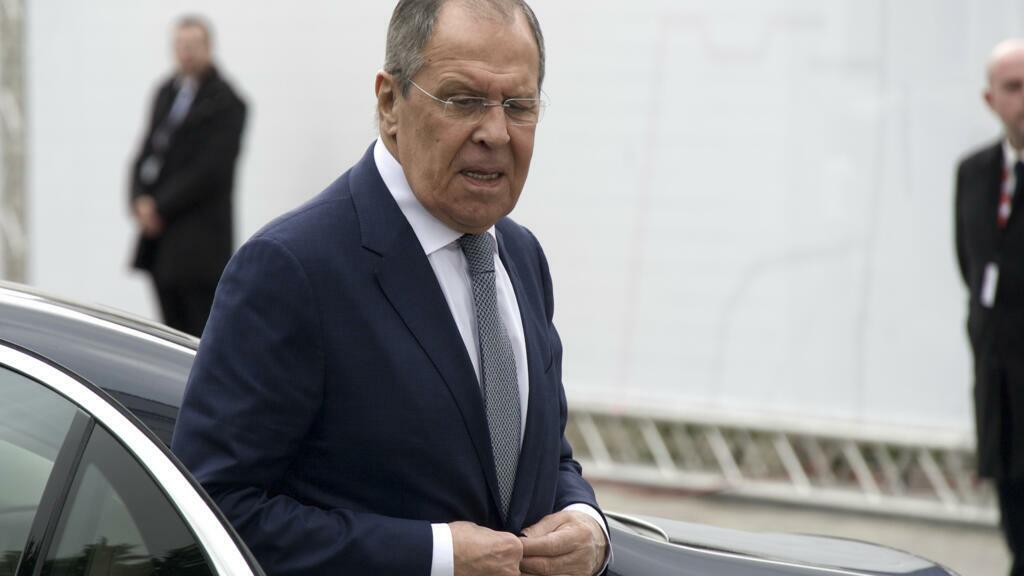
One pundit questions, are we 'winning' yet?... writing the following brief assessment of where things stand: IRGC Joint Staff headquarters under US-Israeli strikes. Iran naming UAE targets as Abu Dhabi enters the war. IDF Chief of Staff warning publicly the Israeli military could "collapse" from manpower shortages. Iran claiming over one million fighters mobilised with IRGC lowering the age for support roles to 12. Pentagon considering 10,000 additional ground troops within striking distance of Kharg. Trump pausing energy-plant destruction for 10 days until April 6. Iran denying it requested the pause. Houthis warning they will enter the war. Lavrov saying the quiet part: “Iran did not violate any of its international obligations.” Russia’s oil revenue doubling to $24 billion this month.

Oil prices continued to spike this morning, with international Brent crude oil once again surpassing $110 per barrel. For the day so far that’s up another 3%. 

Aftermath of strikes earlier this week on central Israel

"After several glimmers of hope, fueled by comments from President Trump, which were quickly dashed, the market is becoming more demanding in terms of rhetoric," said Amélie Derambure, senior multi-asset portfolio manager at Amundi. "The TACO trade is more difficult to do because a return to square one is not possible from here."

Gulf Flashpoint Widens: Iran Signals No Let Up

Multiple GCC countries issued incoming-attack alerts as drones and missiles light up the region Friday, with Kuwait taking at least two new hits: Shuwaikh Port was struck by "hostile drones" - per the Kuwait Ports Authority, with a second target, Mubarak Al-Kabeer Port, reportedly hit by drones and cruise missiles. Infrastructure damage has been reported in both cases, but no reported casualties.

Saudi Arabia maintains its air defense footing, with the Ministry of Defense saying drones were intercepted and destroyed over Riyadh and the Eastern Province, following a warning for Al-Kharj - home to Prince Sultan Air Base. Six ballistic missiles were detected: two intercepted, with four splashing into the Persian Gulf and empty areas.

Absolute chaos in Tel Aviv...

New explosions have been reported in Dubai and Abu Dhabi on Friday. It's as if Iran and the IRGC are sending a clear "f-you" message to Trump in the wake of the series of ultimatums and deadlines Tehran never asked for. Trump earlier went from 48 hours to 5 days to now a 10-day window amid the threats to attack power and energy infrastructure.

Israel Escalates Too: Will 'Intensify & Expand' Strikes on Iran

The White House has been busy talking about its backchannel diplomacy and getting the beginnings of a peace deal off the ground via Pakistan, and at one point within the past week there was talk of Vice President J.D. Vance actually traveling to Islamabad - but the situation on the ground suggests the opposite, given also Israel has on Friday announced escalation of its posture. Israel has continued coming under consistent missile strikes.

Now, Defense Minister Israel Katz is vowing Israel's attacks will "intensify and expand" - citing that Islamic Republic had not heeded warnings "to stop firing missiles at Israel’s civilian population." Katz said: "The fire has continued - and therefore, IDF strikes in Iran will intensify and expand to additional targets and domains that assist the regime in developing and deploying weapons against Israeli civilians."

There remains a huge risk for Israel amid the expectation that Iran has been saving its biggest and most advanced, longer range missiles - rationing its arsenal as it settles in for a long war.

Strait of Hormuz Status & Overnight News

Tehran could still be playing a double game of public rejection coupled with private behind-the-scenes signaling. According to Axios' latest, Iranian officials are quietly showing interest in talks even as they reject Washington's proposal, with mediators leaning hard to force  or 'will into existence' a meeting in the coming days. "Things are progressing very slowly" in terms of negotiations between the US and Iran, and as of now, no meeting between senior officials is even on the calendar, per Isreal's i24NEWS.

The IRGC Navy is still declaring the Strait of Hormuz effectively shut: traffic "to and from" ports tied to enemy allies is banned outright, with warnings any movement will be "severely dealt with." In a rare twist, The Wall Street Journal and others report Iran has even blocked two Chinese vessels from transiting Hormuz - signaling enforcement isn't just for Western targets. Washington seems to be trying to adapt in real time, as Reuters reports the US has deployed uncrewed drone boats into the theater, opening yet another front in an already widening conflict.

*  *  * Nighty night

Tyler Durden Fri, 03/27/2026 - 16:05

Tiger Woods Involved In "Rollover Crash" On Jupiter Island

Zero Hedge -

Tiger Woods Involved In "Rollover Crash" On Jupiter Island

Golf pro Tiger Woods has reportedly been involved in a "rollover crash" on Jupiter Island, just north of Palm Beach County in Martin County, according to local media outlet WPTV.

The Martin County Sheriff's Office said the accident occurred near 281 Beach Road on Jupiter Island in Hobe Sound. Property records from Zillow show the closest house to the accident is valued at $14.8 million.

The sheriff's office has yet to say what happened or whether Tiger was injured.

If the report is correct, this would mark Tiger's third car crash. Here are his prior two:

  • November 2009 in Florida, when he hit a fire hydrant and a tree outside his home.

  • February 2021 in Southern California, a serious single-car rollover that caused major leg injuries.

Sheriff John Budensiek will hold a press conference at around 1700 local time.

*Developing... 

Tyler Durden Fri, 03/27/2026 - 15:46

Soaring Prices Set To Crash China's LNG Imports To 8-Year Low

Zero Hedge -

Soaring Prices Set To Crash China's LNG Imports To 8-Year Low

Submitted by Tsvetana Paraskova of OilPrice.com

Surging LNG prices amid the war in the Middle East are set to lead to the lowest monthly LNG imports into China in eight years as Qatari and UAE supply is off the market and Chinese buyers look to raise supply from domestic gas production and pipeline deliveries.

China is on track to import about 3.7 million tons of LNG in March, per tanker-tracking data by Kpler cited by Bloomberg. That would be the lowest monthly import level in the world’s top LNG importer since the spring of 2018, as well as a 25% slump compared to March 2025, according to Bloomberg data and analysis.

The de facto closure of the Strait of Hormuz has stranded all Qatari and UAE supply of LNG. Additionally, Qatar’s LNG capacity has been severely damaged by Iranian missile attacks, which forced state firm QatarEnergy to declare force majeure on contracts and start quantifying the losses.

The Iranian missile attacks on Ras Laffan Industrial City (RLIC) dashed hopes of quick resumption of Qatari LNG flows even if the Strait of Hormuz were to open to unimpeded and safe traffic today. QatarEnergy last week said the damage from Iranian missile strikes on the Ras Laffan LNG complex, the world’s single largest LNG-producing facility, would cost it about $20 billion per year in lost revenue and to take up to five years to repair.

As a result, Asian LNG prices have nearly doubled this month and Asian buyers are outbidding Europe for spot supply.

China had some buffer to allow itself not to spend too much on costly LNG imports this month. The country’s LNG storage was estimated by Kpler at about 51% by end-March, and this buffer allows Northeast Asian buyers to draw on existing inventories.

The effect would shift peak restocking season in China, Japan, and South Korea to June–July rather than April–May, according to Kpler.

Tyler Durden Fri, 03/27/2026 - 15:30

In Surprise Move, Iran Blocks Two Chinese Ships From Transiting Hormuz

Zero Hedge -

In Surprise Move, Iran Blocks Two Chinese Ships From Transiting Hormuz

In a surprise twist, Iran appears to have turned its back on its best (and only) client, Beijing, when it blocked two China-owned container vessels from the Strait of Hormuz in what the WSJ said was an unusual move by Tehran, which has focused its shipping blockade on countries it deems supporters of Israel and the U.S.

The two ships - CSCL Indian Ocean and CSCL Arctic Ocean - made U-turns near Larak Island, about 20 miles from the port of Bandar Abbas in southern Iran, the WSJ reported.

In recent days, some ships have transited the strait via the narrow channel between Iran’s Qeshm and Larak islands, including those signaling Chinese owners and crew members.

Also on Friday, Iran’s Revolutionary Guard said that it had turned back three container ships of various nationalities trying to cross the strait, adding that all ship traffic to and from ports of supporters of the U.S. and Israel was prohibited, according to Nour News, which is affiliated with the country's Supreme National Security Council.

Container ship owners told the WSJ the only vessels that can now cross the strait are those with cargoes of Iran-destined household goods, cars, clothing and pharmaceuticals.

In the past week, Iran has allowed four ships loaded with grains to cross the Strait of Hormuz in the other direction, after waiting nearly three weeks in the Gulf of Oman, according to brokers who arranged the cargoes. The bulkers unloaded at Iran’s Bandar Imam Khomeini port, where three-quarters of the cargo handled is grain imports mainly from Russia and South America.

Tyler Durden Fri, 03/27/2026 - 15:00

Cartels Are Going 'Broke' As US Fentanyl Supply Drops By Almost 60%: Homan

Zero Hedge -

Cartels Are Going 'Broke' As US Fentanyl Supply Drops By Almost 60%: Homan

Authored by Darlene McCormick Sanchez via The Epoch Times,

The Trump administration’s border crackdown is slowing the flow of deadly drugs into the country to the point that cartel profits have plummeted.

​Border czar Tom Homan said during an appearance at the Conservative Political Action Conference (CPAC) on Thursday that President Donald Trump’s operation to go after the Mexican cartels has been successful, and that they are now focusing their drug operations on Europe and Asia.

​“Cartels are going broke,” Homan said. “They know it’s hard here.”​

Sara Carter, director of the National Drug Control Policy and a CPAC speaker, said that securing the U.S. border has meant fewer illegal immigrants and drugs, especially fentanyl.

​“We’ve seen a decrease in fentanyl coming into our country of around 56 percent to 57 percent, which is phenomenal,” she said.

“You’re holding China accountable and telling them we are watching the supply chain, and you will be responsible if we see more deaths in our country.”

​The cartels securing fentanyl precursor chemicals from China and India know what they are doing, she said, adding that cartels and America’s adversaries want “to break us and to create this massive casualty event.”

Discussing the impact of policy changes, Carter said that under the Biden administration, the cartels made hundreds of billions of dollars from human trafficking and the sale of narcotics.

She said adversarial countries pushing drugs onto American streets, such as China, amount to a “proxy war” against the United States.

​Homan and Carter applauded Operation Southern Spear, in which narcoterrorists carrying drugs on boats in the Caribbean were destroyed with U.S. military air strikes.

​Carter said stopping drug runners in the Western Hemisphere was part of the president’s America First strategy. Carter’s comments are supported by a recent study that also points to a sharp decrease in fentanyl deaths.

​The January study suggested that the decrease in deaths, which started in mid-2023, was due to a disruption in the supply chain of fentanyl precursor chemicals from China, creating a shortage of fentanyl on the streets.

​With less fentanyl, dealers and cartels stretched their supply, according to the study. Fentanyl and other street drugs are often cut with substances such as baby powder or sugar.

Opioid deaths that started to drop under the previous administration are continuing their downward trend. The Drug Enforcement Administration (DEA) under the Trump administration intensified enforcement operations, putting pressure on the global fentanyl supply chain, forcing narco-terrorists such as the Sinaloa Cartel and CJNG Cartel to alter their business model.

DEA lab testing showed 29 percent of fentanyl pills analyzed during fiscal year 2025 had a potentially lethal dose, a significant drop from just two years earlier, when 76 percent of pills had enough fentanyl to kill.

The purity of fentanyl powder has decreased to 10.3 percent in fiscal year 2025 from 19.5 percent in 2024, the DEA said. 

Tyler Durden Fri, 03/27/2026 - 13:20

Will QatarEnergy's LNG Fiasco Derail Goldman's Prewar View Of A Mega LNG Wave

Zero Hedge -

Will QatarEnergy's LNG Fiasco Derail Goldman's Prewar View Of A Mega LNG Wave

Global energy flows are being rewired across Eurasia as the Russia-Ukraine war and the latest U.S.-Iran conflict disrupt Gulf energy flows in what may be the worst energy shock on record.

One major new development is that roughly 20% of global LNG flows remain shut in the Gulf region because of the Hormuz chokepoint, with QatarEnergy warning last week that 17% of its LNG export capacity could be offline for three to five years.

That brings us to Goldman commodities expert Samantha Dart's warning to clients about five months ago, in which she said the "largest-ever LNG supply wave" was set to hit, pushing prices lower.

The question now is whether Dart's warning still holds, given that the Iranian attack on Qatar's Ras Laffan gas facility wiped out about 17% of the country's LNG export capacity, causing an estimated $20 billion in lost annual revenue and threatening supplies to Europe and Asia. Repairs are expected to take three to five years.

Dart's pre-US-Iran war view was that natural gas prices would remain relatively stable through 2027 before peak glut materializes by the end of the decade, triggering U.S. LNG export cancellations. However, the Ras Laffan disruption may have derailed that oversupplied outlook, as LNG markets could remain tight for years.

Another key development, with Qatari LNG flows hampered, is a recent note from Criterion Research President James Bevan, who wrote: "What had been framed as a two-horse race for global LNG market share now looks considerably more one-sided. The beneficiary is clear: U.S. Gulf Coast LNG."

And just like that, with Qatari LNG flows hampered for years, the question now is whether Dart's bearish forecast of the "largest-ever LNG supply wave" will likely have to be revisited. We'll see what she says in the next update.

Tyler Durden Fri, 03/27/2026 - 12:50

Schiff: "Real Rates Are Going To Collapse"; Dollar Confidence Crisis

Zero Hedge -

Schiff: "Real Rates Are Going To Collapse"; Dollar Confidence Crisis

Gold or Bitcoin: which can anchor the next reserve system? 

Last night, in a ZH debate hosted by Real Vision's Ash Bennington, Peter Schiff argued for gold’s role as the future global reserve currency, while Mark Moss made the case for Bitcoin, arguing that it is gaining traction on sovereign balance sheets as of 2025.

They covered America's dwindling reserve status, fundamental monetary properties, and the nature of governments. Here were some highlights for those short on time:

Gold: Tried and True

Schiff argued that Bitcoin does not meet the definition of money and therefore cannot compete with gold, which he described as the foundational reserve asset backing currencies.

He also pointed to current market trends, arguing that “foreign central banks are already moving more of their US dollar reserves into gold because they are losing confidence,” particularly in the U.S. government’s ability to repay debt without massive debasement. While acknowledging recent volatility, he maintained that gold’s decline is temporary and that “real rates are going to collapse, and that’s bullish for gold.”

At a more fundamental level, money must have independent utility, according to Schiff. 

“It has to be a commodity… [with] its own use,” pointing to gold’s role in “industry… jewelry… aerospace… medicine… electronics” as what makes it “better money than other commodities,” and distinct from Bitcoin, which may be transferable but is solely a digital ledger. 

The Issue of Trust

Moss emphasized the importance of custody, arguing that gold ultimately depends on intermediaries (unless stored in one’s basement) even when ownership is legally binding. Governments are not trustworthy and if they or the institution holding possession of the physical gold decide to renege, well ultimately, “they have control over the asset.”

Shipping gold abroad is another matter, filled with counterparty risk and logistical burden. Money needs to be transferable and this is hindered “if [governments] won’t allow you to ship it… or receive it.”

At a more basic level, he argued the issue is unavoidable with physical assets: “you have to trust somebody… [and] trust that they’ll allow you to access it,” concluding that “as long as I don’t have possession of it, I have no control over it.”

Will Central Banks accumulate Bitcoin?

Moss opened by framing Bitcoin within a broader shift in the global monetary system, arguing that reserve assets are moving away from a single dominant anchor toward a mix of holdings. As he put it, “the world is breaking apart… instead of having one… reserve asset, I believe we’ll start to have different assets held in reserve,” with countries diversifying across currencies, commodities, and other stores of value. Within that transition, he argued Bitcoin is already entering the conversation at the sovereign level, projecting that “Bitcoin will have a meaningful allocation in central bank reserves… in the next 20 years.”

Moss argued that if politicians are responding to Bitcoin holders, it suggests scale: “the adoption of Bitcoin is so massive… politicians are forced to bow down to the most powerful voting bloc.”

But is this classic pandering by the political class?

Schiff said “the Bitcoin community has done a very good job of bribing politicians,” framing recent proposals as the result of lobbying and campaign influence rather than monetary necessity. In his view, politicians are responding to a narrow but motivated group of voters, where “when a politician promises to buy Bitcoin… you’re like, yeah, I’m voting for that guy,” effectively bribing voters by promising to use tax dollars to bid up the price of Bitcoin.

The trend, however, may not last. “if the price of Bitcoin collapses, all the political firepower is going to go away.”

Watch the full debate below or listen on Spotify.

*  *  * 25-Year Shelf Life

Tyler Durden Fri, 03/27/2026 - 12:35

Newspaper Apologizes For Accurately Describing Suspected Killer As 'Illegal Immigrant'

Zero Hedge -

Newspaper Apologizes For Accurately Describing Suspected Killer As 'Illegal Immigrant'

Authored by Steve Watson via Modernity.news,

The student journalists at Loyola University Chicago’s Phoenix newspaper have issued a groveling apology for initially reporting the facts about the man charged with murdering 18-year-old Sheridan Gorman.

In an editor’s note, the paper stated: “Additionally, in the body of the original post, we described the man who was charged as an ‘illegal immigrant,’ using language provided by the Department of Homeland Security. That language does not align with Associated Press style, nor does it align with the values of this newspaper.”

It continued:No human’s existence is illegal, and we quickly changed our wording to reflect that. We acknowledge the harm such language can cause and the power and importance of the words we choose to use. We deeply regret these errors, and we’re committed to continuing the high standards we hold for ourselves as journalists and members of the Loyola, Rogers Park and Chicago communities.”

The suspect, 25-year-old Jose Medina-Medina, a Venezuelan national living in the United States illegally, faces charges in the fatal shooting of Gorman on a pier at Chicago’s Tobey Prinz Beach. Gorman, a Loyola freshman, was walking with friends when she was chased and shot in the head.

The case fits the pattern of endless preventable violence perpetrated by criminal illegals.

Worse still, Governor JB Pritzker attempted to shift responsibility by blaming President Trump for the murder:

Medina-Medina was apprehended by Border Patrol in May 2023 and released into the U.S. interior. Weeks later, Chicago police arrested him for shoplifting, but he was released again under sanctuary policies that shield illegal immigrants from federal immigration authorities.

Chicago Alderwoman Maria Hadden (D–Rogers Park) downplayed the incident, claiming “it sounds like, this might have been a wrong place, wrong time, running into a person who had a gun, they might have startled this person at the end of the pier.”

Gorman’s distraught family pushed back hard against attempts to minimize what happened. Their statement read: “What happened to Sheridan cannot be reduced to a ‘senseless tragedy,’ nor can it be explained in general terms about public safety.”

They added: “Sheridan was our daughter. She was 18 years old. She was doing something entirely normal — walking near her campus with friends. She should be here.”

The family continued: “Calling this ‘senseless’ is not enough. There must be a clear and honest accounting of what went wrong. We will not allow Sheridan’s life to be reduced to a talking point or a generalization. We expect leadership that is willing to confront hard truths and ensure that what happened to her does not happen again.”

Further: “Sheridan was a daughter, a sister, and a young woman whose life was taken in a way that should never have been possible. We are not interested in political arguments or in watching responsibility shift from one place to another. If there were failures—as the Governor himself has acknowledged—then every one of them must be identified, examined, and addressed directly. The location of those failures matters less than the willingness to confront them honestly.”

They concluded: “Our daughter is not a policy debate. She is a life that was taken, and that demands accountability.”

Governor JB Pritzker responded by acknowledging failures while pointing elsewhere: “This has been a terrible tragedy … there have been real failures. Those failures, of course, extend beyond the borders of Illinois. That’s their national failures, a failure to have comprehensive immigration reform, a failure of the president to follow his own edict to go after the worst of the worst.”

Chicago Mayor Brandon Johnson avoided taking ownership of the city’s long-standing sanctuary policies: “Let’s just be very clear, between the Safe-T Act and the welcoming city ordinance, the welcoming city ordinance was passed 40 years ago by the first Black mayor in the history of Chicago, and the Safety Act was passed under the governor at that time, who was a Republican.”

The family’s direct call for accountability stands in sharp contrast to the deflection and word games from officials and the student press. While the Loyola Phoenix regrets using accurate language from the Department of Homeland Security, the real harm remains the policies that allowed a twice-released illegal immigrant to cross paths with an innocent student.

Sheridan Gorman’s death was not inevitable. It resulted from repeated decisions that prioritized open-border practices and sanctuary protections over basic public safety. As long as leaders refuse to secure the border and enforce immigration law, more American lives will be lost to the same failures.

Your support is crucial in helping us defeat mass censorship. Please consider donating via Locals or check out our unique merch. Follow us on X @ModernityNews.

Tyler Durden Fri, 03/27/2026 - 12:05

UAE Pushes For Hormuz Security Force, While Turkey Argues Against Gulf Entry Into War

Zero Hedge -

UAE Pushes For Hormuz Security Force, While Turkey Argues Against Gulf Entry Into War

It's one of those things that sounds nice on paper, but when missiles and drones are inbound, no one is going to want to be on a military ship sitting in the middle of the Strait of Hormuz: the United Arab Emirates, which has been among the hardest-impacted Gulf states in Iran's ongoing retaliation, is pressing for a multinational maritime ​taskforce to reopen vital oil transit waterway, the Financial Times reports ‌Friday.

The UAE, with a navy that's not really going to strike fear into any enemy (much less the Iranians), says it is willing to participate in a "Hormuz Security Force" to defend the strait and escort shipping. Dozens of countries are being asked to join, sources cited in FT say.

Source: Abu Dhabi Ship Building Company

And yet for all the public posturing and signing of 'symbolic statements' - not a single country with a strong military has actually stepped up with a concrete offer to provide warships and military assets (other than Israel, which is a direct party to the war).

This is despite that for much of the past month of the war immense pressure has been exerted on allies by the Trump administration. But by and large they've shrugged and have said "this is not our war" - despite rising oil prices and global shipping disruption. 

At the same time, the Mideast/Asia regional country representing NATO's second largest military, Turkey, is reportedly behind the scenes telling the Gulf (GCC) not to join the war.

"Turkey is conducting intensive diplomatic efforts to try and prevent Gulf Arab countries from joining the US-Israeli war against Iran, according to people familiar with the matter," Reuters writes separately on Friday.

"Ankara has urged Gulf nations to act with restraint, said the people, who spoke on condition of anonymity to discuss sensitive matters," the report continues. "Turkey has stepped up diplomacy, with Foreign Minister Hakan Fidan visiting Saudi Arabia, the United Arab Emirates and Qatar and holding calls with other regional counterparts."

Turkey, which shares a far eastern border with Iran, does indeed have an interest in avoiding broader escalation in region - but it has also of late been a sworn enemy of Israel, especially during and in the wake of the Gaza War.

Reuters further reveals that there's lots more "talk" but no action as yet:

Several U.S. allies have ⁠said they have no immediate plans to send ships to unblock the ​Strait of Hormuz, rebuffing a Trump request for military support to keep the ​vital waterway open.

France said on Thursday it had held talks with around 35 countries seeking partners and proposals for a mission to reopen the strait, but only once the U.S.-Israeli war ​on Iran ends.

It's a big open question whether the United States itself will actually send warships deeper into Gulf waters near the strait. Some military analysts have warned of the immense risk and exposure, given reports that Iran has mined the strait, but also given the IRGC would without doubt send missiles and drones against any military vessels seeking to pass.

Currently the 'international community' seems to be sitting around saying 'you first' while looking for others to lead. And all the while the White House seems to lack a coherent big vision strategy, or at the very least has not clearly communicated one. Trump is not going to be happy to hear that America's wayward ally Turkey could be thwarting efforts to cobble together a Hormuz coalition.

Tyler Durden Fri, 03/27/2026 - 11:45

House Ethics Panel Finds Florida Democrat Congresswoman Committed 25 Violations

Zero Hedge -

House Ethics Panel Finds Florida Democrat Congresswoman Committed 25 Violations

Authored by Chase Smith via The Epoch Times,

A bipartisan House Ethics Committee panel found on March 27 that Rep. Sheila Cherfilus-McCormick (D-Fla.) committed 25 ethics violations, a ruling that sets the stage for a sanctions hearing and a potential expulsion vote on the House floor.

The adjudicatory subcommittee, composed of four Republicans and four Democrats, deliberated until well past midnight before releasing its findings Friday morning.

The panel found 25 of 27 counts in the Statement of Alleged Violations proven by clear and convincing evidence.

The full committee will hold a sanctions hearing shortly after the House returns from the April recess.

The violations center on Cherfilus-McCormick’s alleged use of millions of dollars from her family’s health care company, Trinity Healthcare Services, to fund her 2022 congressional campaign through a network of family members and affiliated businesses.

Investigators also found violations related to her reelection campaign, financial disclosure failures, and use of her congressional office to benefit allies.

Thursday’s public hearing was the first open ethics proceeding against a sitting House member in nearly 15 years.

The ruling could fuel a Republican-led expulsion push and further divide a Democratic Caucus trying to retake the House majority in November.

Cherfilus-McCormick is running for a fourth term representing a southeastern Florida district.
 

Expulsion from the House requires a two-thirds vote.

Republicans have signaled they intend to push for it.

“I look forward to proving my innocence,” the congresswoman’s office told The Epoch Times via email.

“Until then, my focus remains where it belongs: showing up for the great people of Florida’s 20th District who sent me to Washington to fight for them.”

The congresswoman has maintained her innocence.

“This is an unjust, baseless, sham indictment—and I am innocent,” she said at the time of her indictment.

“The timing alone is curious and clearly meant to distract from far more pressing national issues. From day one, I have fully cooperated with every lawful request, and I will continue to do so until this matter is resolved. I am deeply grateful for the support of my district, and I remain confident that the truth will prevail. I look forward to my day in court. Until then, I will continue fighting for my constituents.”

Cherfilus-McCormick also faces a federal indictment on charges of stealing approximately $5 million in COVID-19 disaster relief funds and using it for personal purchases, including a 3-carat yellow diamond ring.

Her brother, the former chief of staff, and the accountant were also charged in the alleged scheme.

She has pleaded not guilty.

Tyler Durden Fri, 03/27/2026 - 11:25

China Dismisses Report Of Top Chipmaker Aiding Iranian Forces As "Fake News"

Zero Hedge -

China Dismisses Report Of Top Chipmaker Aiding Iranian Forces As "Fake News"

Beijing moved into damage-control mode on Friday, with its foreign ministry dismissing a Reuters report that cited two senior Trump administration officials alleging that SMIC, China's largest chipmaker, had sent chipmaking tools to Iran, as "false information."

Asked about the report at a regular news conference in Beijing, foreign ministry spokesman Lin Jian said he was "not familiar with the situation" and added, "What I can tell you is that recently, some media have been keen on releasing news that seems correct but is actually wrong."

Jian added that, "after verification, all such reports were found to be false information," but he did not elaborate further.

The denial underscores just how sensitive Beijing is to headlines featuring Trump administration officials accusing SMIC of sending chipmaking tools to Iran.

"We have no reason to believe that any of this has stopped," one Trump official told Reuters.

Those allegations build on a separate report about a viral video circulating on X that appears to show a Chinese company mass-producing Shahed-type drones.

One Trump official told the outlet that the SMIC tools sent to Iran could be used in any electronics that require chips.

Reuters noted, "It was not immediately clear what, if any, role the chipmaking tools have played in Iran's response to the war, which was launched by the U.S. and Israel on February 28."

What is clear, based on a separate report we first noted in early March, is that an Iranian drone that targeted the British Royal Air Force base at Akrotiri, Cyprus, contained a Russian-made "Kometa" satellite navigation chip using Western-made components.

Just so readers are on the same page, here is the current map of the two modern battlefields in Eurasia overlaid with natural gas pipelines.

Read: "Eurasia Energy War?"

Tyler Durden Fri, 03/27/2026 - 11:05

Someone Tell Lloyd Blankfein The Fire In Private Credit Has Already Started

Zero Hedge -

Someone Tell Lloyd Blankfein The Fire In Private Credit Has Already Started

Submitted by QTR's Fringe Finance

As I’ve been writing about, private credit has been under immense stress for months, with liquidity strains, redemption pressure, and growing questions around valuations all surfacing at once. And now with things on the verge of imminent collapse and literally all of f*cking Wall Street already on notice, one former major banking CEO has decided to offer up the King Solomon-like revelation that he believes things could get worse from here.

But, obviously, what he doesn’t realize is that the deterioration he’s warning about isn’t ahead of us. It’s already here.

“At some point there needs to be a forcing function or a reckoning that causes you to come to grips with what your balance sheet really is worth,” former Goldman CEO Lloyd Blankfein told Bloomberg this week. He continued: “The analogy I like to give is you accumulate tinder on the floor of the forest and eventually a spark will come. But the longer between intervals where there’s a spark that sets it on fire, the more that accumulates.”

Blankfein’s metaphor of tinder piling up in a forest misses one crucial point: the smoke is already in the air. When Blankfein warns that a spark will eventually force a reckoning in private assets, he’s describing a future event. But the market isn’t waiting for ignition, it’s already reacting. The forcing function he anticipates is not some external shock still to come it’s already unfolding inside fund structures, redemption queues, and valuation disputes. As I’ve written, it’s psychology.

And the psychology has shifted. The bid is no longer blind.

Look at the sequence of events just in March. Apollo Global Management capped withdrawals after double digit redemption requests. Ares Management restricted redemptions as its income fund came under pressure. BlackRock began limiting withdrawals in a major private credit vehicle. And just yesterday, more headlines hit showing big losses for Ares funds. Tinder, meet spark.

This is where Blankfein is late. The moment redemptions get gated, the psychology is already broken. Investors are no longer thinking about yield, they are thinking about access. They are no longer asking what return, they will earn they are asking whether they can get their money back. That shift is irreversible in the short term. Once liquidity becomes uncertain, every private mark becomes suspect. Every quarterly report becomes a negotiation with reality.

And once that realization sets in, the game changes completely. As Morgan Stanley and Cliffwater cap redemptions, and as funds across the space impose limits or gates, the narrative breaks. Investors do not wait for official markdowns…they front run them. They redeem preemptively. They assume the worst. That behavior is the spark Blankfein is looking for, except it is already happening.

As I wrote last week, even insiders have been saying the quiet part out loud. An executive at Apollo Global Management recently said that “all” marks in parts of private markets are wrong. Add in regulatory scrutiny with the SEC questioning private credit ratings and you have something more dangerous than a valuation problem: you have a credibility problem. And markets do not wait for numbers to adjust when credibility breaks. They reprice instantly in behavior.

For anyone who’s been paying attention, none of this is new. This has been building for months, and it has been called out for months. The gates, the redemption limits, the quiet markdowns, the uneasy investor calls…it’s all been there in plain sight. The only thing that’s changed now is that it’s too obvious to ignore. What was dismissed as isolated stress is now showing up everywhere at once.

What Blankfein is describing as a future reckoning is, in reality, a lagging recognition of something already in motion. So the question is no longer what will trigger the downturn. The question is how far it spreads now that it has started. Because once investors collectively realize that liquidity is conditional and marks are questionable, the unwind becomes self reinforcing. That is not tinder accumulating. That is combustion already underway.

--

QTR’s Disclaimer: Please read my full legal disclaimer on my About page hereThis post represents my opinions only. In addition, please understand I am an idiot and often get things wrong and lose money. I may own or transact in any names mentioned in this piece at any time without warning. Contributor posts and aggregated posts have been hand selected by me, have not been fact checked and are the opinions of their authors. They are either submitted to QTR by their author, reprinted under a Creative Commons license with my best effort to uphold what the license asks, or with the permission of the author.

This is not a recommendation to buy or sell any stocks or securities, just my opinions. I often lose money on positions I trade/invest in. I may add any name mentioned in this article and sell any name mentioned in this piece at any time, without further warning. None of this is a solicitation to buy or sell securities. I may or may not own names I write about and are watching. Sometimes I’m bullish without owning things, sometimes I’m bearish and do own things. Just assume my positions could be exactly the opposite of what you think they are just in case. If I’m long I could quickly be short and vice versa. I won’t update my positions. All positions can change immediately as soon as I publish this, with or without notice and at any point I can be long, short or neutral on any position. You are on your own. Do not make decisions based on my blog. I exist on the fringe. If you see numbers and calculations of any sort, assume they are wrong and double check them. I failed Algebra in 8th grade and topped off my high school math accolades by getting a D- in remedial Calculus my senior year, before becoming an English major in college so I could bullshit my way through things easier.

The publisher does not guarantee the accuracy or completeness of the information provided in this page. These are not the opinions of any of my employers, partners, or associates. I did my best to be honest about my disclosures but can’t guarantee I am right; I write these posts after a couple beers sometimes. I edit after my posts are published because I’m impatient and lazy, so if you see a typo, check back in a half hour. Also, I just straight up get shit wrong a lot. I mention it twice because it’s that important.

Tyler Durden Fri, 03/27/2026 - 10:50

Logic, Logistics, And At Least Another 10 Days...

Zero Hedge -

Logic, Logistics, And At Least Another 10 Days...

By Michael Every of Rabobank

Thursday was a rocky day in markets ahead of today’s deadline for the US to shift from bombing Iran’s nuclear, missile, drone, military-industrial, and regime sites to destroying its electricity grid, potentially taking out its power generation for a generation, and unleashing an Iranian response against the broader region’s power, water, and energy infrastructure.

Given that backdrop, some TACO the view it was logical Trump subsequently extended the deadline to 8PM EST on Monday 6 April, because “talks are ongoing, and despite erroneous statements to the contrary from the Fake News Media, and others, they are going very well.” Is this true, is Trump pulling a head-fake ahead of an impending strike, or did he just ramp the markets looking for an off-ramp?

Supporting a ‘deal ahead’ view, Israel is shifting from hitting regime to military-industrial targets and is back to 24-hour attack runs despite the incredible strain it puts on its pilots and fighter jets. Yet there are other logics derived from logistics.

The official Iranian position is that the US proposal to end the war is “one-sided and unfair.” Indeed, Iran’s hardline new leaders are calling for a rapid move to gain a nuclear bomb, and it is already recruiting children as young as 12 to man checkpoints in Tehran, according to Al Arabiya, and is using civilian shields around regime targets. Iran also says Yemen's Houthis may cut off Saudi Oil flowing from its Red Sea back-up pipeline and target the key trade route between Asia and Europe.

The Pentagon is reportedly choosing ‘final blow’ options if talks fail. There are strong suggestions that if the US steps up its attacks, the UAE and Saudi Arabia will move from defence to offence alongside it, which would change the regional dynamic – they, like Israel, are not able to ‘go home’ afterwards if they fail. This morning also sees news the US may send an additional 10,000 ground troops - and most of those forces could only arrive by next weekend, just ahead of the new Monday deadline. (Also note in 1991’s Gulf War 1, the US sent 650,000 troops at its peak, and in 2003’s Gulf War 2, around 450,000.)

However, that decline is part of the logic arguing why the US is acting – both to deal with Iran’s nuclear threat and to keep control of key commodity supply chains while it still can. Indeed, it’s reported US plans may include seizing key Iranian oil assets, either strategic islands in Hormuz or the oil hub of Kharg. Trump floated the US controlling Iranian oil yesterday, as it de facto does Venezuelan. If the US were to take the mouth of the Strait it could lock Iranian oil in, throttling the regime, while letting others’ out, albeit under some fire.

In short, we have an extension of the war until at least April 6 as the financial press say ‘24 days to disaster: Trump’s new deadline won’t change oil shock maths’. Oil already at sea pre-war will have been used up by then, revealing the true supply shock. Meanwhile, Ukrainian attacks have taken 40% of Russian oil export capacity out, there was a strike against a Turkish tanker carrying Russian oil yesterday, and a major cyclone just forced Australian LNG shutdowns. Vietnam and the Philippines are asking Japan to help them from its own oil reserves. Expect more such pleas.

We also have conflating geopolitical shocks that will echo after the war is over. Trump scorched NATO for failing an Iran ‘loyalty test’ and seems to be flirting with dumping the alliance again, despite Secretary General Rutte saying, “NATO is safer under Trump.” Europe still insists, “This isn’t our war.” Trump literally replied, “Ukraine isn’t ours.” Yet that’s as Russia admits it is helping Iran militarily, as Iran helped Russia fight until now…. and as the German Armed Forces Association called to prepare for a war economy.

Potential geoeconomic shocks are also clear beyond those from energy. Though the EU parliament approved the US trade deal yesterday, avoiding the US threat to use LNG exports as an economic weapon, there were caveats. The updated agreement allows for its suspension if: (1) the US undermines the deal's objectives or discriminates against EU economic operators - which implies there cannot be higher tariffs for different sectors, which the US is going to insist on; (2) if the US threatens the territorial integrity of member states - which implies Greenland, which the US is likely to return to after the Diego Garcia debacle with the UK, Spain’s restriction on allowing the Pentagon to use its airbase there, and some EU countries not allowing US planes to overfly them; (3) if the US engages in economic coercion – which is always a risk with economic statecraft.

Notably, and logically, some note a ‘patriots' paradox’, where even Trump's far-right European allies refuse to support his EU trade deal. Indeed, as underlined before, historically this is why neo-mercantilists don’t unite: they all want to win in the zero-sum trade game. Indeed, all political sides are seeing some things the same way in Europe, it seems. Germany is planning how it can hurt the US in a trade war even though they have no escalation dominance as the net exporter; and Chancellor Merz just proposed a new trade deal with China, which is supporting Russia vs Ukraine, though Brussels knocked it back.

Moreover, Canada’s PM Carney is also trying to put together a ‘mega anti-Trump alliance’ to ‘save world trade’. As Politico puts, it “Nearly 40 nations are hatching a plan to save the WTO or, if it can’t be salvaged, to build a new order.” Without the US and China? The EU and UK are deeply reliant on the US (and China); Canada borders the US, and it, Peru, Chile, and Mexico are in Donroe Doctrine territory; Japan is a key, freshly-pledged US ally; Australia and New Zealand are totally reliant on US defence and access to Eurodollar borrowing; and Brunei, Singapore, Vietnam, and Malaysia are in China’s neighborhood. (As China just threatened Mexico with trade reprisals over its new 50% import duties.)

That’s already a lot for markets to try to (in)digest today. Yet it’s also necessary to include that the FT reports the US Treasury market is showing signs of strain as the Iran war sparks tumult – any problems there are problems almost everywhere; more FOMC members are worrying about the potential impact of the war on the US economy, as the OECD suggests inflation could reach as high as 4.2%; the Fed’s Miran argues the central bank could cut its balance sheet by up to $2tn ‘without any market turmoil’; and President Trump’s signature is going to appear on paper dollars, making him the first sitting president to see this happen.

Whether that latter news is good or bad for the dollar, like so much else around us, ultimately pivots around the outcome of this war vs Iran.

Let’s hope for a quiet weekend – we haven’t had one in quite some time.

Tyler Durden Fri, 03/27/2026 - 10:15

Iran War Triggers Jump In Americans' Inflation Expectations, Slump In Sentiment

Zero Hedge -

Iran War Triggers Jump In Americans' Inflation Expectations, Slump In Sentiment

While the preliminary UMich survey was undertaken between February 17 and March 9, with about half completed after the start of the US military conflict in Iran, today's final print includes the full month with all the conflict's escalations (and de-escalations).

Expectations were for the headline sentiment index to tumble with expectations projected to fall most and consensus was right with the expectations tumbling from 54.1 to  51.7 and current conditions down from 57.8 to 55.8 (worse than expected). Put together, the headline sentiment index fall from 55.5 to 53.3 (worse than expected) - the lowest reading of the year...

Source: Bloomberg

Declines were seen across age and political party. Consumers with middle and higher incomes and stock wealth, buffeted by both escalating gas prices and volatile financial markets in the wake of the Iran conflict, exhibited particularly large drops in sentiment. Overall, the short-run economic outlook plunged 14%, and year-ahead expected personal finances sank 10%, while declines in long-run expectations were more subdued.

As UMich Survey Director Joanna Hsu notes: "These patterns suggest that, at this time, consumers may not expect recent negative developments to persist far into the future."

Interviews for this release were collected between February 17 and March 23, with about two-thirds completed after the start of the US military conflict in Iran.

Year-ahead inflation expectations climbed from 3.4% in February to 3.8% this month, the largest one-month increase since April 2025. 

Long-run inflation expectations inched down to 3.2%.

Note that for both time horizons, interviews completed after February 28th exhibited higher inflation expectations than those completed before that date...

Only 28% of consumers expect interest rates to fall in the year ahead, down from 35% last month and nearly half of consumers 6 months ago.

Expectations for other elements of the economy, including personal finances, business conditions, labor markets, and stock markets, also deteriorated this month.

Decreases in expectations for personal finances and business conditions were much sharper for the short run than the long run.

However, Hsu concludes, "these views are subject to change, however, if the Iran conflict becomes protracted or if higher energy prices pass through to overall inflation."

Tyler Durden Fri, 03/27/2026 - 10:08

AI Disruption Returns: Cybersecurity Stocks Tumble On Report Of New Anthropic "Step Change" AI Model

Zero Hedge -

AI Disruption Returns: Cybersecurity Stocks Tumble On Report Of New Anthropic "Step Change" AI Model

Cybersecurity stocks are slumping in premarket trading on Friday as the AI disruption trade returns after a Fortune report said Anthropic is testing a new AI model that “poses significant cybersecurity risks.”

According to the report, Anthropic is "developing and has begun testing with early access customers a new AI model more capable than any it has released previously," the company said, following a data leak that revealed the model’s existence. 

An Anthropic spokesperson said the new model represented “a step change” in AI performance and was “the most capable we’ve built to date.” The company said the model is currently being trialed by “early access customers.”

Descriptions of the model were inadvertently stored in a publicly-accessible data cache and were reviewed by Fortune.

A draft blog post that was available in an unsecured and publicly-searchable data store prior to Thursday evening said the new model is called “Claude Mythos” and that the company believes it poses unprecedented cybersecurity risks.

Among notable movers this morning: CrowdStrike -6.0%, Palo Alto Networks -4.6%, Cloudflare -3.9%, Zscaler -4.7%, Fortinet -4.0%, Okta -4.26%. The broader Global X Cybersecurity ETF is down 2.7%

Security stocks — along with software names more broadly — have been pressured by concerns that tools from AI companies like Anthropic or OpenAI could reduce demand for products from legacy providers, weighing on their growth, margins, and pricing power.

Tyler Durden Fri, 03/27/2026 - 09:01

Pages